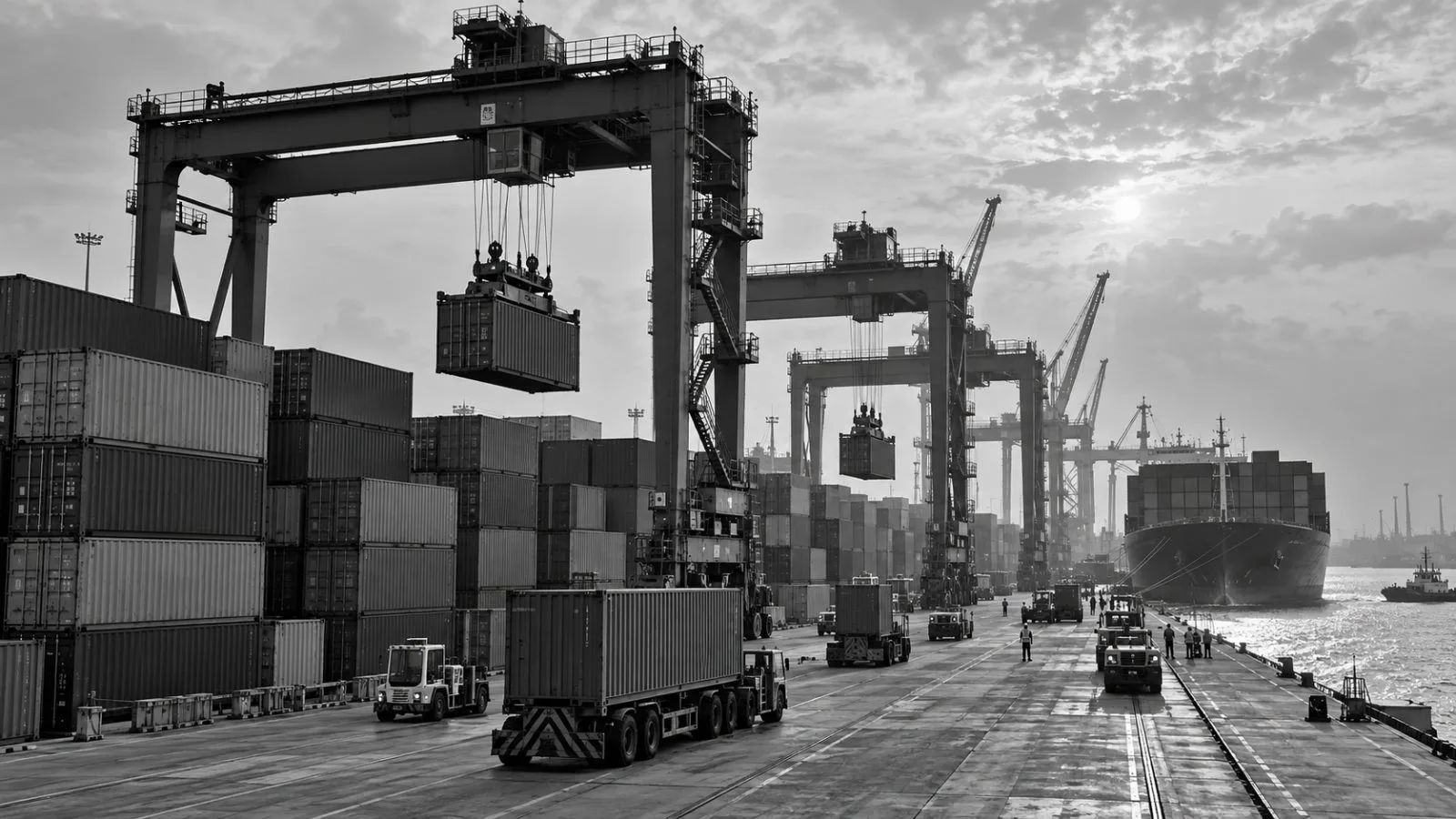
Meridian Port Services CEO Mohamed Samara said Tema Port’s 16 electric rubber-tired gantry cranes (RTGs) were fully deployed and operating at full capacity, adding a West African example to port energy choices.
The package also included three ship-to-shore cranes. Samara said the 16 electric RTGs arrived between April and June 2026 and were progressively commissioned from July.
At Abidjan’s Côte d’Ivoire Terminal, the operator said on May 5, 2025, that it had received 21 electric tractors, taking its fleet from 38 to 59. It reported that the new vehicles had an operating range of more than 12 hours.
Spain’s H2PORTS project tested hydrogen machinery in terminal operations from mid-September 2023 through November 2025. The trials included a reach stacker at MSC Terminal Valencia and a terminal tractor at Valencia Terminal Europa.
Fundación Valenciaport said the reach stacker could move containers weighing more than 30 metric tons. The Port Authority of Valencia said its design aimed to deliver lifting and operating performance comparable to a diesel machine. Manufacturer Hyster said in 2023 that the reach stacker’s tanks could be refilled in 10 to 15 minutes.
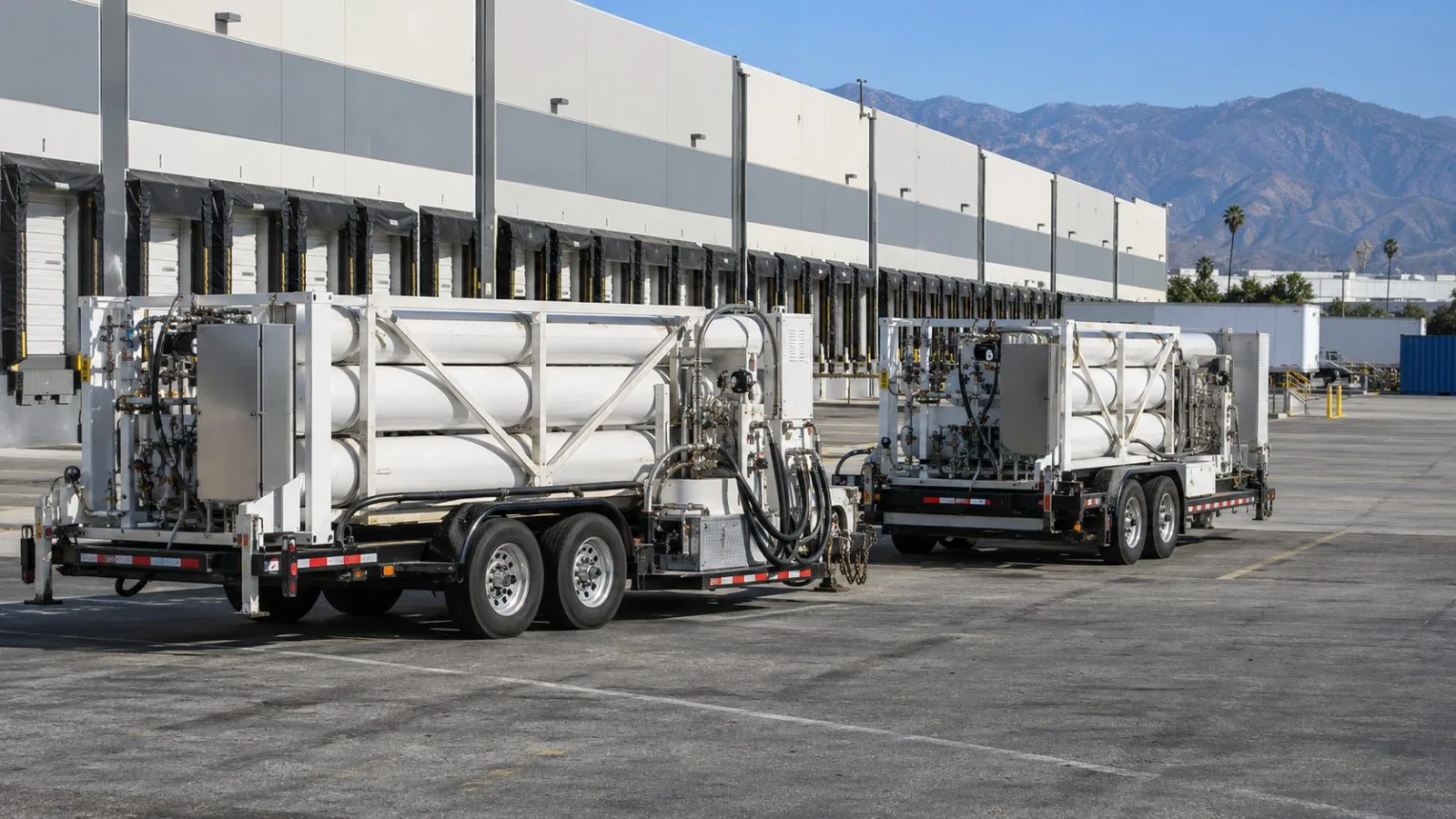
The terminal tractor had a 70-kilowatt fuel cell, a 25-kilowatt-hour battery and four high-pressure hydrogen tanks. The Port Authority said the prototype could complete a shift without producing emissions at the terminal and used renewable hydrogen supplied by Carburos Metálicos. The pilot’s mobile refueling station could supply up to 55 kilograms of hydrogen a day, the authority said.
The European Commission’s CORDIS project record lists H2PORTS’ total cost at €4,117,197.50 and its EU contribution at €3,999,947.50. Those are project-level figures, not costs for a commercial fleet. CORDIS lists cost-benefit and total-cost-of-ownership analyses among the project reports, but its summary does not state their conclusions.
In an Oct. 28 opinion published by BusinessDay, Jama Onwubuariri, managing director of TTP and director of West African Truck Terminals, argued that ports should match energy choices to the work each machine performs. The examples cover different equipment and locations, and offer no like-for-like cost comparison for West African operators.