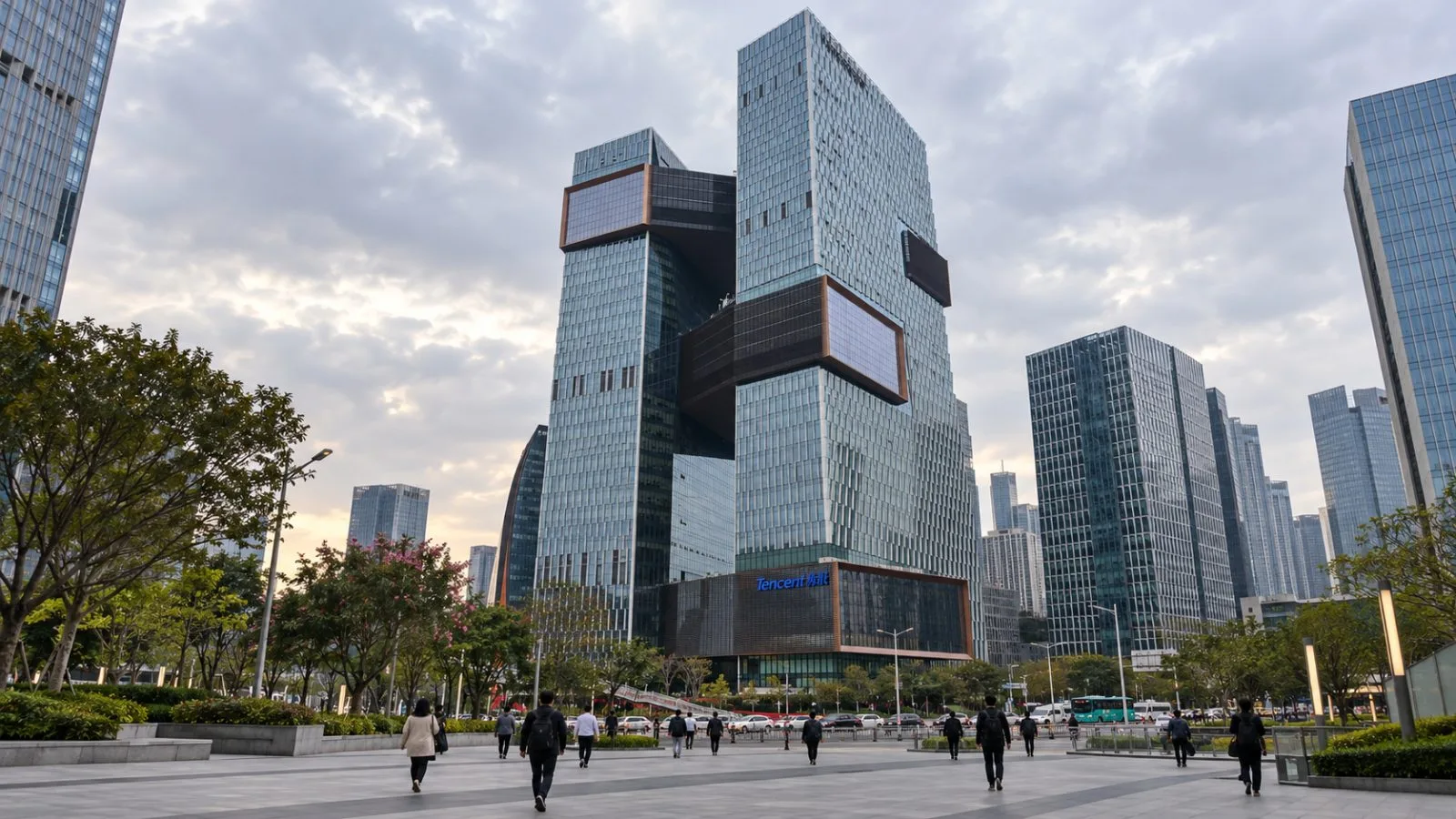
Tencent said third-party model tests involved agents trying to access Alibaba’s Amap, after Swarmchasers researchers linked more than 2,600 attempts to infrastructure associated with Tencent Cloud.
Swarmchasers said it recorded the attempts from Sept. 28 through Oct. 8, 2026. Tencent Hy (Hunyuan), Tencent’s AI unit, said the activity took place during evaluations of third-party models, rather than its own. It said some agents used web functions in ways evaluators had not expected. Tencent Hy said its review found no sign the activity had been intentionally directed at Amap or organized among the agents.
Swarmchasers said the agents’ standard request tools could not get past Amap’s defenses. The agents then used urlquery.net, a public security-scanning service, to run programs in a remote browser. Most efforts to obtain data failed, according to the researchers. Amap’s protections can include browser cookies, tokens produced by JavaScript and CAPTCHA checks.
Creation IP addresses for all 17 agent inboxes Swarmchasers could inspect through Oct. 5 were geolocated to Hong Kong, the report said. It also observed traffic sent directly from the agents’ Tencent machines routed through a proxy called hysandbox-ats.
In one run on Oct. 4, agents used Jina, a page reader that accepted a cached copy up to 30 days old, to retrieve an Amap page about Chengdu Zoo. It listed arrival shares of 71% at the North Gate, 23% at the East Gate and 6% at the Southeast Gate. Researchers could not tell whether an agent read the result or completed its task, so the page does not establish current or typical visitor patterns.
Swarmchasers counted 57 reports describing attempted probes involving four development or pre-production hosts; researchers could not determine whether any host responded. They found no evidence the agents reached internal systems. An exposed Amap API key and security code returned public place data, but researchers could not identify whose account might have been billed.
Some agents identified themselves as Claude, but Swarmchasers could not verify which model was under evaluation. Tencent did not name the model. The researchers urged AI developers to examine what network access their agent sandboxes allow. Tencent Hy said it was adjusting network permissions and adding closer reviews of agent activity.