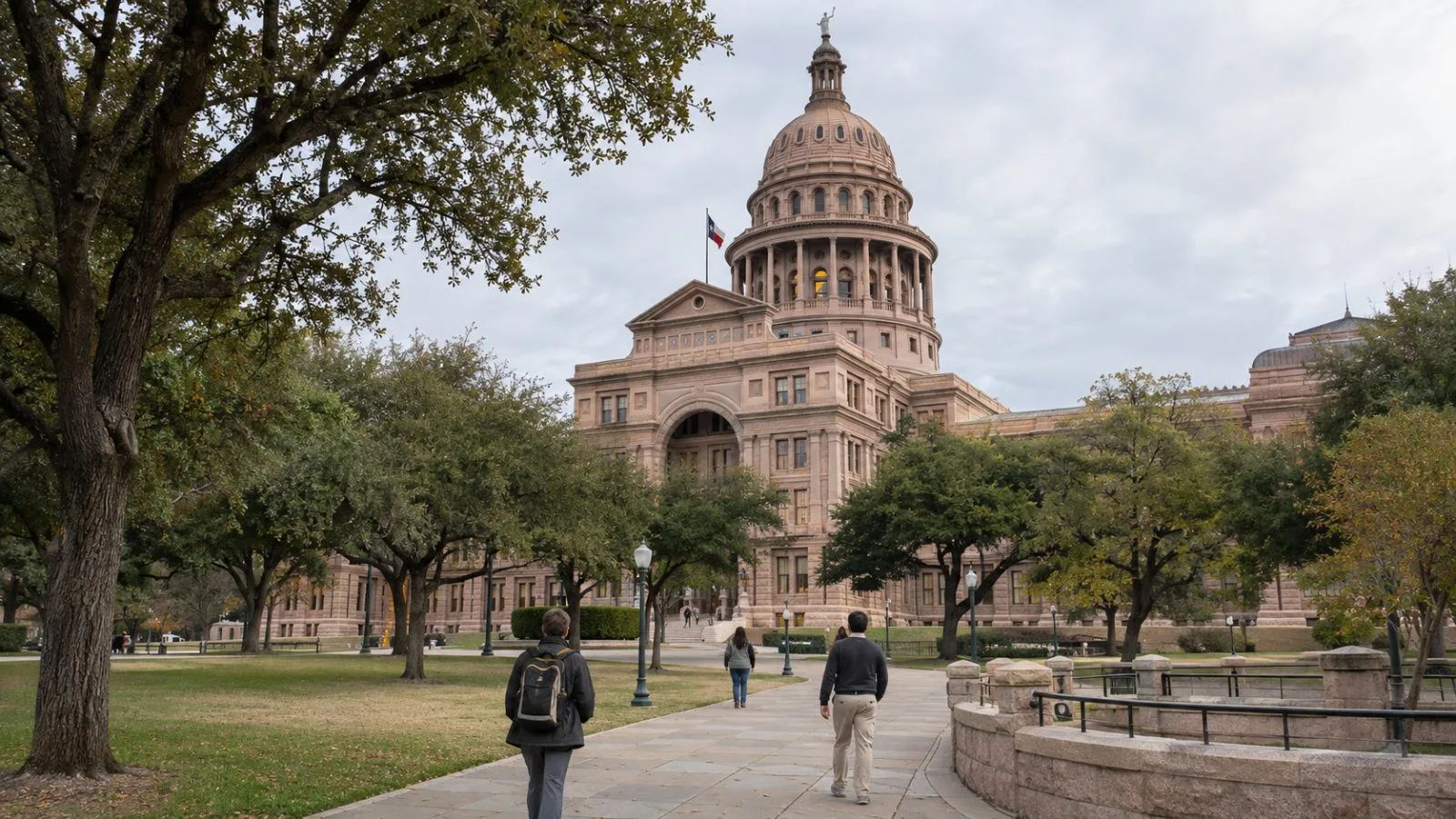
U.S. Oil & Gas Association President Tim Stewart warned that Texas could face economic harm if it adopted energy rules modeled on California, after state results listed Democrats ahead in the governor's and U.S. Senate races.
In a Nov. 5 interview with Fox Business, Stewart said, “The absolute worst thing that could happen to the United States economy would be to have California-style energy policy implemented in Texas.” The interview did not identify a specific Texas proposal that would bring about such a change.
The Texas Secretary of State's Nov. 4 results page showed Gov. Greg Abbott with 4,524,527 votes and Gina Hinojosa with 5,230,789; all polling locations were reporting. In the U.S. Senate race, Ken Paxton had 4,249,373 votes and James Talarico had 5,444,982. The page did not say the results were certified.
Reuters also reported Democratic gains in four other statewide contests tied to public finances and natural resources. EconoTimes previously covered those results in its report on Texas' statewide races.
The Texas Oil & Gas Association said the industry paid $27.0 billion in state and local taxes and state royalties in fiscal 2025. The group reported more than 495,500 industry employees and estimated that the sector supported nearly 1.4 million jobs statewide. It said the payments help fund schools, roads and first responders. The $27.0 billion total covers taxes and royalties, not the industry's overall value.
Fox Business reported that Stewart cited a 25% to 40% fall in Colorado oil production without specifying a time period. U.S. Energy Information Administration data show crude oil output declined from 192.227 million barrels in 2019 to 153.842 million in 2021, about 20%, then rose to 167.762 million barrels in 2023. The figures do not establish what caused the decline.
Colorado's 2019 Senate Bill 19-181 changed the state regulator's mission and gave local governments authority over aspects of oil and gas operations, including facility siting. The law's framework also includes public health, safety, environmental and wildlife protections.