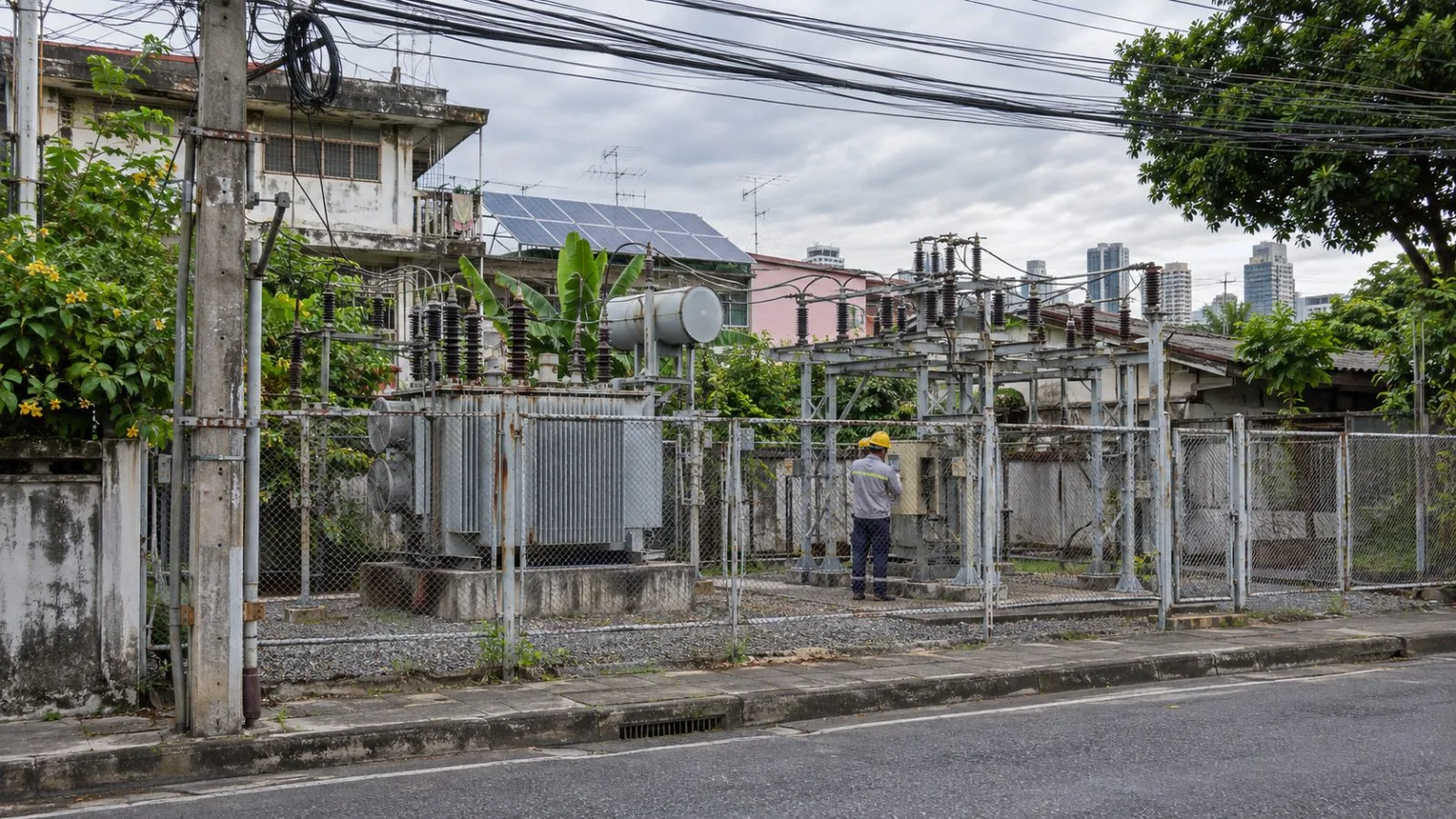
Thailand’s clean-energy expansion will require grid upgrades to balance variable renewable output and keep power reliable and affordable, researcher Areeporn Asawinpongphan said, according to the Bangkok Post.
The Bangkok Post traced the appeal to a Facebook post by Asawinpongphan, a research fellow whose work focuses on energy policy at Thailand Development Research Institute. It quoted her as saying, “Immediate public and private investment is needed.”
The report said she urged the government to put a substantial share of the 200 billion baht borrowing program toward electricity-network upgrades, smart meters, energy storage and improved building efficiency. Digital controls and two-way data links can help balance electricity moving between generators and customers. A virtual power plant (VPP) combines distributed sources, such as home solar arrays, so their output can be supplied to the national grid.
Weather-driven changes in solar and wind generation can make it harder to keep the grid balanced as renewable power expands. Asawinpongphan also called for clearer accounting of renewable-energy funds, warning that large corporations could capture a disproportionate share of the benefits.
The Bangkok Post reported that the proposed rooftop-solar scheme would offer households subsidies capped at 50,000 baht and let them sell excess electricity to the grid for 2.20 baht per unit. Industry sources cited by the newspaper raised concerns about hidden costs and lengthy licensing procedures that could discourage participation. Some executives also questioned whether the program would distribute benefits fairly across the sector.
Asawinpongphan questioned the government’s reliance on carbon capture and storage (CCS) to meet Thailand’s 2050 net-zero greenhouse gas goal, the Bangkok Post reported. She said the technology remains costly and could put upward pressure on electricity prices over time, according to the report. The new power plan is designed to guide Thailand’s energy development from 2026 to 2050, the Bangkok Post reported.