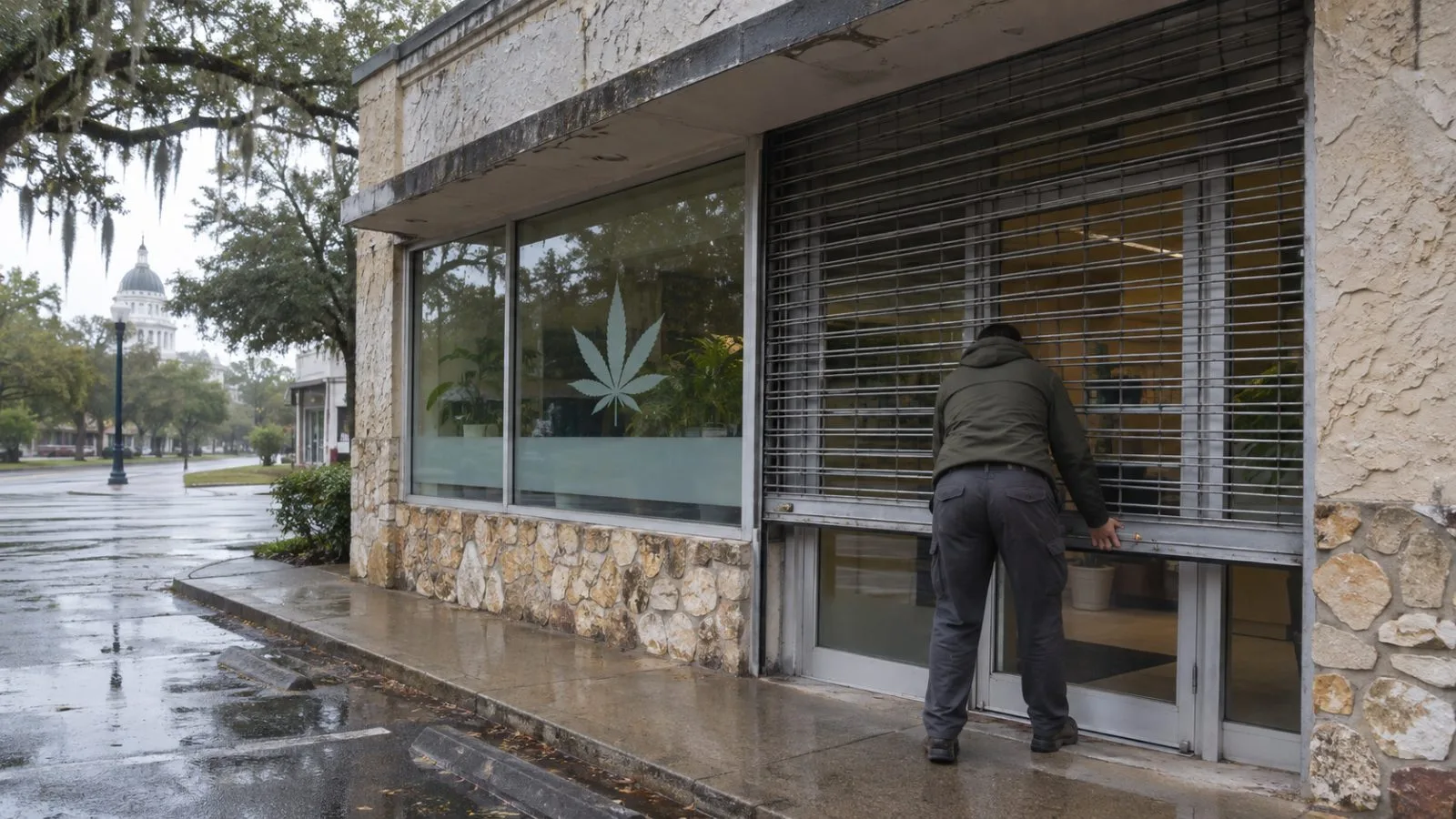
Trulieve Cannabis Corp. said Nov. 2 it received federal registrations for medical marijuana dispensaries, but gave no count or locations, limiting what is known about the scope of the new approval process.
On Oct. 30, the U.S. Department of Justice (DOJ) said the Drug Enforcement Administration (DEA) had started issuing more than 900 dispensary registrations in Alabama, Florida, Mississippi, South Dakota, Texas, Virginia and West Virginia. The DOJ did not identify the recipient businesses.
Trulieve’s second-quarter filing reported 206 dispensaries as of June 30: 169 in Florida, 21 in Pennsylvania, 10 in West Virginia and six in Georgia. The filing said the company had applied for DEA registration for all its state-licensed medical operations in those four states. Its Nov. 2 statement did not say which applications had been approved or whether the registrations cover all or part of that footprint.
The DEA’s public applicant list gives each applicant’s state, business activity and control number, but not its name. The agency says the list can change as registrations are issued, applicants withdraw or timely-applicant status lapses.
An April 28 final order set up a faster federal registration route for state-licensed medical marijuana operations. It does not authorize recreational sales. Dispensaries had to pass a DEA pre-registration investigation before receiving registration; registered businesses must then follow federal safeguards for security, recordkeeping and inventory.
The order says Section 280E’s restriction on federal business deductions will no longer apply to state licensees. It does not determine any individual company’s tax liability, and Trulieve has not estimated a tax benefit. In the company’s statement on federal reclassification, Chief Executive Officer Kim Rivers said it “opens the door for clinical research” and would give responsible operators a more even competitive position.
The DEA plans to process additional dispensary registrations in stages. It is also reviewing manufacturer and distributor applications, work that includes facility inspections, production controls and quota decisions; the DOJ gave no timetable for later phases.