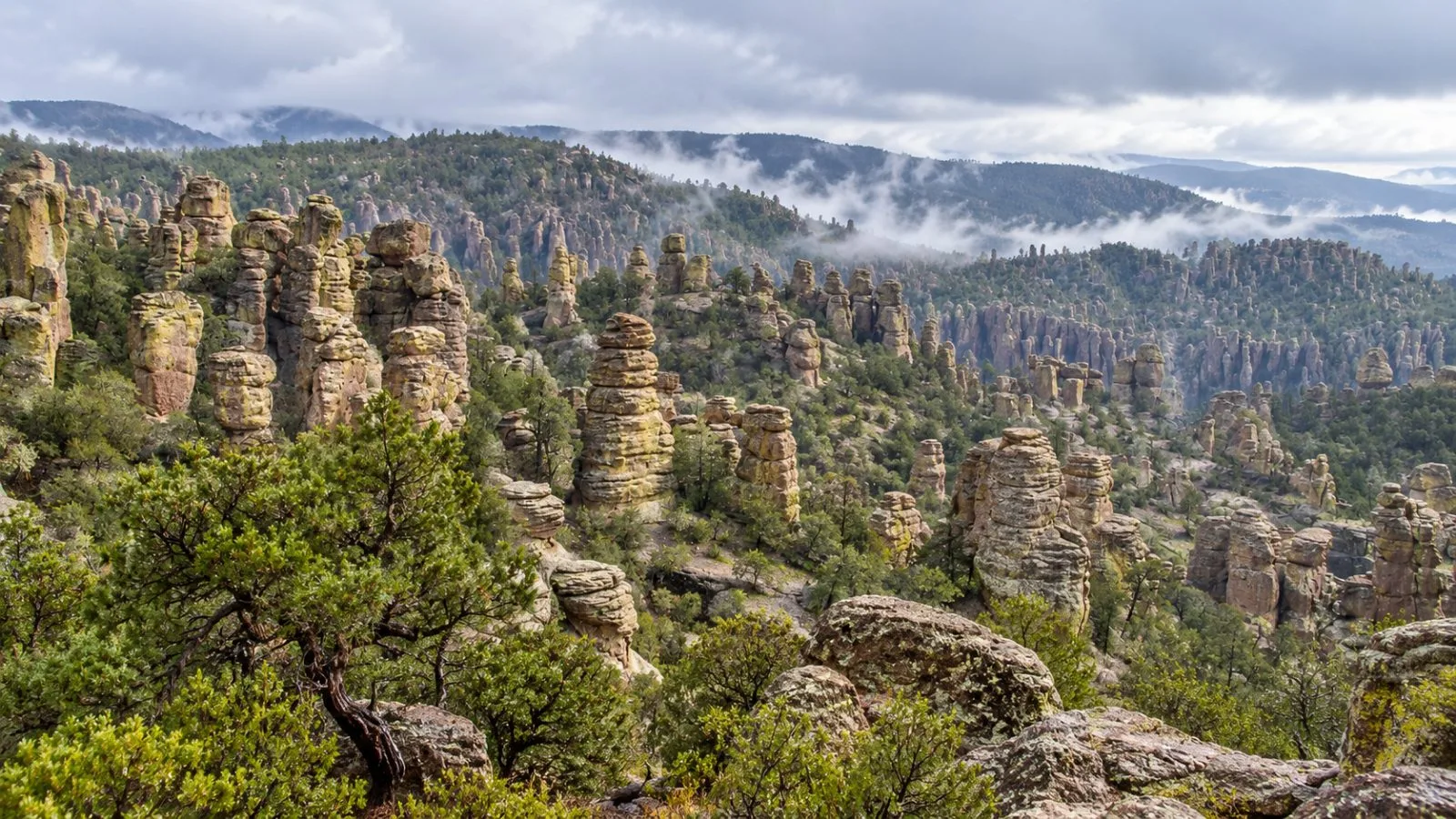
President Donald Trump signed a law Tuesday, Oct. 20, redesignating southeastern Arizona’s Chiricahua National Monument as a national park while preserving its boundaries and setting tribal access protections.
Congress completed work on the bill Sept. 30, when the Senate approved it by unanimous consent. The House had advanced H.R. 6380 on March 16 through a rule requiring two-thirds support, with lawmakers from both parties speaking for it. The National Archives lists the enacted measure as Public Law 119-133.
The House Natural Resources Committee said in its report that the bill would make Chiricahua the nation’s 64th national park and Arizona’s fourth. The National Park Service says the protected area covers about 12,000 acres near Willcox.
The law sets the park’s boundary at the monument’s limit on the date of enactment and makes funds available for the monument available to the park. The Congressional Budget Office estimated implementation would cost less than $500,000 from 2026 through 2031, subject to appropriations. It said the redesignation would not change ownership or management.
The statute directs the Interior secretary to consult tribes and protect traditional cultural and religious sites. It requires access for tribal members for traditional cultural and customary uses. At a tribe’s request, the secretary may temporarily close areas to the public; each closure must cover the smallest practicable area and last the minimum necessary time.
The area has been a national monument since 1924, according to the National Park Service. In 2024 testimony on an earlier bill, San Carlos Apache Tribe Deputy Attorney General Justine R. Jimmie raised concerns about tourism’s potential effects on cultural resources and access. A House committee report said local supporters expected national park status to increase visitation and benefit nearby gateway communities. Interior Secretary Doug Burgum said the designation could bring more visitors and support local economies.