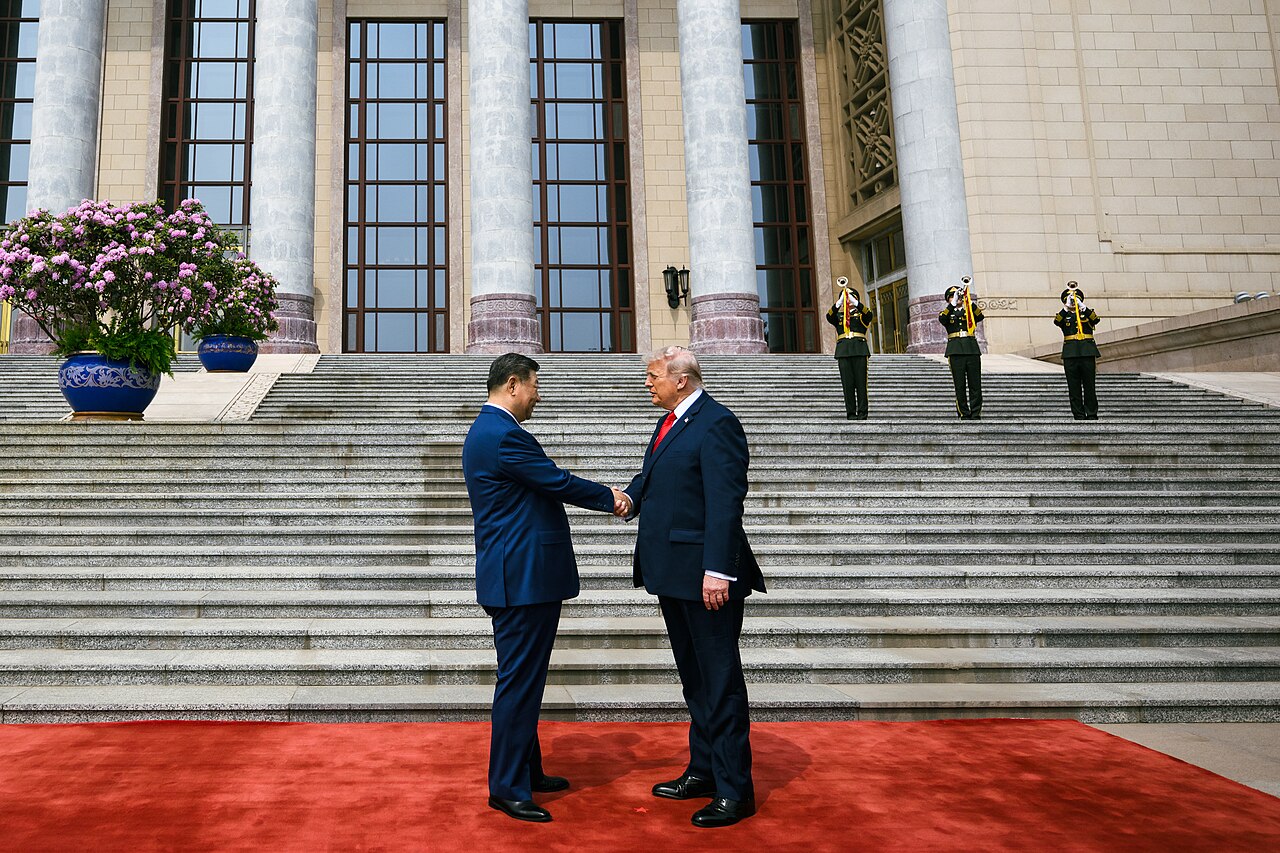
U.S. President Donald Trump is set to accompany Chinese President Xi Jinping to the National Archives on Friday, extending a high-profile Washington visit that has highlighted both cooperation and persistent tensions between the world’s two largest economies.
The visit follows Thursday’s White House state summit, which featured extensive ceremony but produced no publicly announced breakthrough on major disputes. Trump pointed to progress through a bilateral trade mechanism, including what he described as greater market access for U.S. farmers and ranchers. Both leaders also identified artificial intelligence as a potential area for U.S.-China cooperation.
At the National Archives, Trump said Xi would view major U.S. historical documents, including the Declaration of Independence, Constitution and Bill of Rights. The leaders are also expected to see artifacts documenting the history of U.S.-China relations and cultural exchanges.
China has not publicly detailed its expectations for the visit. Analysts have suggested Xi could take particular interest in historical records surrounding Washington’s 1979 decision to establish diplomatic relations with the People’s Republic of China and end formal recognition of Taiwan.
Taiwan remained a key issue during Thursday’s talks. According to China’s state news agency, Xi urged Washington to “handle the Taiwan question with prudence” and expressed hope that the U.S. would oppose Taiwan independence.
The United States does not maintain formal diplomatic relations with Taiwan but remains its most important international supporter and is required under U.S. law to provide the island with defensive capabilities.
Trump’s approach to Taiwan is being closely watched after his administration approved an $11 billion arms package in December. Following a May meeting with Xi, Trump said another package worth about $14 billion had been put on hold, describing it as a negotiating tool.
Craig Singleton of the Foundation for Defense of Democracies said Beijing may increasingly view Washington’s restraint on Taiwan arms sales as a new baseline rather than a temporary pause.
Senate Democrats criticized Thursday’s summit, arguing Trump had not obtained significant concessions from China on trade, security, AI or human rights. They also called for approved U.S. military assistance and arms sales to Taiwan to move forward.