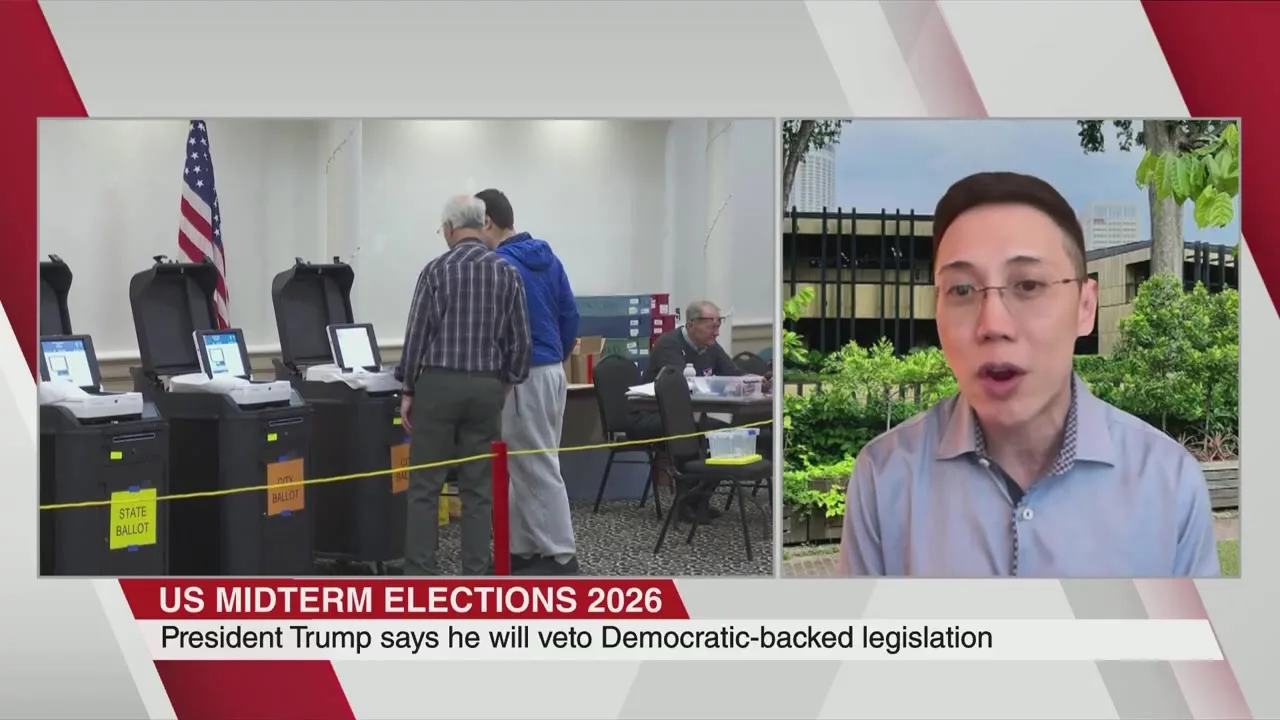
A veto could stall legislation under a Democratic-led Congress, but the Constitution gives lawmakers a route to enact a bill over U.S. President Donald Trump’s objections: two-thirds of members voting in both chambers must vote to pass it again.
The Associated Press reported Wednesday that Democrats had at least 54 Senate seats and a House majority above the 218-seat threshold, while some races remained uncalled. The results would give Democrats greater power over legislation and congressional oversight.
After both chambers approve the same bill, the president may sign it or return it to the chamber where it began with objections. Members can reconsider the bill, and an override succeeds if two-thirds of members voting in each chamber vote to pass it again. If every seat votes, that would mean 290 votes in the 435-member House and 67 in the 100-member Senate.
The president has 10 days, excluding Sundays, to return a bill. If Congress remains in session and the president does not return it within that period, the bill becomes law without a signature. If an adjournment prevents the bill’s return, it does not become law; that is known as a pocket veto.
In a phone interview with CBS News before polls closed Tuesday, Trump called veto power “the ultimate power” and said he expected repeated vetoes to bring Democrats to negotiations. He had described his veto strategy in earlier remarks. During Fox News’ election-night coverage, he said he would veto bills he considered “insane.”
A president cannot use a veto to cancel selected parts of an enacted law. In 1998, the Supreme Court ruled in Clinton v. City of New York that such cancellations violated the Constitution’s Presentment Clause.
Senate records list two vetoes by Trump in his second administration, both issued in 2025. The House sustained both on Jan. 8, 2026, in votes of 248-177 and 236-188. The new Congress is scheduled to begin Jan. 3, 2027.