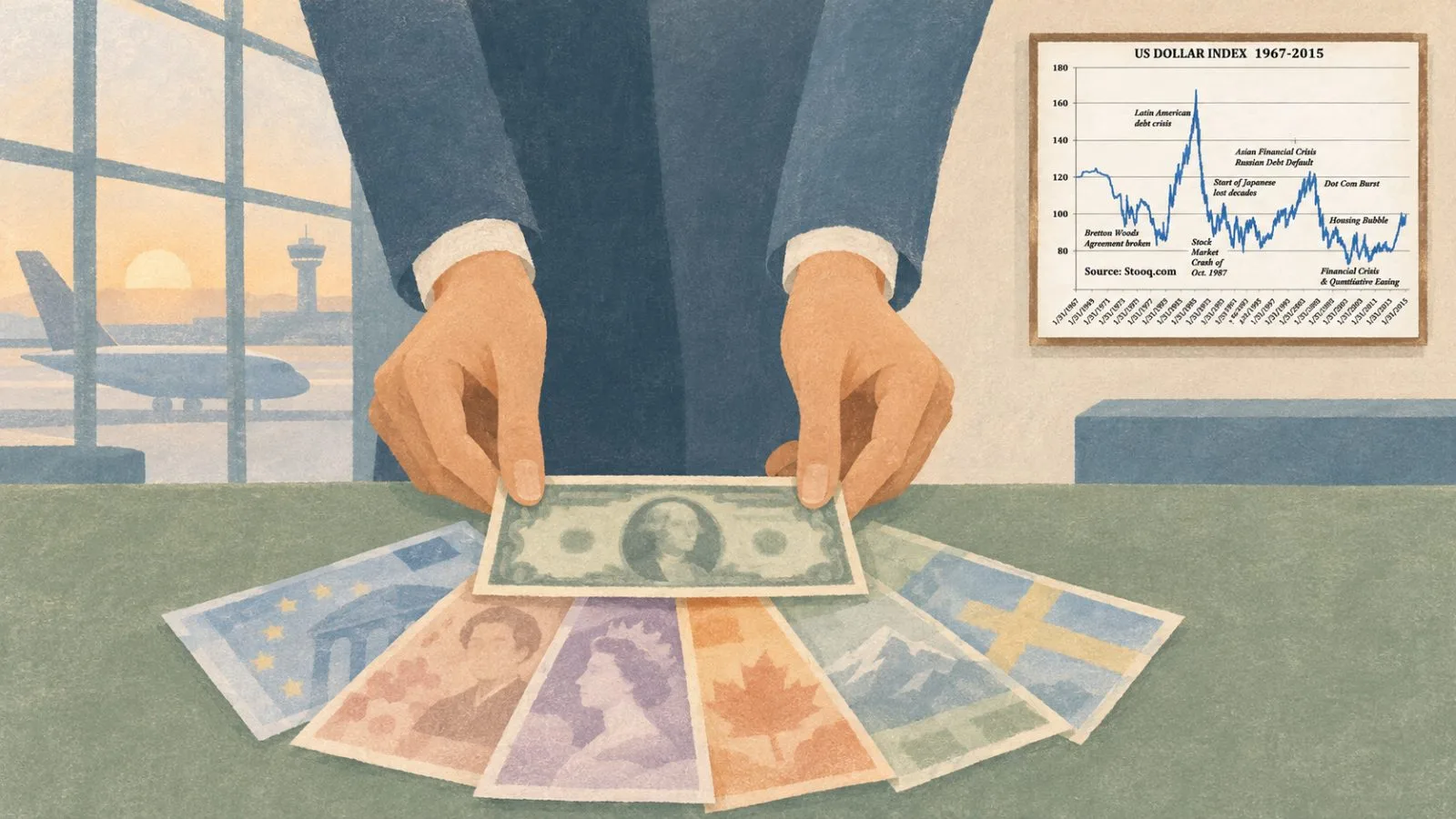
Two reported readings of the U.S. Dollar Index fell within a range ING had outlined before October payroll data showed stronger-than-average job growth, linking the labor report with near-term currency positioning.
The Bureau of Labor Statistics (BLS) said payroll employment increased by 165,000 in October, compared with an average monthly gain of 48,000 over the previous 12 months. Unemployment was 4.1%, down from 4.2% in September. The largest job gains were in professional and business services, health care, and transportation and warehousing.
Charles Schwab’s market update, published as of 9:15 a.m. ET Friday, listed the U.S. Dollar Index (DXY) at 102.22, up 0.66% that day. Reuters later reported a reading of 102.26, up 0.77%. Both reported levels were inside the 101.50–102.50 range ING had projected before the release. They are separate snapshots and do not describe the index’s full path during the day.
Average hourly earnings for private nonfarm employees rose 14 cents, or 0.4%, to $38 in October, and were up 3.1% from a year earlier. The BLS also revised August and September payroll estimates upward by a combined 84,000. EconoTimes previously covered the October payroll report.
Before the data, ING analyst Chris Turner said a solid jobs report could support short-term U.S. interest rates and the dollar. He said short-dated rates had fallen close to 50 basis points since late September and that near-4% rates on one-week deposits supported the currency in ING’s assessment.
Turner said foreign exchange had moved only modestly during the technology-stock sell-off. He added that market participants appeared to regard the decline as sector-specific rather than a broad signal about U.S. growth and inflation. “Expect defensive FX to outperform, rather than a broad dollar decline,” he wrote.
The BLS has scheduled its November Employment Situation report for Dec. 4 at 8:30 a.m. ET.