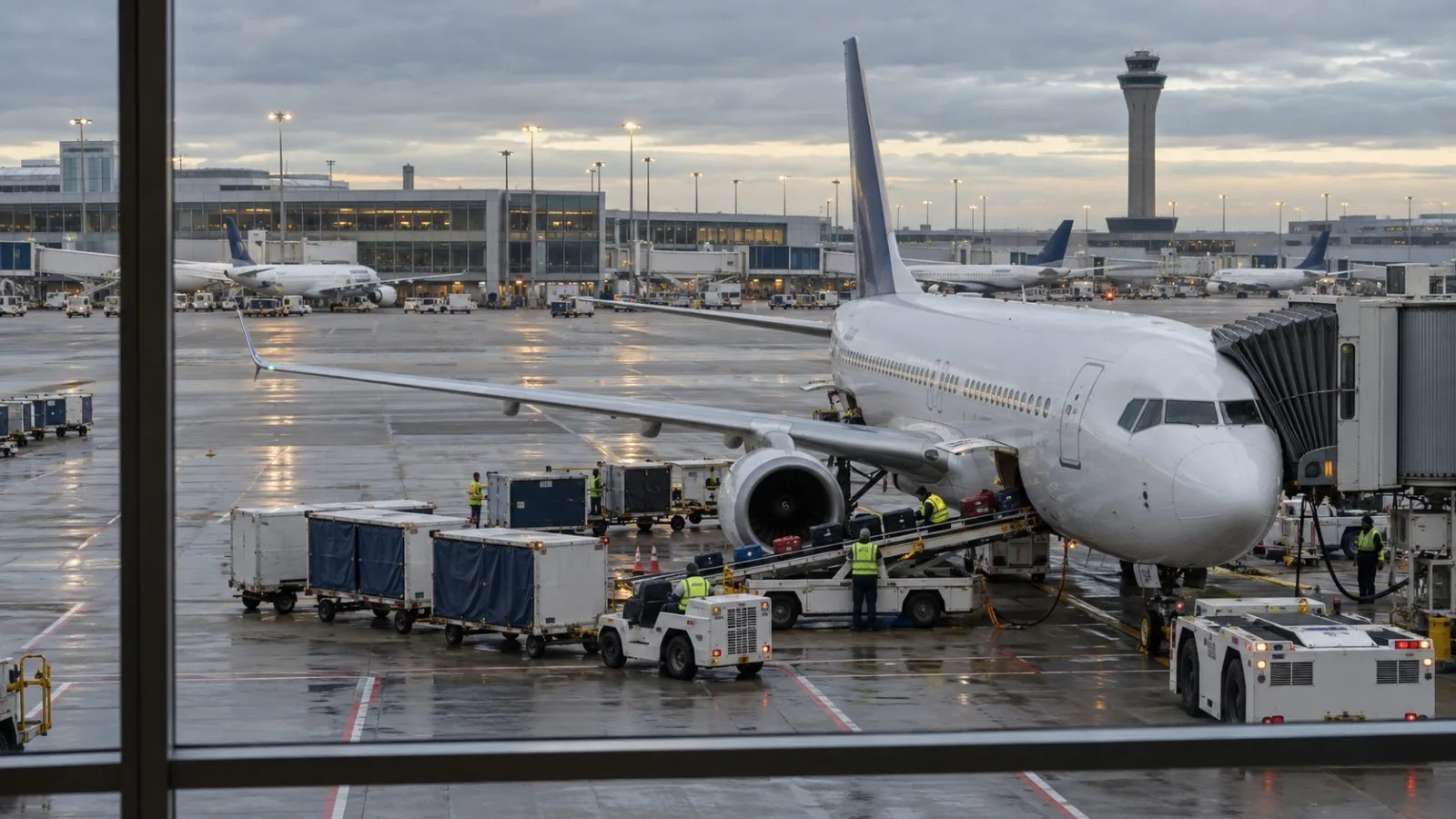
Southwest Airlines, United Airlines and American Airlines reported different third-quarter passenger and capacity results as the U.S. airfare index rose 22.4% year over year in September.
The index also rose 1.2% from August. Consumer prices overall increased 3.7% over 12 months. The airfare measure reflects movement in prices over time; it does not give the dollar amount for a typical ticket.
Southwest’s average passenger fare was $231.69 in the third quarter, a 26.9% year-over-year increase. The airline carried 33.467 million revenue passengers, 3.2% fewer, even as operating revenue grew 21.2% to $8.422 billion. Capacity slipped 0.4%, while operating revenue per available seat mile climbed 21.6% to 18.55 cents.
Passenger revenue grew 22.8%. Southwest Airlines President and CEO Bob Jordan said, “Demand remained strong as we lapped last year’s bag fee and other commercial initiatives.” Southwest’s paid options include checked-bag fees, assigned seating and extra-legroom seats.
United Airlines handled 49.527 million passengers, a 2.4% increase, as its capacity grew 1.3%. The carrier’s total revenue per available seat mile advanced 15.9%.
American Airlines raised capacity by 4.2% while a smaller proportion of seats filled: 83.4%, down 2.6 percentage points. Its premium products occupied about 30% of seats yet brought in about half of ticket revenue, with revenue from that category 22.9% higher.
Southwest’s fuel outlay was $821 million higher than a year earlier, a 61.7% increase. Its average fuel cost was $3.92 per gallon, up from $2.40. American ended the third quarter with a $269 million net loss and projected its 2026 adjusted loss per diluted share at $1.00 to $1.60. American Airlines CEO Robert Isom said high fuel prices “significantly impacted” results and said the carrier remained focused on “restoring profitability.”