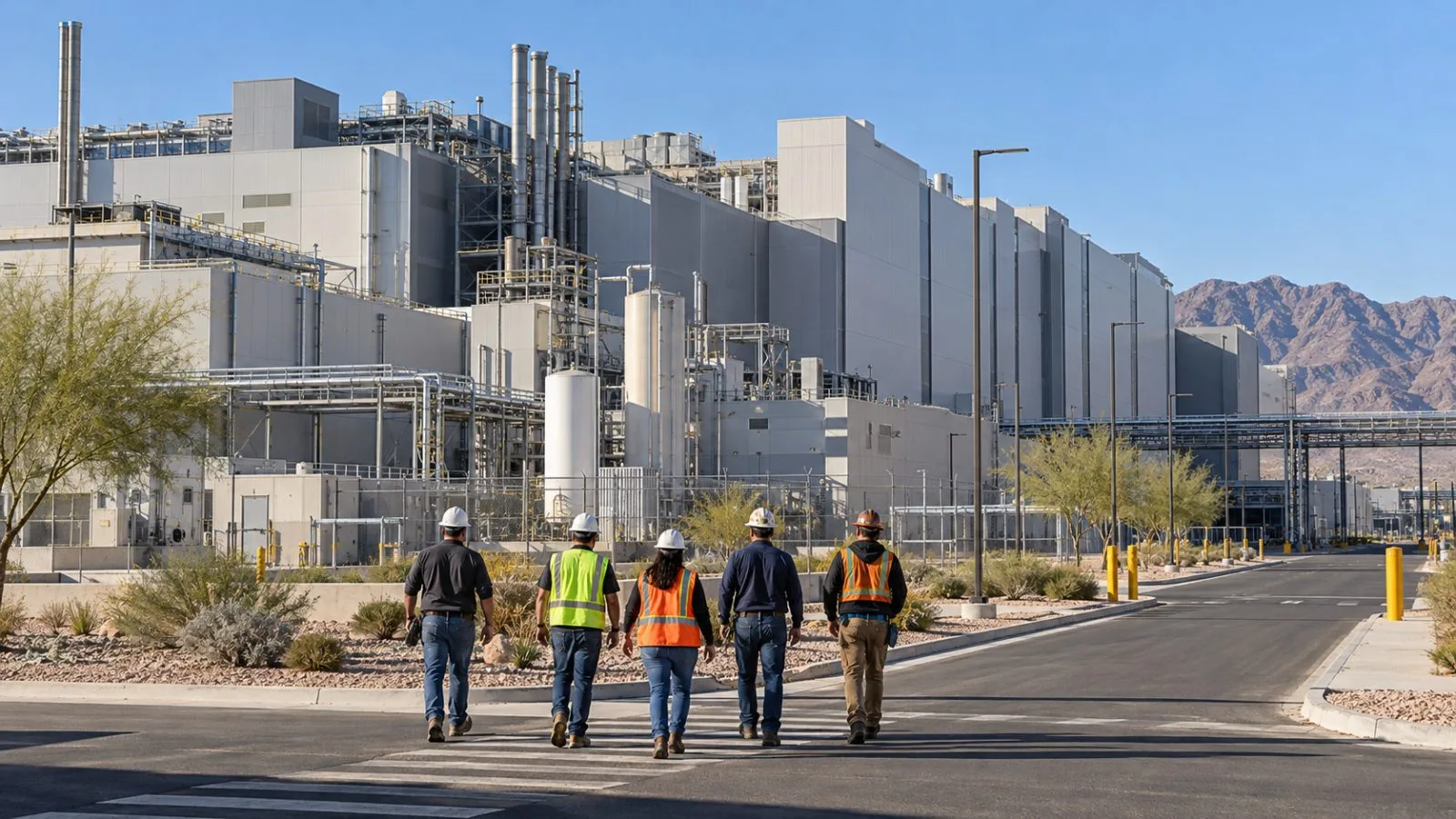
U.S. factory construction fell in August and clean-technology investment weakened in the third quarter, even as operating projects increased, showing a mixed pace for the industrial buildout.
Private manufacturing construction spending stood at a seasonally adjusted annual rate of $168.2 billion in August 2026, down 19.8% from August 2025, the U.S. Census Bureau reported. The bureau labeled the estimate preliminary and said it does not account for price changes.
Two major federal industrial laws became law in August 2022. The CHIPS and Science Act, signed Aug. 9, supported semiconductor manufacturing and research; the Inflation Reduction Act, signed Aug. 16, used tax incentives to encourage clean-energy investment. A Federal Reserve Bank of Boston analysis of Census data measured private manufacturing construction at $79 billion in June 2021 and $236 billion in June 2024, both seasonally adjusted annual rates. Those figures track a rise but do not establish how much either law caused.
Rhodium Group and the Massachusetts Institute of Technology’s Clean Investment Monitor counted 418 operating U.S. solar, wind, battery and electric-vehicle manufacturing projects in the third quarter of 2026, up from 305 in the first quarter of 2025. Yet the monitor estimated clean-technology manufacturing investment at $7 billion in the third quarter, 11% below the second quarter. No quarter since Q1 2023 registered a smaller total. New project announcements fell to about $2 billion from $11 billion in the second quarter.
For example, Taiwan Semiconductor Manufacturing Company Limited (TSMC) said its first Arizona site began high-volume production of 4-nanometer technology in the fourth quarter of 2024.
Public chip awards offer another measure of progress. The Government Accountability Office (GAO) reported that the Commerce Department had disbursed $13.1 billion of $31.2 billion in direct awards by April 2026. Nine of the milestones GAO assessed were past their anticipated dates; that count excludes Intel’s milestones under the terms of its amended award. Another 125 remained in progress. Companies receive the funds under project award terms, while taxpayers finance the direct awards.
The Internal Revenue Service (IRS) says clean-vehicle credits under sections 25E and 30D are unavailable for vehicles acquired after Sept. 30, 2025. The Census Bureau scheduled its next monthly construction-spending release for Nov. 2, 2026.