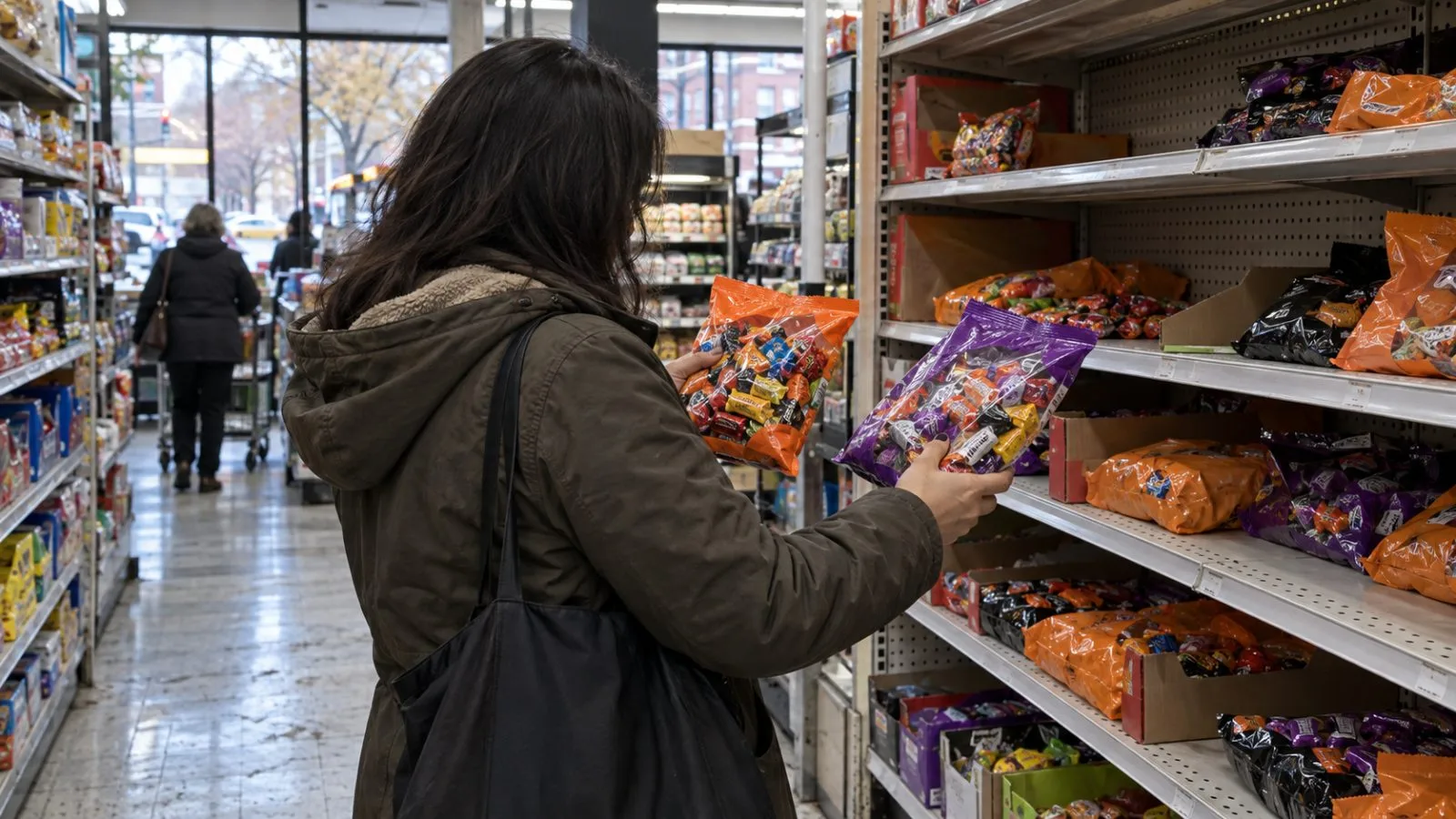
U.S. Halloween spending is forecast to set a record $13.5 billion in 2026, while the average planned budget rises only 69 cents per person as candy prices outpace overall inflation.
The National Retail Federation (NRF) survey estimates average spending at $115.14 per person, up from $114.45 in 2025. It found that 74% plan to celebrate, compared with 73% last year. The NRF projects $4.1 billion for candy, $4.4 billion for costumes and $4.3 billion for decorations. Prosper Insights & Analytics conducted the survey among 7,889 consumers from Sept. 1-9, 2026.
U.S. Bureau of Labor Statistics (BLS) data show the candy and gum category climbed 7.7% over the 12 months ending in September 2026. The overall consumer price index increased 3.7% over the same span. The BLS measure covers candy and gum generally; it does not isolate Halloween products or chocolate.
A separate retail check by FinanceBuzz found that the average price of a full-price, assorted 100-piece Halloween candy bag was $16.96 in 2026. The analysis covered bags at Walmart, Target, Kroger and Albertsons, and put the average 3.5% above 2025 and 71% higher than in 2021.
The International Cocoa Organization (ICCO) reported a seasonal average of $6,612 per tonne for its indicator price in 2024/25, 39% above the previous season. ICCO linked a late-2024 surge to weaker arrivals, weather shocks and low stocks. Prices declined from January 2025 as demand softened, supply improved and inventories grew.
USA TODAY reported that David Branch, a sector manager at Wells Fargo Agri-Food Institute, said much of the cocoa used in candy on store shelves this season had been bought by manufacturers six to 12 months earlier, when cocoa prices were near record levels.
CBS News quoted Cortland Hickey, general manager of Chicago Costume, linking costume price pressure to transportation and order-fulfillment expenses, including diesel and fuel surcharges. The NRF found that 79% of surveyed consumers expected tariffs to raise Halloween item prices; that figure measures expectations, not tariffs' actual effect.
Separately, NielsenIQ data cited by The Associated Press showed candy sales were down 6.7% in the month ending Oct. 17, 2026, compared with the same period a year earlier. That monthly sales measure differs from the NRF's survey-based forecast for spending across the Halloween season.