U.S. studies of building-code changes estimate that some multifamily requirements raise construction costs, while selected single-family revisions may save money, underscoring how effects depend on the rule and building.
Michael D. Eriksen, Deniz Besiktepe and Claudio Martani modeled revisions to the International Building Code for a three-story apartment building. Their working paper, posted to SSRN on May 16, 2026, reviewed 130 revisions affecting multifamily housing that the International Code Council adopted from 2012 to 2021. The researchers estimated that 16 revisions increased national average construction costs by 9.9% compared with a 2009 baseline. Fire-protection provisions accounted for 67% of the dollar-weighted increase. The model held material prices and labor productivity at 2024 levels.
The researchers estimated that the revisions would raise monthly break-even rent for a two-bedroom apartment by $134 to $222 across the most populous city in each state. Those are modeled figures based on local land prices and capitalization rates, not observed rent changes. The paper says the modeled affordability burden falls disproportionately on renters in lower-income, noncoastal markets.
The International Building Code is a model code that state and local governments must adopt to make it law. Jurisdictions can amend it, so requirements vary by location.
A Home Innovation Research Labs report prepared for the National Association of Home Builders compared selected changes in the 2024 International Residential Code with the 2021 code. For four reference houses, each 2,607 square feet, the report estimated savings of $13 to $2,227 from the selected changes outside energy-efficiency and existing-building provisions. The analysis covered selected changes and locations, not all new homes.
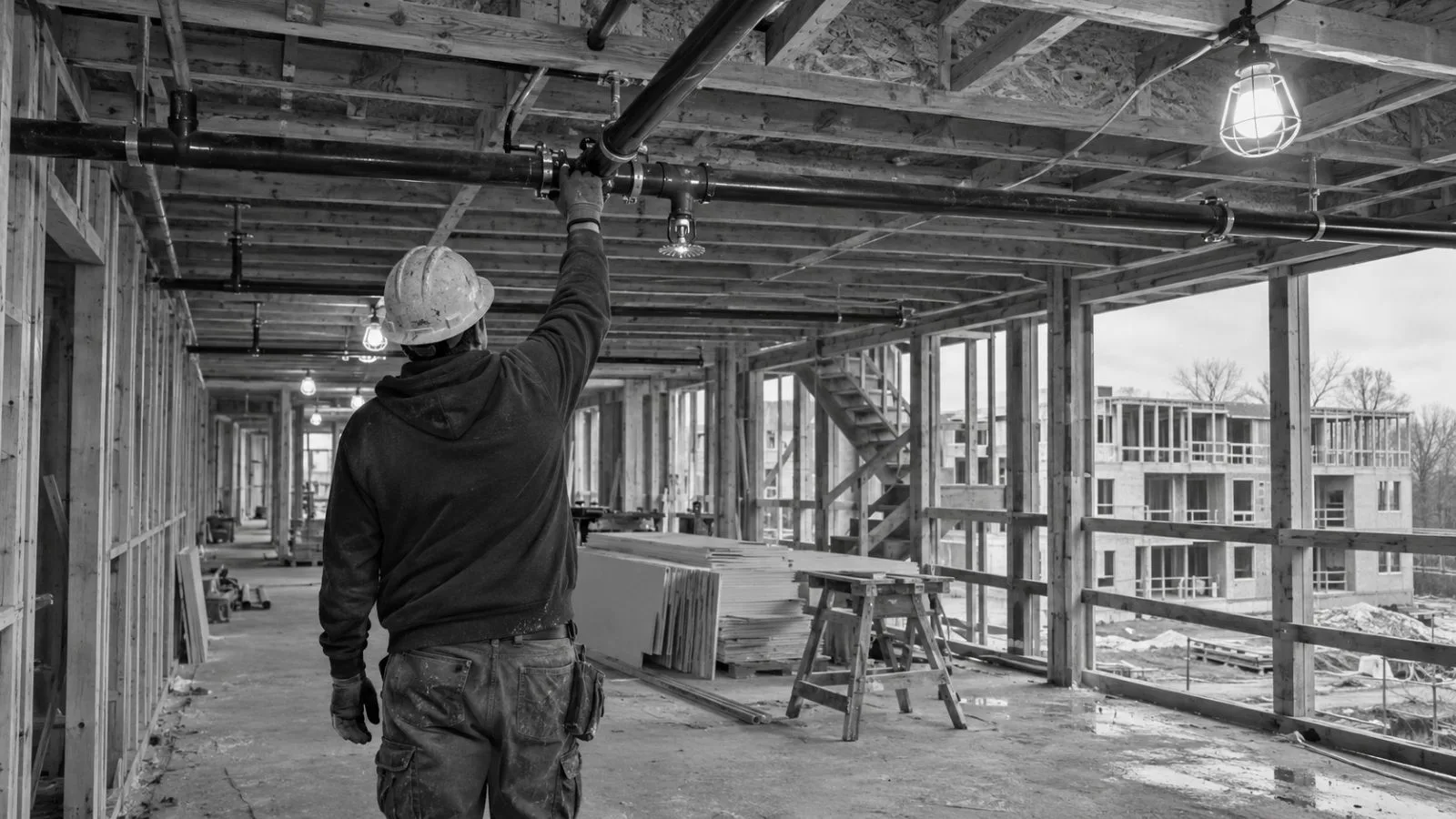
A 2007 National Institute of Standards and Technology (NIST) assessment examined newly constructed single-family houses fitted with a multipurpose network fire sprinkler system. In 2005 dollars, it estimated net benefits of $2,919 for a colonial-style house, $3,099 for a townhouse and $4,166 for a ranch-style house, including modeled reductions in fire risk and related economic benefits. NIST said residents could benefit from fewer fatalities and injuries, lower insurance premiums and fewer uninsured losses, while homeowners bear the initial purchase and installation costs.
The studies use different buildings, code provisions and methods. Their estimates do not establish an overall effect of building codes on U.S. housing prices or rents.