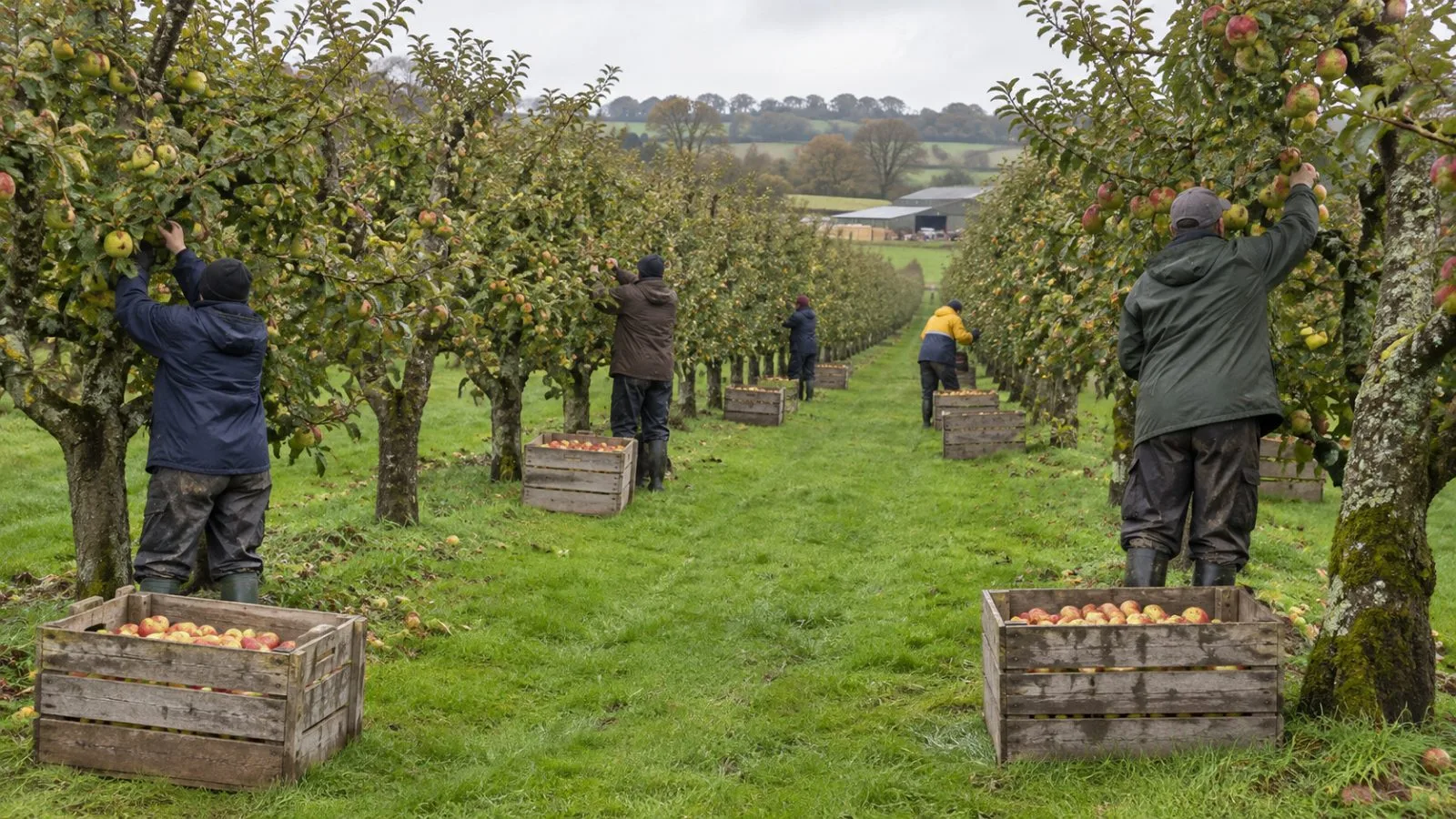
Thatchers Cider is testing about 100 apple varieties at its Somerset farm to guide future production as record summer heat and swings in rainfall complicate long-term orchard planning.
According to Thatchers’ 122-year records, its 2026 harvest began earlier than any before it. Picking started 10 days ahead of the previous record, set in 2025. The company said heat played a part in the timing and left early apples slightly smaller.
Thatchers also reported a slight yield reduction, which its cider maker attributed to the changing harvest timetable. The company said the fruit remained suitable for cider.
The United Kingdom’s summer mean temperature reached a provisional record 16.5°C, the Met Office said. England received 64% of its average summer rainfall, following southern England’s fourth-wettest winter in the agency’s records. Those regional figures do not measure conditions at Myrtle Farm.
At the farm, Thatchers is assessing about 100 varieties across 40 acres (about 16 hectares). It is examining how the trees grow, respond to weather and disease, and produce fruit suitable for cider. A separate collection at the farm holds 458 varieties.
The planting decision has a long lead time: Thatchers says a new orchard can take nine to 10 years from planting to produce its first crop suitable for cider. The company expects the trials to inform future planting at its own orchards and those run by 27 growers under long-term contracts.
The Guardian reported that Myrtle Farm is adding wildflower strips to provide habitat for insects that feed on orchard pests. The farm’s orchard manager also identified jonagold as a strong-growing variety in this year’s trials, the newspaper reported.
A 2025 study in the Journal of Agricultural Economics modeled a £2,997 increase in annual margin per hectare for a hypothetical flower strip through the center of a dessert-apple orchard in a high-aphid year. That calculation is neither a measured saving at Myrtle Farm nor an estimate for cider orchards. The variety trials will give Thatchers information for its next planting choices.