Public electric-vehicle charging prices in the UK rose as much as 94% in real terms from 2021 to 2026, a government-backed review found, raising costs for drivers without home charging.
Prices for lower-powered public chargers rose 69%, the review said. Independent review chair Philip New led the study for the Department for Transport (DfT), the Department for Energy Security and Net Zero (DESNZ) and HM Treasury. It was published Wednesday, Oct. 28. Both figures are stated in real terms, after inflation.
Fixed expenses, especially electricity network charges, contributed more to the price increases than higher electricity prices, the review said. Charging infrastructure expanded ahead of use, leaving fewer charging sessions across which operators could spread those expenses.
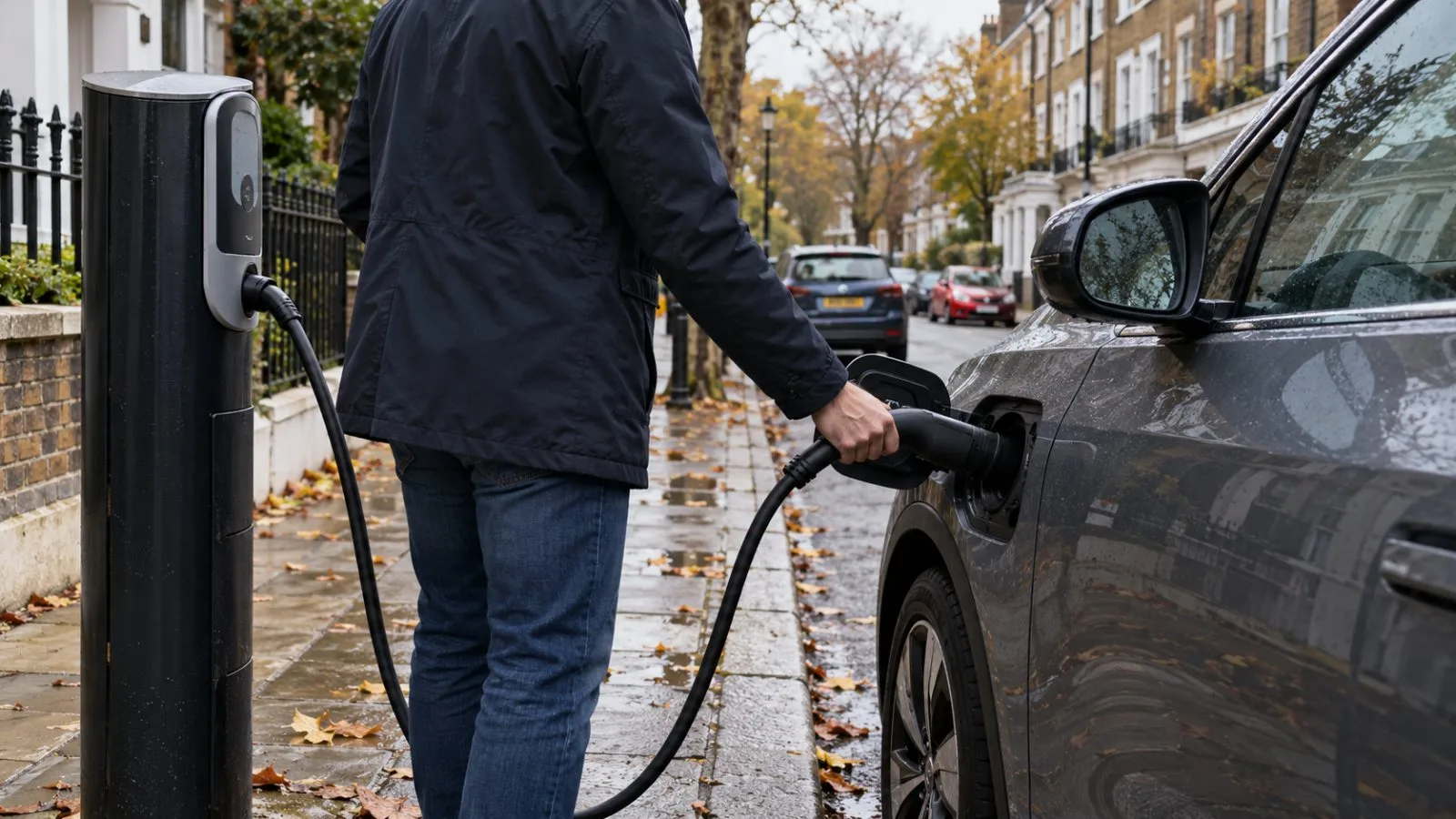
Drivers who cannot charge at home face public rates, and the review found they are more likely, on average, to have lower incomes. About one-third of UK drivers do not have access to their own driveway. The review said any funding gap could ultimately be borne by taxpayers, other electricity-system users or other motorists, without identifying which group would pay.
Among its recommendations, the review proposes a pilot that would let drivers use their household electricity tariff at some local, lower-powered public chargers. Other options include temporary financial help for drivers, changes to network charges and policy levies, renewable-electricity certificate trading for EV charging, and more support for battery storage.
Separately, the government plans to provide £100 million over two years from spring 2027 to lower costs at lower-powered public chargers near homes. It estimates drivers without home charging who rely on on-street chargers would save about £150 a year on average. An industry-led “tariff porting” task force will explore tariff portability. The DfT said it will provide further details later but gave no date; the funding is scheduled to start in spring 2027.