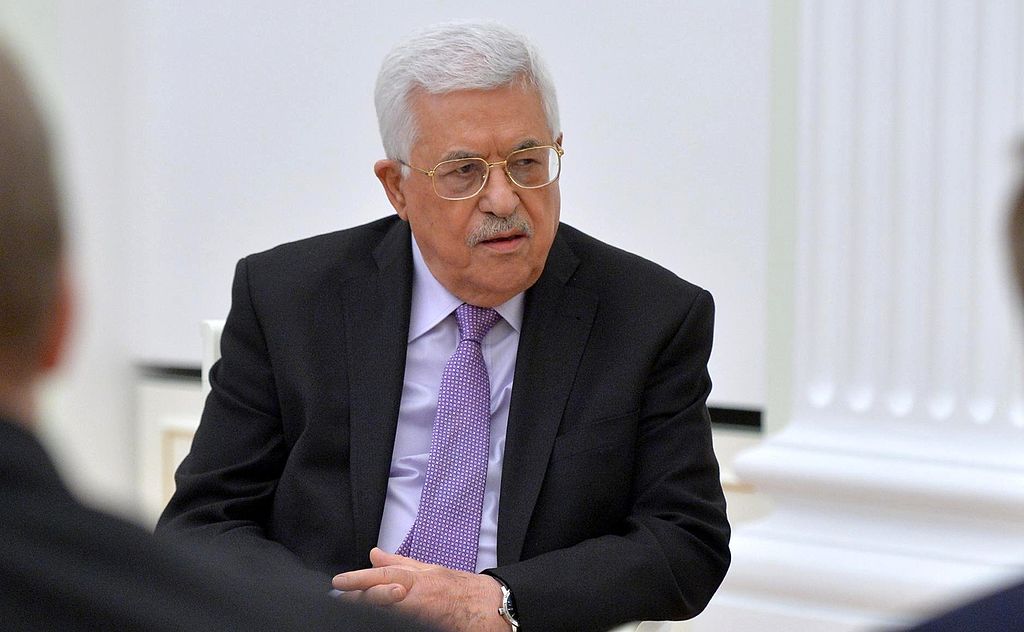
The United Nations General Assembly voted Thursday to allow Palestinian President Mahmoud Abbas to address next week’s annual gathering of world leaders by video after the United States again denied him a visa to travel to New York.
The resolution passed with 152 countries voting in favor, three opposing it and four abstaining. The measure also permits Abbas and other senior Palestinian officials to participate remotely in U.N. meetings and conferences during the next year if they are unable to enter the United States.
The decision marks the second consecutive year that Abbas has been allowed to address the U.N. General Assembly virtually because of U.S. visa restrictions.
Washington said last year that Abbas and roughly 80 other Palestinians were affected by its move to deny or revoke visas for members of the Palestine Liberation Organization and the West Bank-based Palestinian Authority. The United States announced Wednesday that it was extending the visa restrictions.
Deputy U.S. Ambassador to the United Nations Tammy Bruce defended Washington’s position before the General Assembly vote, arguing that the Palestinian Authority needed to change its policies if it wanted to be treated as a partner. She criticized what the U.S. describes as Palestinian payments linked to terrorism and the use of international diplomatic institutions against Israel.
The U.S. State Department said Wednesday that visa sanctions against Palestinian officials were being extended over efforts to “internationalize the Israeli-Palestinian conflict.” It specifically cited Palestinian moves to pursue cases involving Israel through international tribunals.
A Palestinian official, speaking anonymously, confirmed that Abbas had been denied a U.S. visa.
The dispute also raises questions surrounding Washington’s obligations as host of the United Nations headquarters. Under the 1947 U.N. Headquarters Agreement, the United States is generally expected to provide foreign diplomats with access to U.N. facilities in New York.
However, U.S. authorities maintain that visas can be denied under certain circumstances, including security, extremism and foreign policy considerations. Abbas is now expected to deliver his address remotely as world leaders convene for the annual U.N. General Assembly session.