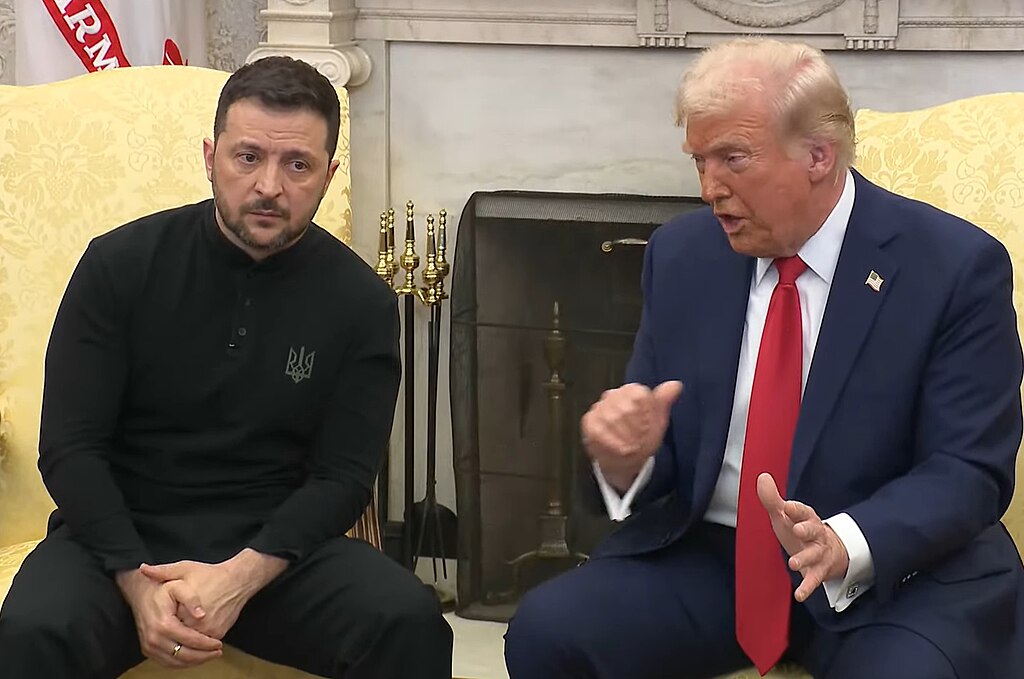
The United States has restored critical intelligence-sharing with Ukraine following a temporary suspension, Ukrainian President Volodymyr Zelenskiy confirmed on Sunday, as tensions between Washington and Kyiv deepen over US policy toward Russia.
Speaking in an interview with NBC’s Meet the Press, Zelenskiy said American intelligence assistance, essential for detecting Russian ballistic missile attacks, had been briefly interrupted before being reinstated.
"We are very thankful for this," Zelenskiy said. "Now it works."
Ukraine relies heavily on US intelligence to track incoming Russian missiles and provide early warnings to civilians and military forces. Ukrainian officials previously reported that several Russian attacks occurred without advance alerts during the disruption.
President Donald Trump had maintained earlier in the week that Washington continued sharing intelligence with Ukraine, despite reports suggesting temporary restrictions.
The restoration comes amid growing disagreements between Trump and Zelenskiy over Washington's approach to the Russia-Ukraine war.
Zelenskiy criticized recent US decisions, including an agreement to import Russian diesel and Trump's move to waive sanctions targeting Russia that were scheduled to take effect this week.
The Ukrainian leader warned that closer cooperation between Washington and Moscow could significantly weaken Ukraine's ability to resist Russian aggression.
"If the United States will officially take the side of Russia, of course if these two countries will be together, of course we will not prevail and we will not be able to stand," Zelenskiy said.
Despite these concerns, Zelenskiy expressed hope that Trump would reconsider his policies and maintain American support for Ukraine.
Trump defended his approach in a Sunday Truth Social post, arguing that his decisions were intended to prevent Russia from withdrawing from potential peace negotiations.
Meanwhile, US Treasury Secretary Scott Bessent emphasized that Ukraine continues receiving American assistance unavailable to Russia, including intelligence support and US weapons supplied through third countries.
However, Bessent declined to explicitly identify Ukraine as a US ally when questioned during his own NBC interview.
Instead, he stressed that ending the conflict through diplomacy remains Washington's priority.
"The war must end, and that will be with some kind of a negotiated settlement," Bessent said.
The developments highlight uncertainty surrounding US-Ukraine relations as Kyiv seeks continued military intelligence, stronger security guarantees and sustained international pressure on Moscow.