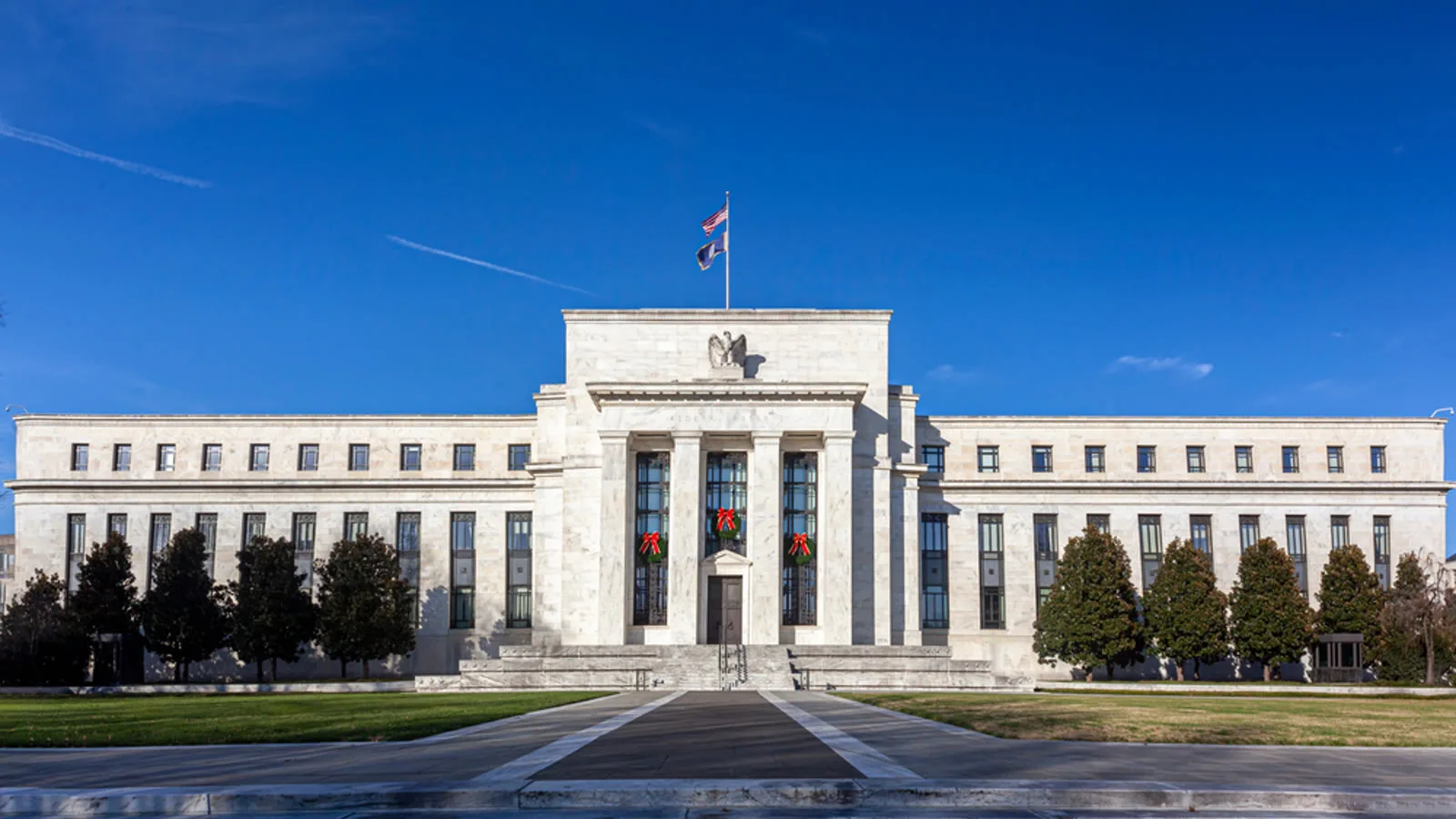
US banking vulnerability showed rising trends on three of four measures through the second quarter of 2026, researchers at the Federal Reserve Bank of New York said in their annual update.
All four measures remained below levels preceding the 2008–09 financial crisis, the authors said in “Banking System Vulnerability: 2026 Update,” published Nov. 12 in Liberty Street Economics. Some measures nevertheless exceeded the lows reached between 2015 and 2020.
The analysis used publicly available regulatory data on bank holding companies to assess capital, forced asset sales, liquidity and bank runs. It compared readings through the second quarter with the previous annual update. The authors examined how these vulnerabilities can interact to magnify losses after a shock.
The New York Fed researchers estimated that banks would need $16.9 billion in additional capital under a repeat of conditions during the 2007–09 financial crisis. That compared with $1.9 billion in the second quarter of 2025. Under a repeat of the 2022 interest-rate rise, the estimated gap was $151.1 billion, against $161.3 billion a year earlier.
Those estimates measure how much capital banks would need to bring each bank’s common equity, a core financial cushion against losses, to at least 10% of assets weighted for risk. The interest-rate scenario also counts unrealized gains and losses on securities in banks’ capital.
Banks’ starting capital positions had improved since 2023 as actual capital increased and unrealized securities losses shrank, the authors found. Since the second quarter of 2025, however, capital levels had deteriorated modestly. The researchers also said higher interest rates since March 2026 had added to capital vulnerability under the interest-rate scenario.
The authors found that vulnerability to forced asset sales had increased slightly from the previous annual update, extending an uneven rise since late 2024. Their model tests how banks’ sales after a broad fall in asset values could push prices lower and cause further losses. Changes in borrowing relative to capital drove most of the index’s movements since 2022.
Their liquidity stress measure, which compares potential funding outflows with assets available to meet them, reached a level last seen in 2014. It stood slightly above half its peak in the third quarter of 2007. The authors linked its rise since early 2022 to fewer liquid assets, more unstable funding and greater off-balance-sheet exposures.
Vulnerability to bank runs also increased from the previous annual update, the authors found. Their model measures how much unstable funding a bank must retain to avoid insolvency under stress. More illiquid assets, unstable funding and borrowing relative to capital under stress contributed to the increase.
The authors described the asset-sale, liquidity and run measures as moderate by historical standards.
Matteo Crosignani and Thomas M. Eisenbach are financial research advisors at the New York Fed, and Fulvia Fringuellotti is a financial research economist there. The findings represent their views and do not necessarily reflect those of the bank or the Federal Reserve System.