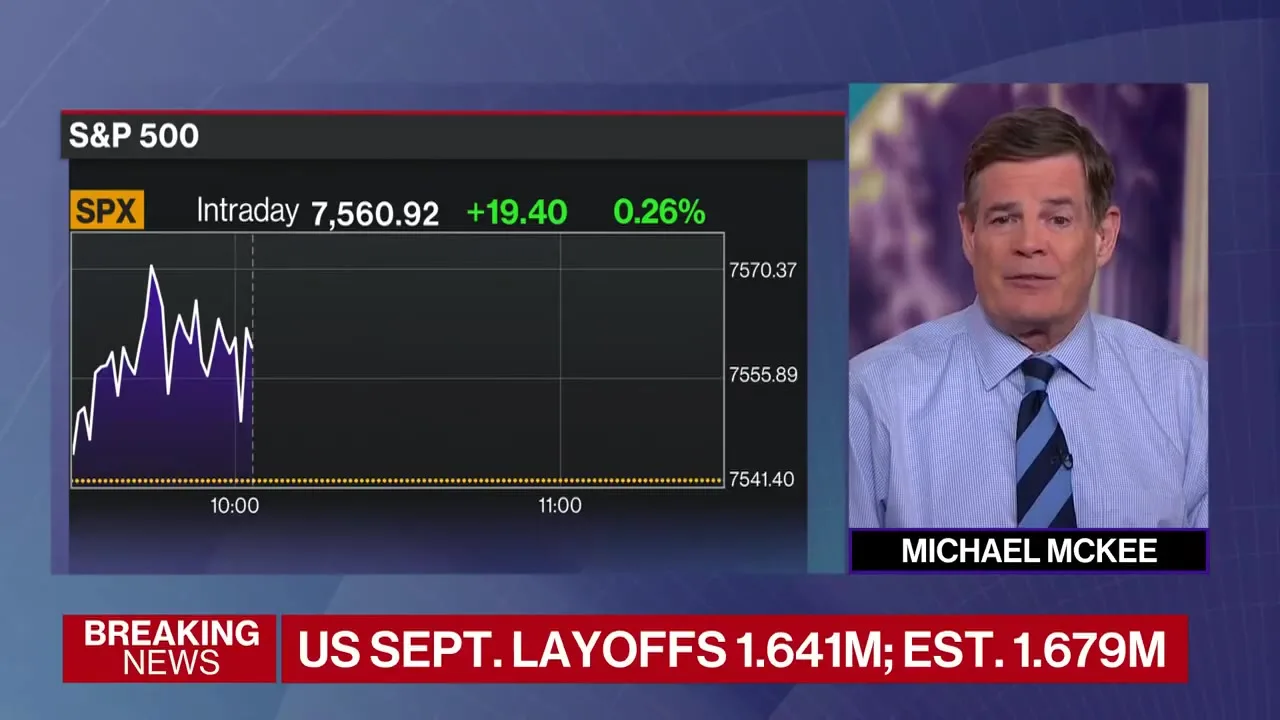
US job openings rose by 444,000 in September, alongside increases in manufacturing orders, according to Labor Department figures cited in a Bloomberg Television broadcast published on Nov. 3.
The openings figures were two months old when discussed, limiting their value as a guide to current conditions. The manufacturing figures also covered September, leaving more recent developments in hiring and business spending unresolved.
The department counted about 7.5 million vacancies, compared with about 7.1 million in August. Its job openings rate rose to 4.5% from 4.3%, an increase of 0.2 percentage point.
The department's quits rate, which measures workers voluntarily leaving their jobs, rose to 2.1% from 1.9%. That also represented an increase of 0.2 percentage point from the previous month.
Higher voluntary departures can reflect greater confidence among workers about finding another job. Consumer confidence figures released the previous week also showed people feeling better about the labor market, Bloomberg Television reported in “US Job Openings Jump as Factory, Durable Orders Also Rise.”
Factory orders rose 1.8% in September after a 0.3% increase the previous month. Orders for durable goods, products intended to last several years, rose 1.9%, compared with the previously reported 1.8% increase.
The factory orders figures incorporated a revision to durable goods orders and added orders for nondurable goods. Nondurable orders also increased, although the broadcast gave no exact figure for that category.
The age of the manufacturing figures limited what they could show about the Federal Reserve's next decision in December. They described activity in September rather than business conditions closer to that decision.
The discussion then turned to the economy's health heading toward year-end and whether household spending could offset weakness elsewhere. Unemployment remained low, and employers continued to report a large number of vacancies.
Artificial intelligence had yet to produce either the widespread job losses or the productivity gains discussed in the broadcast. The remaining questions concerned inflation, household purchasing power and the durability of business spending.
Paychecks were failing to keep pace with inflation, leaving open whether households would cut spending. The jobs report due Friday was expected to provide more information on hourly earnings.
For businesses, the unresolved question was whether companies had already made most of their planned purchases of artificial intelligence equipment for the rest of the year. Further data were needed to assess both household spending and those purchases.