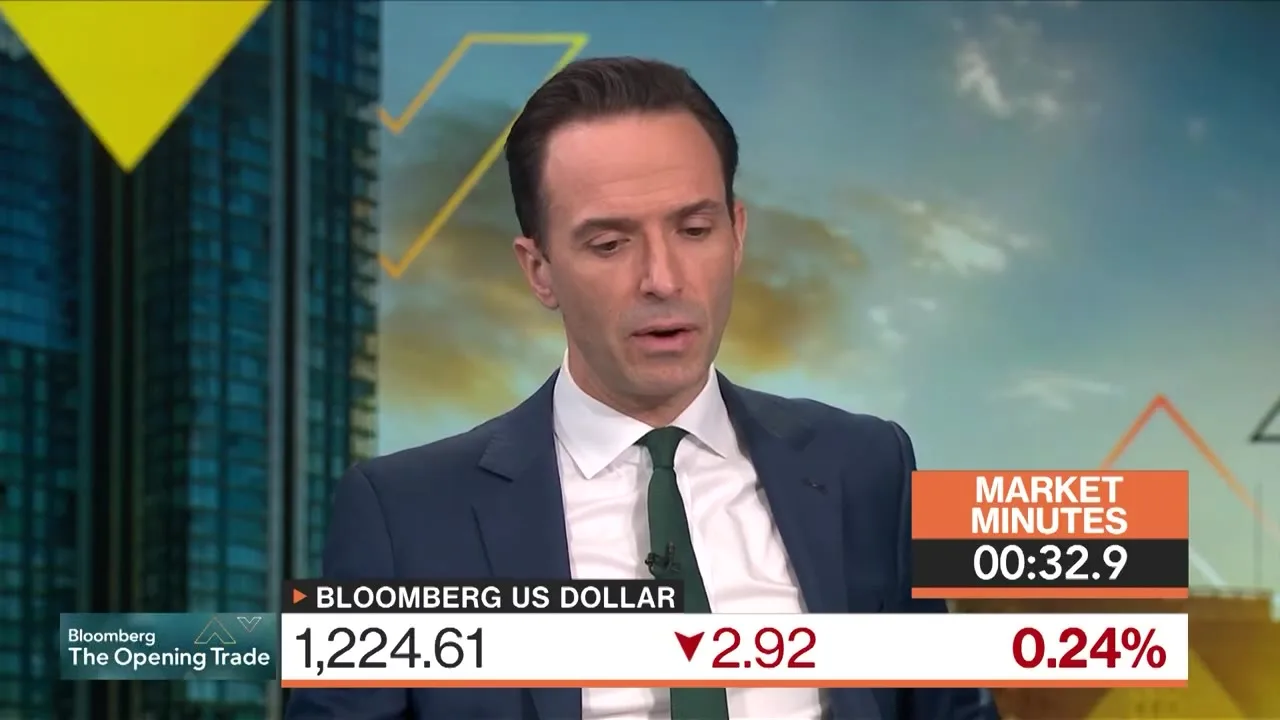
Nasdaq futures fell 0.8% during morning trading as uncertainty surrounding artificial intelligence companies weighed on technology shares ahead of upcoming earnings, Bloomberg Television reported in its Nov. 9 broadcast.
The decline narrowed from an earlier fall of about 1.2%. Technology shares had also staged a muted rebound on Friday after recent losses.
Further short-term turbulence was expected as questions about AI companies competed with relatively strong U.S. consumer spending and upbeat corporate earnings. Other U.S. industries and European stocks offered alternatives to technology shares.
The discussion on “AI Turbulence to Keep on Running: Market Analysis” identified AI and oil as the main influences on trading during a relatively quiet week for scheduled events.
AI was expected to have the greater influence after driving moves across different asset markets the previous week. The immediate question was whether technology shares would recover or face further selling.
Upcoming earnings were expected to bring renewed attention to the cost of financing AI businesses. Nvidia's results were due the following week, adding another event for investors assessing the sector.
An anticipated Anthropic initial public offering, the company's first sale of shares to public investors, was also among the developments drawing attention to AI.
Recent declines alone offered little assurance of a recovery in technology shares. The same argument for a rebound could have been made during each of the preceding two weeks.
Uncertainty surrounding Nvidia and Jensen Huang added another complication. The extent of support from within the company and from the U.S. administration remained a consideration, without a clear resolution.
Europe was presented as an alternative to the AI trade, partly because of the mix of industries represented in its stock markets and investors' existing holdings.
October had brought selling in economically sensitive businesses and defensive shares alike, alongside higher oil prices and instability in interest-rate markets. Those moves had since reversed.
European shares also faced some selling the previous week as investors sold assets broadly. Corporate earnings in the region nevertheless remained relatively solid, while trading patterns were seen as holding up.
The dollar fell 0.2% during the session. U.S. inflation figures were due the next day, putting another economic release ahead of investors weighing the currency's direction.
Relatively strong U.S. economic conditions and the previous week's employment figures offered support for the dollar. Differences between U.S. and overseas interest rates also remained part of that assessment.
The currency had received some support during the previous week's broad selling. The Swiss franc and Japanese yen were identified as possible refuges as concerns increasingly centred on the dollar itself.