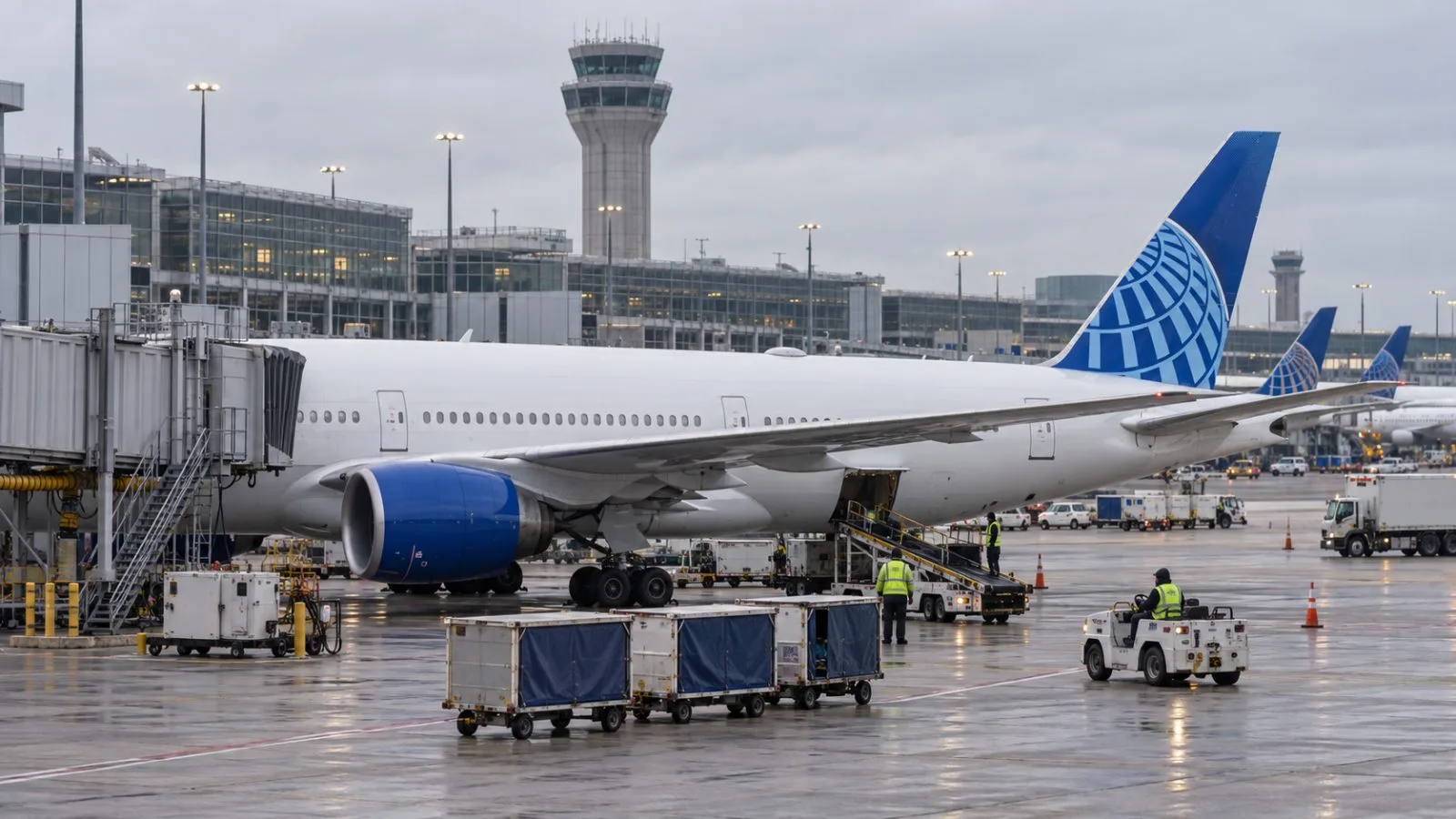
United Airlines Holdings, Inc. reported that United Airlines CEO Scott Kirby’s 2025 compensation was about 334 times median employee pay, a comparison that adds context to his tax proposals.
The parent company’s 2026 proxy statement listed $32,282,253 in total compensation for Kirby in 2025, including $22,565,804 in stock awards. Those awards were valued under executive-pay disclosure rules. The reported total therefore does not show how much cash he received.
The company put its median employee’s 2025 total compensation at $96,670, producing a CEO-to-median-employee ratio of about 334 to 1. The median is the midpoint of the employee pay distribution, rather than its average. United cautioned that companies may use different permitted methods to calculate pay ratios, limiting comparisons across employers.
In an interview published Oct. 18, The New York Times reported that Kirby wants wealth taxed nationally and floated inheritance levies near 100%. He linked the proposals to wealth inequality but gave no rate for the wealth tax and did not define which inheritances would face a rate near 100%.
Kirby argued that a tax enacted by one state could prompt people to move, according to the newspaper. That concern was his reason for proposing a national measure. EconoTimes previously covered Kirby’s tax proposals.
The federal estate tax offers a point of comparison, although Kirby did not specify how his suggested inheritance tax would work. For deaths in 2026, the Internal Revenue Service sets a basic exclusion of $15 million per person and lists 40% as the top marginal estate-tax rate. That is a rate on taxable estates, not a flat tax on all property transferred at death.
Deductions can reduce the taxable estate, while credits can reduce the resulting tax. Kirby did not say whether his proposal would change the existing estate tax or establish a separate levy.