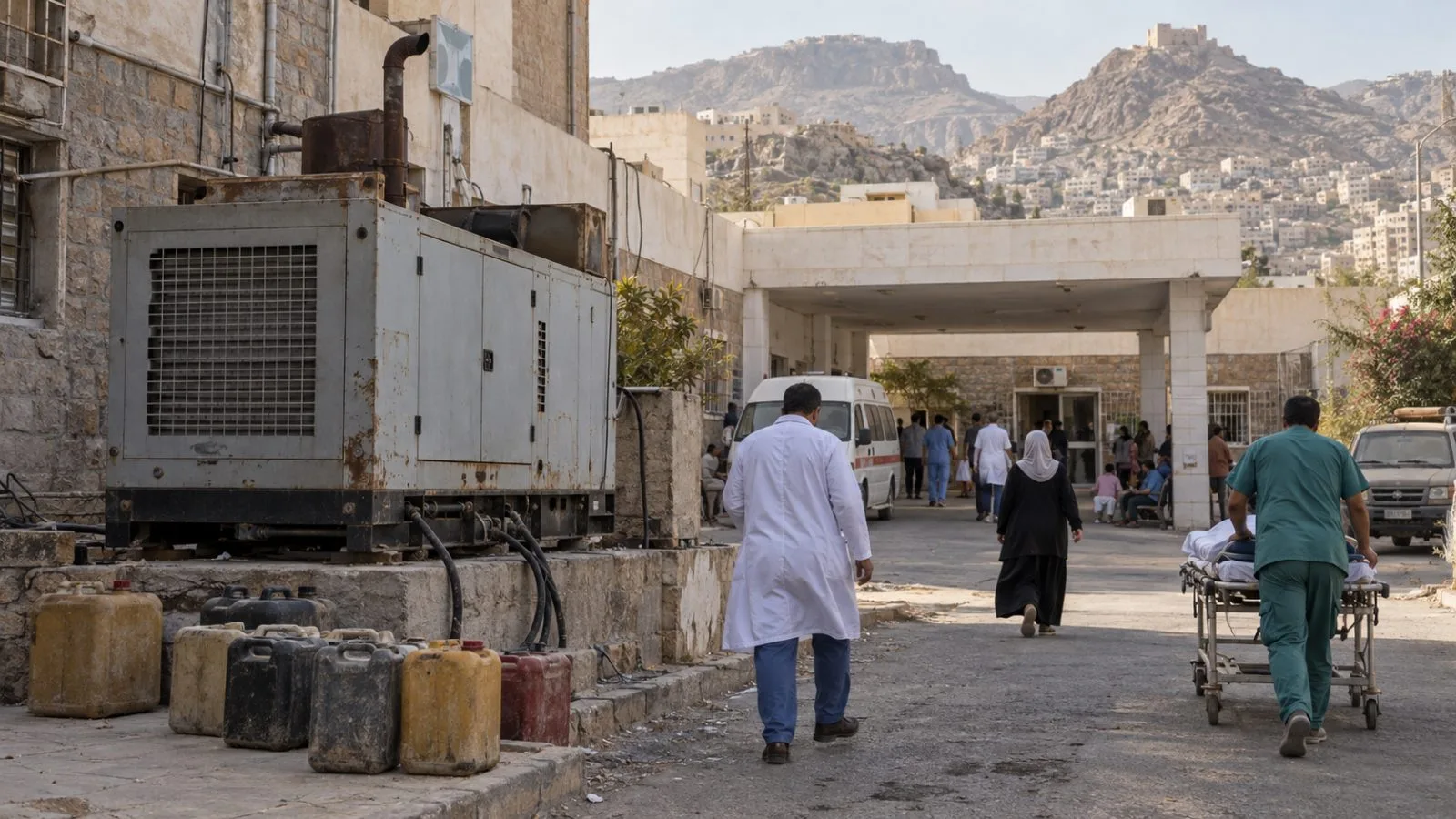
The World Health Organization (WHO) estimated on Oct. 20 that 12 hospitals in Yemen’s Taiz had roughly four days of fuel left, as fighting restricted supplies to the city.
Supplies of 115 of the 127 essential medicines would last no more than about a week, WHO spokesperson Tarik Jasarevic told a U.N. briefing in Geneva.
The World Food Programme (WFP) said on Oct. 14 that fighting prevented it and its partners from reaching more than 600,000 Taiz residents who need humanitarian aid. Including communities cut off along Yemen’s West Coast, the agency put the number beyond its reach at 800,000. Wheat flour stocks in affected areas were nearly exhausted, it said.
U.N. human rights chief Volker Türk said Houthi forces had encircled Taiz and blocked the road connecting it to Aden. U.N. Humanitarian Coordinator for Yemen Laurent Bukera said on Oct. 20 that prices for the food and fuel still available had more than doubled, while the city was producing half as much water.
As displacement and disrupted supply routes around Taiz continued, the U.N. said more than 250,000 people had fled renewed fighting across Yemen by Oct. 20. Around half had sought shelter in Taiz city and its governorate.
The crisis is unfolding during a government campaign against the Houthis. Presidential Leadership Council Chairman Rashad Al-Alimi announced military operations on Oct. 4. His office said the “Dawn of Yemen” campaign began the next day, with the stated aims of restoring state institutions and taking Sana’a.
In an interview with The Guardian, former Prime Minister Maeen Abdulmalik Saeed, now an adviser to Al-Alimi, identified poor coordination among government-aligned forces as a weakness around Taiz.
U.N. experts found that an effective blockade of Taiz began around August 2015 and was broken in March 2016, though restrictions on movement and supplies persisted. Bukera has called on Houthi authorities to allow commercial goods and aid into the city.
WFP warned that a funding shortfall would force major cuts to its assistance beginning in November.