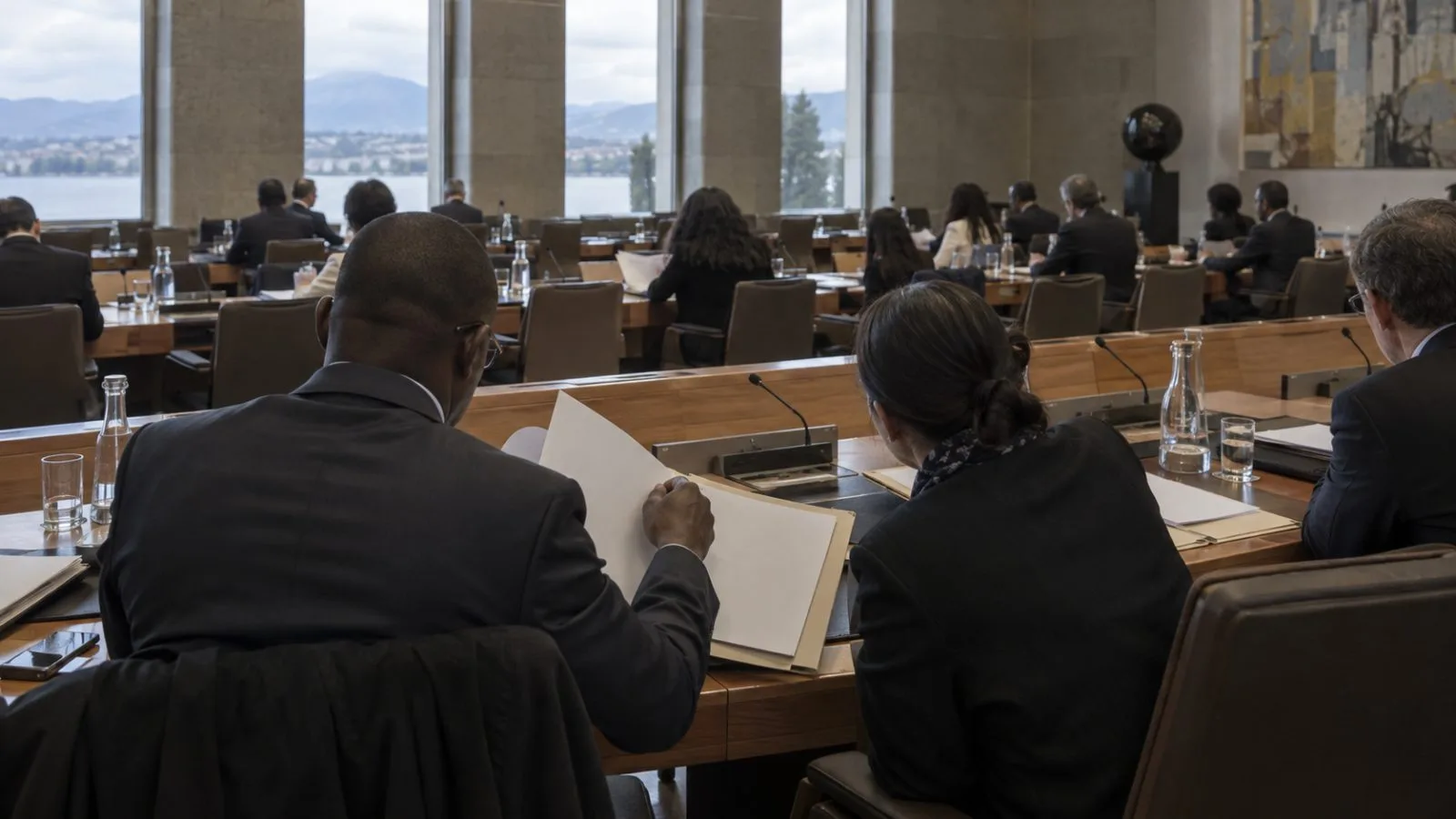
At its Oct. 21-22 meeting, the WTO Committee on Trade Facilitation moved forward its second assessment of the Trade Facilitation Agreement (TFA), keeping a year-end completion target as developing-country groups raised concerns about implementation support. Members reaffirmed their commitment to finish the review and reach agreement on a final report before year-end.
Those groups said the future of the Trade Facilitation Agreement Facility (TFAF) was a concern, citing uncertain donor-funding conditions and continuing gaps in putting the pact into practice. Developing and least-developed members requested the facility, which the WTO launched in July 2014 to help them obtain assistance with their commitments.
Committee Chair Alix Rancurel of France gave members a schedule, including deadlines and further talks, for completing the review. Delegates assessed a factual draft on the agreement’s operation and implementation, alongside proposals for future committee work and recommendations. Nine members spoke, some representing broader groups.
Four of eight trade-facilitation concerns about other members’ practices were new to the committee. Switzerland cited the West African Economic and Monetary Union’s implementation of Article 10.2 of the TFA, while Australia raised Indonesia’s inspection rules for foreign halal products. The United States brought up Indonesian customs procedures for intangible products and reward systems for officials in Indonesia, Sri Lanka and Thailand, as well as e-commerce handling fees in Italy and Romania.
Members also compared customs and risk-management approaches. Nigeria presented on the use of data analytics and artificial intelligence in risk-management systems, while China described joint incentives across agencies for authorized economic operators. Nigeria discussed advance rulings, which provide binding customs guidance on goods before they are imported.
A dedicated session on assistance and capacity building heard presentations from China, Myanmar, Niger and the United States. Six organizations — the World Customs Organization (WCO), World Bank, International Trade Centre, United Nations Trade and Development (UNCTAD), Organisation for Economic Cooperation and Development (OECD) and Global Alliance for Trade Facilitation — briefed the committee on technical-assistance work and answered questions about implementation needs among developing and least-developed members. Agreement on the review’s final report by year-end is the next stated milestone.