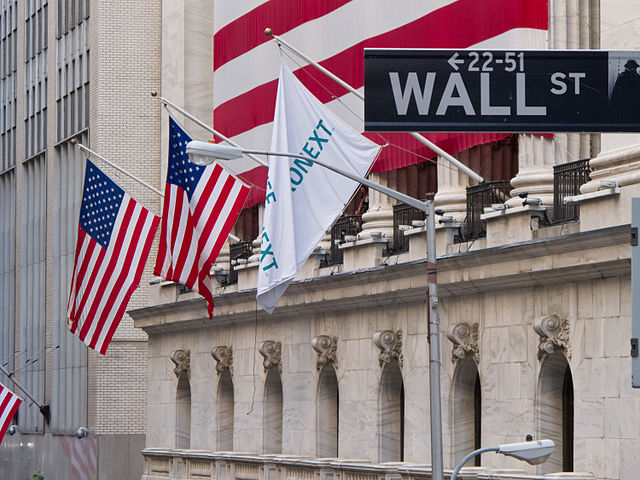
Wall Street ended sharply lower on Friday as renewed concerns over artificial intelligence investments, rising oil prices, and uncertainty surrounding Federal Reserve policy weighed on investor sentiment. The Nasdaq Composite recorded its worst weekly performance since late June as technology stocks faced heavy selling pressure.
The S&P 500 declined 1.1% to 7,659.11, while the Dow Jones Industrial Average dropped 0.6% to 52,001.52. The Nasdaq Composite plunged 2.2% to 26,140.03. For the week, the S&P 500 lost 2%, the Nasdaq tumbled 4.5%, and the Dow gained 0.7%.
Technology shares suffered amid concerns about mounting debt used to finance AI infrastructure and increasing competition from Chinese semiconductor manufacturers. Reports of advances by China's ChangXin Memory Technologies triggered significant losses across memory chip stocks.
Micron Technology fell 14.6% for the week, while Samsung Electronics and SK Hynix declined 17.8% and 24.3%, respectively. The Philadelphia Semiconductor Index dropped 11.4%, marking its steepest weekly decline since April 2025.
AI cloud infrastructure providers also struggled. CoreWeave and Nebius each lost 25.2% during the week as investors questioned the financial sustainability of specialized AI computing businesses.
Meanwhile, Federal Reserve interest rate expectations shifted following Chair Kevin Warsh's remarks at an international economic forum in Bangkok. Despite stronger-than-expected inflation reports, Warsh avoided signaling whether policymakers would raise rates at their October 27-28 meeting.
According to CME FedWatch, the probability of a quarter-point rate hike fell to approximately 17% from nearly 28% the previous day.
Corporate earnings offered mixed results. Alcoa gained 2.6% after exceeding third-quarter profit expectations, while Truist Financial advanced following stronger-than-anticipated earnings. Tesla declined 2.1% despite unveiling its rocket-assisted Roadster prototype.
Oil prices added another challenge for financial markets as escalating Middle East tensions threatened global energy supplies. Brent crude gained 4.7% for the week, while West Texas Intermediate surged 10.7%.
Investors also monitored President Donald Trump's controversial diesel supply agreement with Russia, which faced bipartisan opposition in Congress.
Looking ahead, Wall Street will focus on upcoming third-quarter earnings reports, inflation developments, and Federal Reserve policy signals to determine whether stocks can recover from the latest technology-driven sell-off.