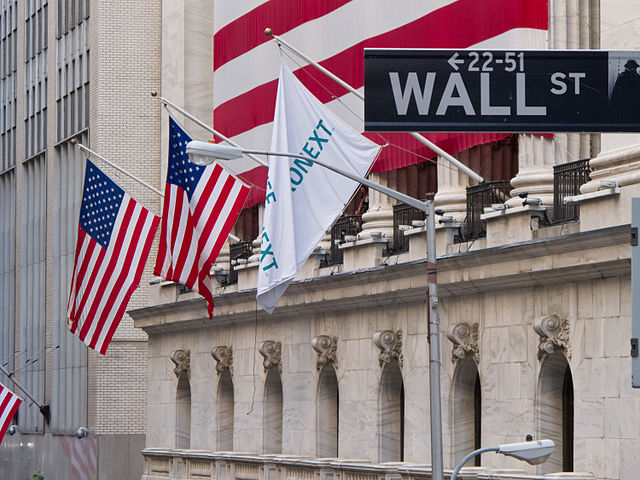
Wall Street ended sharply lower on Wednesday as growing tensions between the United States and Iran overshadowed inflation data that largely met market expectations. Investors moved away from risk assets amid concerns about potential further military action in the Middle East and its impact on global markets.
The S&P 500 fell 1.6% to close at 7,267.65, while the Nasdaq Composite dropped 2% to 25,169.50. The Dow Jones Industrial Average declined 1.9%, ending the session at 49,919.09.
Market sentiment weakened after President Donald Trump intensified his stance toward Iran, warning that the United States would strike the country again following recent military operations. The comments came after U.S. forces conducted what officials described as “self-defense” strikes against Iran. Trump stated that Iran had delayed signing a negotiated agreement and warned that further consequences could follow.
Investor concerns were amplified by reports suggesting additional U.S. attacks on Iranian infrastructure may be under consideration. Although hopes for a ceasefire had briefly improved earlier in the week, renewed geopolitical uncertainty pushed energy prices higher and weighed on equities.
Brent crude oil climbed 2.4% to $93.64 per barrel as disruptions around the Strait of Hormuz continued to threaten global energy supplies. Rising oil prices have become a major driver of inflation concerns worldwide.
Meanwhile, the latest U.S. Consumer Price Index report showed headline inflation increased 0.5% month-over-month and 4.2% year-over-year in May, matching forecasts. Core inflation, which excludes food and energy, rose 0.2% monthly and 2.9% annually. While energy costs contributed heavily to the increase, softer core inflation figures eased fears of additional Federal Reserve tightening.
Technology stocks remained under pressure, with semiconductor shares extending recent losses. The Philadelphia Semiconductor Index dropped 3.6%, while companies including Qualcomm, Arm, and Marvell posted notable declines. Super Micro Computer plunged nearly 28% after announcing plans to raise $7 billion through equity-related offerings.
Transportation and logistics stocks also fell after Amazon unveiled a new less-than-truckload freight service for businesses. Shares of Knight-Swift Transportation, J.B. Hunt Transport Services, and FedEx Freight all moved lower as investors assessed the competitive implications of Amazon’s expansion into freight logistics.
Despite the market pullback, analysts noted that the broader long-term uptrend remains intact. However, elevated oil prices, geopolitical uncertainty, inflation concerns, and ongoing volatility in technology stocks are expected to keep markets on a cautious footing throughout the remainder of 2026.