
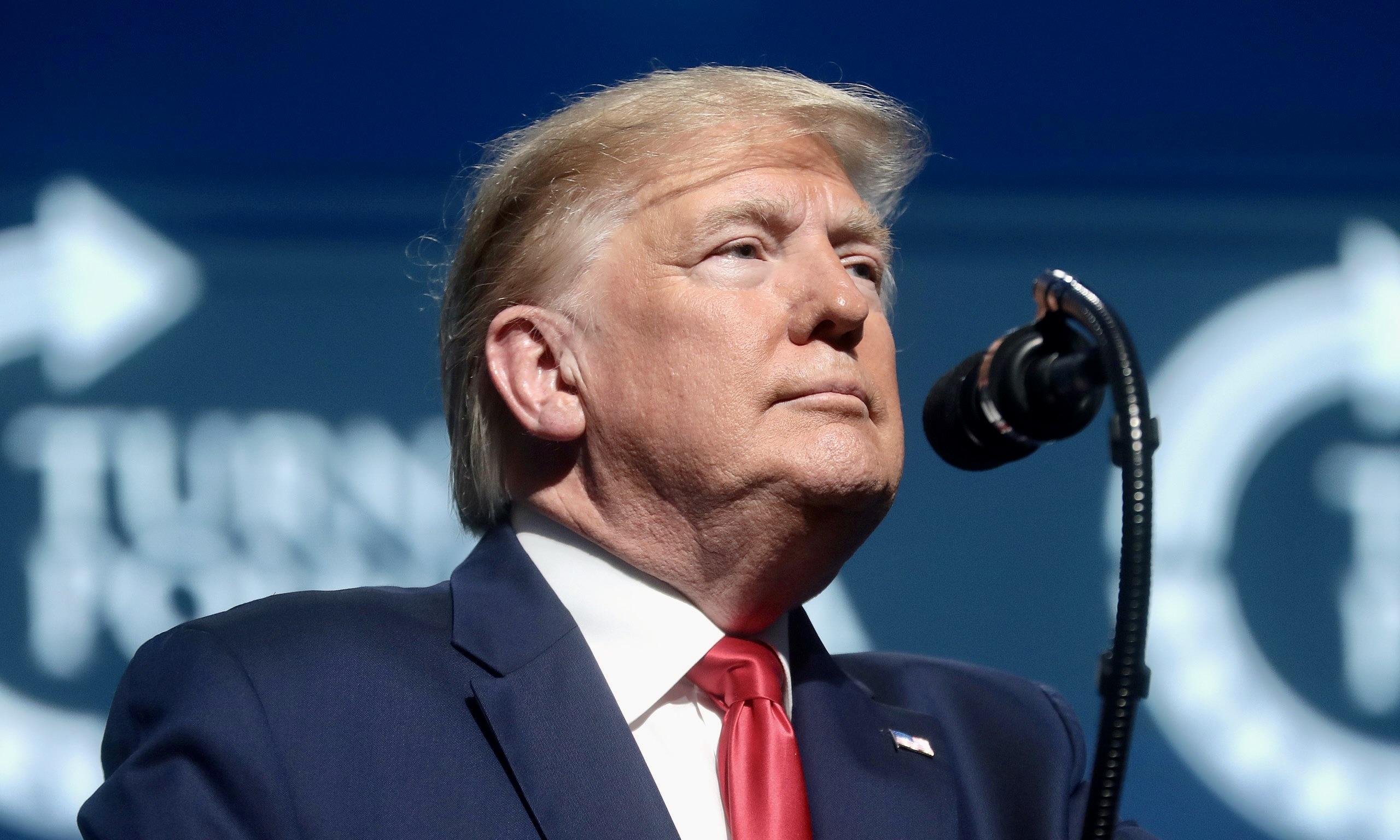
By the end of winter 2024, the return of Donald Trump to the top of the GOP presidential ticket has revealed a surprising trend in the former president’s base of support: his increasing popularity among Black and Latino voters.
Several polls suggest as many as 23% of Black voters and 46% of Latino voters could cast their ballot for Trump.
If the polls are right, these numbers represent a far cry from the 6% of Black and 28% of Latino voters who supported Trump in 2016 and the 8% of Black voters and 32% of Latino voters who voted for Trump in 2020.
Given Trump’s long record of racist and xenophobic comments, the question, then, is why Trump’s support among voters of color has increased over the years.
A ‘racial realignment’?
Two explanations have emerged to explain Trump’s growth in support among voters of color.
The first is based on the faulty assumption, made by some Democratic strategists that the increasing racial and ethnic diversity of the U.S. electorate would automatically benefit Democratic candidates. This assumption rests on the idea that voters of color are inherently progressive on issues such as education, social services, health care and criminal justice reform.
According to this line of thinking, Trump’s polling numbers are mostly the result of poor messaging by the Democrats – a failure to remind voters of color that their interests align with Joe Biden, not Trump.
The second explanation is that voters of color are inherently conservative, particularly working-class Black and Latino men, who identify more closely with the political right on issues such as immigration, law and order and cultural conservativism.
“Many of America’s nonwhite voters have long held much more conservative views than their voting patterns would suggest,” data analyst John Burton-Murdoch argued in the Financial Times in March 2024. “The migration we’re seeing today is not so much natural Democrats becoming disillusioned but natural Republicans realizing they’ve been voting for the wrong party.”
Though few other analysts go as far, Burton-Murdoch concluded that the numbers represent “racial realignment.”
GOP appeals to cultural identities
Both interpretations suffer from the same faulty assumption that politics can be reduced to a simple exercise in consumer branding and retailing.
Polls provide snapshots of how individual voters feel about certain topics at particular points in time. But they cannot capture the complex forces shaping the varied political realities of the estimated 35 million voters of color.
More important in understanding the apparent racial political shifts are the efforts that are made on the ground in local communities, especially by right-wing activists, that are appealing to a sense of isolation, economic precariousness and widespread mistrust in government.
To see those efforts in action, we attended the December 2023 America Fest, an annual conference in Phoenix sponsored by Turning Point USA, a right-wing organization focused on students and young adults. Perhaps half of the 13,000 attendees were under 35, including small but noticeable numbers of people of color.
At the conference, the emphasis of the group’s messaging was on connecting people who say they feel frustrated about contemporary political and cultural life.
These appeals, which attempted to exploit widespread cynicism among young voters, were used in every part of the group’s social media and outreach efforts. Paraphernalia for such efforts are part of the group’s online activism kits that provide posters and buttons emblazoned with slogans such as “Deep in the heart of freedom,” “Womanhood is not a costume,” “Take pride in my country” and “I 2nd that.”
Cultural refrains that mock gay and transgender people and support the Second Amendment right to bear arms are becoming more popular across the right.
On another front, the Libre Initiative, a libertarian organization funded by the conservative billionaire Koch brothers, launched in August 2023 a multistate advertising campaign aimed at Latino voters that blames Biden for the economic precariousness many of them are facing.
With six months remaining in the presidential campaign, these and other GOP efforts appealing to voters of color appear to be working, based on polling thus far.
But the outcome of the election is far from certain.
in our view, what the polls are revealing is the GOP’s attempt to win support of an increasingly diverse electorate – not through appeals to policy or ideological interests but through forging connections often rooted in identity, community and a sense of belonging.
While polls may provide some useful information and cues, it’s important for American voters to remain cautious about using them as the catchall explanations for these complex and ongoing racial dynamics.


