It’s a summer’s afternoon in Amsterdam. Two young adults meet and strike up a casual relationship. The evening ends, happily for both of them, with a sexual encounter.
The following day, during a conversation to get to know each other better and strengthen their relationship, they discover (what a coincidence!) that they were both conceived via IVF (in vitro fertilization) using an anonymous donor. This is increasingly common these days, although it’s not exactly a standard topic of conversation for first dates.
Here, a disturbing question may arise. What are the chances that the same sperm donor was responsible for both births? That is to say, that they have the same father and are therefore siblings.
Last March, the media reported on the case of a Dutch sperm donor who is believed to have fathered over 550 children. The mother of one of them took legal action to prevent him from making any further donations in the future.
The donor had, of course, resorted to underhand tactics to circumvent clinic rules. However, it would appear that according to Dutch law he hadn’t actually committed a crime, since there are no limits on the number of offspring a person can father. That said, the country officially outlawed anonymous donations in 2004.
Limits to reduce the risk of interbreeding
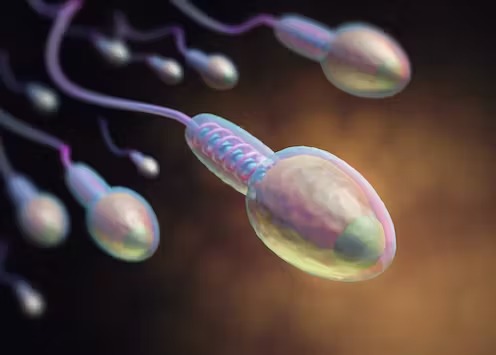
Sperm donation is a process by which a male offers his sperm to help other individuals or couples who wish to have children. However, if a donor fathers too many children, this can cause significant complications from a statistical point of view. This is because the probability of a chance encounter between two people who are siblings, genetically speaking, increases.
That’s why, in addition to imposing limits on donation with regards to the health of the donor (for example, to protect against infections transmissible through donation), there’s also a growing tendency to limit the number of offspring per donor to avert the risk of interbreeding.
Why? Well, basically because interbreeding, i.e., the production of offspring from the mating of individuals who are closely related or from very small, closed populations, increases the likelihood of recessive gene disorders. This is why it’s deemed medically unwise.
Furthermore, donation also increases the likelihood of situations of incest due to lack of knowledge. This issue has scientific, moral, and legal ramifications.
Donor responsibility
From an ethical point of view, this issue also raises serious questions in terms of donor responsibility. If donors are dishonest and provide false information regarding the number of times they’ve donated sperm or their medical history, the health, knowledge-based freedom of choice, and wellbeing of donor-conceived individuals are compromised.
The aforementioned Dutch sperm donor is known to have made donations in other European countries after several Dutch clinics refused to accept his contributions. The lack of a centralized registry and common European standard on this issue means that these situations can easily arise.
There has been a ban on anonymous sperm donation in the UK since 2005, which has led to a significant drop in donations. Germany has also banned anonymous donation and has granted children conceived through sperm donation the right to access their donors’ information.
Aside from this issue, a clash between the right to health and information and the donor’s right to anonymity, the donation and freezing of sperm, eggs, and embryos raises other bioethical and biolegal questions.
For example, in the event of the death of a non-anonymous donor, there may be a conflict of interest between the donor’s wishes and the use of these biological specimens. If gametes (sperm or eggs) or embryos are frozen and the donor later gets divorced and dies, can the donor’s ex-partner use them for reproductive purposes? How does this affect the rights of offspring to paternal inheritance? And if they are no longer viable, who decides how they are to be disposed of?
As is often the case with bioethical issues, technology evolves faster than its social implications can be fully regulated and, often, before relevant legal regulations can be put into place to address potential implications. Everything ends up becoming far more complex and problematic than initially envisaged.
As technology continues to develop and new assisted reproductive techniques are made available, it’s necessary to tackle these dilemmas from a bioethical perspective and to come up with solutions that protect the rights of all those involved.
It’s also important to standardize legislation at a global level by means of international treaties. In the European Union specifically, a common registry and binding regulations between member states would be highly beneficial.