Witchcraft is generally understood to refer to a supernatural power possessed by an individual. In Ghana, particularly in the northern parts of the country, the subject continues to spark fierce debates.
In regions such as Northern, Savanna and North East, people accused of witchcraft are banished from their communities. In response, other communities have provided refuge for displaced people. These places of refuge have themselves sparked controversy. Critics contend that they have become centres of “abuse” and have called for their closure.
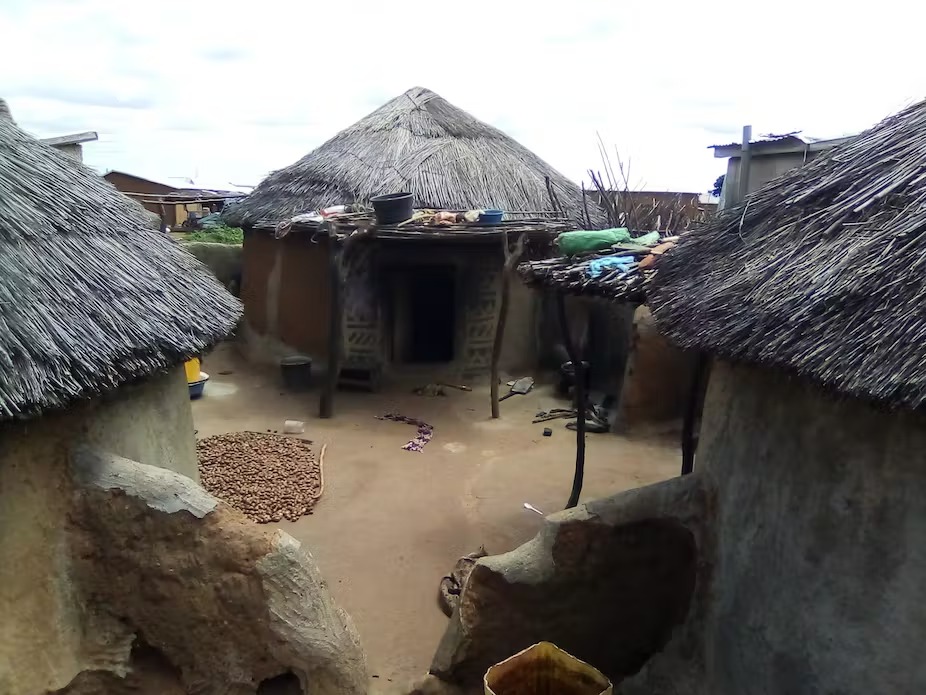
I am a lecturer in anthropology and development studies. I set out to understand the controversy around what are often called “witch camps” and whether they should be abolished. I conducted a year long ethnographic study in the Gnani-Tindang community in northern Ghana. Gnani-Tindang provides refuge for people accused of witchcraft who have been banished from their communities.
I conclude from my findings that government and NGOs aren’t proving capable of managing the problem, because they are starting at the wrong place. The focus is on witchcraft accusations, by which time people have already been stripped of their “social citizenship” and been forced to relocate.
Engaging with the experiences of people accused of witchcraft and their communities shows that intervening at an earlier point matters more.
The background
Victims of witchcraft accusations face alienation or exclusion from their communities. Exclusions can be social, physical, economic or psychological.
Some villages in northern Ghana have become known as places that provide refuge to people banished from their communities. These villages were not created for this purpose. Rather, they are already existing communities that have chosen to provide such refuge.
Banishment happens when someone accused of witchcraft is no longer welcomed in their community. They are asked to leave and never return. Not heeding such advice comes with consequences including violence, abuse, social exclusion and murder.
Sometimes people relocate to a village that’s offering them safety after they’ve been forced to leave their homes following direct threats. In some instances people move when they hear rumours that they risk being accused of witchcraft.
What people who had been banished told me
The purpose of my research inquiry was to gain insights into how individuals accused of witchcraft speak about themselves and their circumstances.
The experiences of those accused varied. As one told me:
They finally threatened that they were going to do their juju, and if I had any knowledge about the child’s sickness, I was going to die within four days. I told them they should go ahead; I was willing to die if I were the one responsible for the child’s sickness. After the ritual, I didn’t die. However, they said I could no longer stay with them in the community.
Another gave this account:
After the death of my husband, the relatives accused me of witchcraft. My in-laws said I killed my husband, but I don’t know anything about it. He fell sick and died afterwards. How can I kill my husband? I was lucky I wasn’t killed. There were lots of chaos, and some of the people suggested that I should be killed. Others disagreed and suggested that I should be brought to Gnani-Tindang … It’s my husband’s people who brought me here.
We also observed that elderly people with little strength to fend for themselves were often targeted. One person, who was 80 years old, said:
Look at me; I’m old and weak now. I can’t do much for myself. But I must fetch water, firewood and beg for food to eat. It is lonely here.
What next
Ghana’s parliament has recently passed an anti-witchcraft bill. It seeks to criminalise the practice of declaring, accusing, naming, or labelling people as witches. Making such an accusation would lead to a prison sentence.
But, in my view, the bill alone isn’t the solution. This is because declaring certain behaviour illegal – and therefore punishable in a court of law – doesn’t address the issue of prejudice and discrimination which often relates to people’s age, gender and economic status. In other words, the law won’t deal with the tensions that emerge when culture intersects with the reality of people who become victims of witchcraft accusations.
Additional steps need to be taken.
Firstly, attention needs to be given to the underlying social issues driving accusations of witchcraft. For example, extreme inequalities among men and women, old and young, rich and poor. Creating avenues that provide a balance in society will have an effect on witchcraft accusation and banishment.
Early gender-tailored education needs to be introduced by the government and development actors on the value of both boys and girls. This is particularly important in the patriarchal societies of northern Ghana. This could help address gender inequalities that lead to witchcraft accusations. Witchcraft accusation is gendered: more women than men are accused, confronted and banished.
There is a need to engage widely with the Ghanaian society about the dangers of witchcraft accusation and to put in mechanisms to protect those who are abused and violated as a result of such accusations.
Finally, there is a need to listen to the voices and experiences of those who are victims of witchcraft accusations. This will ensure that interventions aren’t detached from their reality.