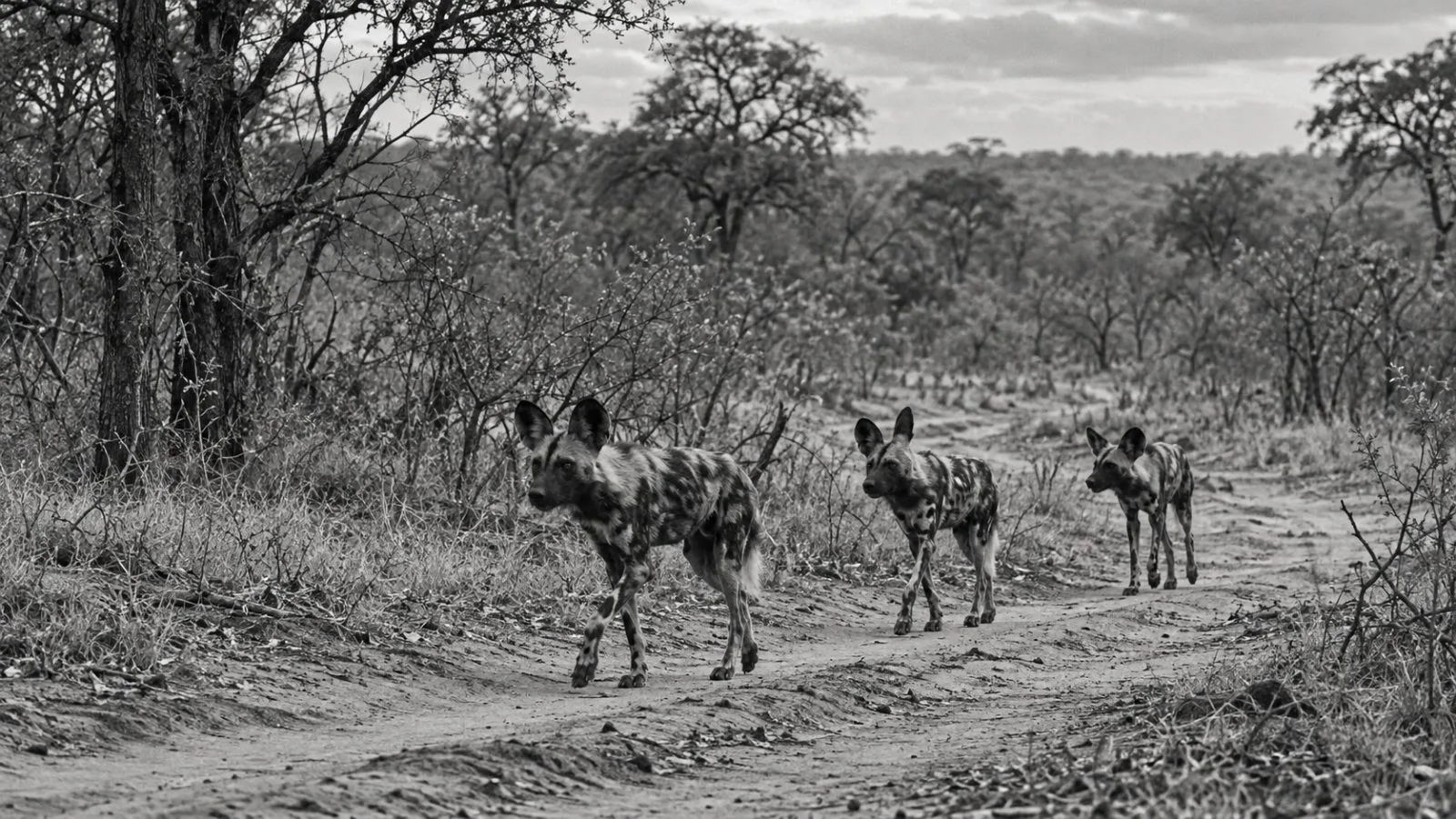
Three male African wild dogs traveled as far as 4,126 kilometers across Zambia after leaving Kafue National Park, showing that a long journey alone does not establish genetic or demographic ties between populations.
The 3-year-old males left the Mayukuyuku pack in July 2025. By April 1, 2026, their new range was in the Luano Game Management Area, part of Zambia’s Luangwa Valley Ecosystem, according to a study published Sept. 13, 2026, in Ecology. The researchers measured their route at up to 4,126 km; the greatest distance between points on a direct line was 419 km.
A Montana State University news release called the journey the longest known dispersal by an African mammal. The study documents the route and compares it with an earlier 3,892-km journey by another African wild dog.
The males were part of a cohort of 19 pups that survived to adulthood. Four females from the pack began dispersing two weeks before the males. Across four movements, the study counted 9,863 km of travel but found little genetic or demographic connectivity among populations. The male group did not stay with females it encountered during the journey.
African wild dog packs typically have one dominant breeder of each sex. Other adults may wait for a chance to become dominant or leave in search of breeding opportunities. The study says dispersal is common among 2- and 3-year-olds, especially when several dogs of the same sex reach those ages together.
The dogs crossed central Zambia, including unprotected areas with substantial human activity, and traveled near major cities, the researchers said. They identify snares used in the bushmeat trade as a major danger to dogs on the move. The authors estimate that wildlife protection of some kind covers 40% of Zambia and urge protection of corridors linking core populations. They warn that wildlife population growth could bring more dispersal and raise the risk of conflict between people and wildlife.
Scott Creel, an ecology professor at Montana State University, called the findings “new and important information,” the university said in its release.