Our contributors

Contributors

Meet the researchers, writers and practitioners bringing perspective to the global conversation.

Join the conversation

14545 contributors

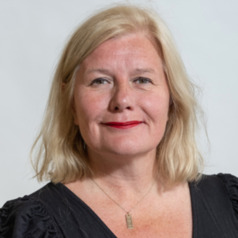
Tinashe Timothy Harry

Tinashe Timothy Harry

Senior Lecturer in Industrial and Organisational Psychology, Nelson Mandela University

Senior Lecturer in Industrial and Organisational Psychology, Nelson Mandela University I am a registered Industrial Psychologist with the Health Professions Council of South Africa (HPCSA). I have extensive experience in areas such as Psycho-Legal, Organisational Development, and HR Consulting. I have published research articles in various areas, including psychobiography, career psychology, graduate employability, labour market experiences, self-initiated expatriates, and human capital development in local and international journals. My research interests are in women's health issues and mental disorders in the workplace, graduate employability, psychobiography, and logotherapy (meaning-centered therapy).

1 articles
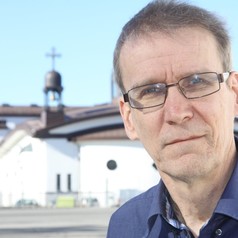
Matthew Beach

Matthew Beach

Doctoral Scholar, Geography, Queen Mary University of London

Doctoral Scholar, Geography, Queen Mary University of London I am an artist-researcher working at the intersection of discourses around place, the photographic, and care in more-than-human worlds. My practice spans between more ‘normative’ humanities research outputs in the form of research publications and conference presentations, as well as artistic outputs in the form of printmaking, sculpture, and experimental films/filmic essays. I maintain broad discursive interests around materialisms, ethics of care, more-than-human enquiry, science and technology studies, and participatory art models and criticism. Recently these areas have been focused on the colonial legacies of houseplants and on jellyfish economies. Currently a doctoral scholar within the School of Geography at Queen Mary, University of London, my thesis (working title - Connective Tissue: (Un)lively Materialities of Gelatinous Life) considers the intersections between legislation, ethics, and naturecultures in mapping the material and social life of gelatine, collagen, and their related commodities. Gelatine and collagen are animal agriculture (by)products extracted from connective tissues in the form of odourless/tasteless granules or powder. It accomplishes this through three approaches: (1) charting the development of global gelatine/collagen markets by engaging with a selection of historical and contemporary production and consumption practices; (2) focusing on a collaboration between a private company and university scientists working to produce/sustain a coastal jellyfish/gelatine economy in the state of Georgia in the United States; and (3) exploring the emergent world of jellyfish aquaculture and companion gelatinous zooplankton.

1 articles
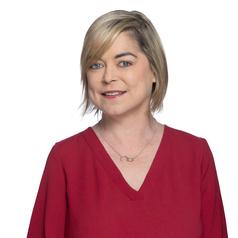
Joanne Berry-Frith

Joanne Berry-Frith

Lecturer in Graphic Design and Illustration, Loughborough University

Lecturer in Graphic Design and Illustration, Loughborough University I have been working as an artist for more than 30 years. I am fascinated by light, colour, lasers, technology and science. My initial curiosity in how artists can work with scientists was piqued in 1998 when I became aware of the SciArt scheme. The ethos of the SciArt scheme encouraged me, as an artist, to seek out Life Scientists to collaborate with because the methods we employ to create images are connected. We both use laser technology (I make laser-cut lightboxes), which requires knowledge of light, optics, and computer visualisation methods, and I am fascinated by how I can use scientific image data innovatively. As a result, since 2010, a central part of my practice has involved contributing to scientific research projects as one of the research team. I identified a gap in knowledge while working with scientists in labs. There was a lack of understanding between the two disciplines of approaches to imaging and its potential. I wanted to discover if and how an artist-researcher can contribute to new methods of interdisciplinary approaches in advanced imaging and microscopy through collaborative practice. Over the last ten years I have collaborated with Advanced imaging and Microscopy specialists, working with a network of internationally renowned core imaging laboratories in the field of Life Science. My aim is to dismantle silo mentalities so that artist-researchers can collaborate with scientists to create new representations, insights and behavioural change. I implemented a four-stage framework and protocol underpinned by the inclusion of play. Each element helped me negotiate and interpret art and science collaboration in new ways by extending art and scientific methods of visualisation. This led to non-standard representations, technological advancements, and better intellectual and visualisation skills, hence enhancing practice-based research through collaboration. Each element helped me negotiate and interpret art and science collaboration in new ways by extending art and scientific methods of visualisation. I advanced three methods of production: an introspective, digital drawing method using limited tools; data montages where data and documentary footage are explored; and experimental moving image work, integrating documentary film footage and sound. The work I will show at Coningsby Gallery showcases artwork made from three recent collaborations at: • COMPARE, The Cell Signalling and Pharmacology Group and a minor study at the Molecular and the Cellular Biology Group, School of Life Sciences, Queens Medical School, University of Nottingham. • Core Research Laboratories Imaging and Analysis Centre, Natural History Museum (NHM), London, • The Centre for Cellular Imaging (CCI) Sahlgrenska Academy Gothenburg University, Chalmers University and the Biofilms, Research Centre for Bio-interfaces, Malmo University. High-quality outputs from working with scientists’ include Art–Science Interplay, Coningsby Gallery London (2023), Ars Electronica -Virtual Garden (2020). SCANDEM the Nordic imaging society (2019), Centre for Cellular Imaging (CCI) Sahlgrenska Academy, Gothenburg, Sweden. Biofilms, Research Centre for Bio interfaces at the annual research centre conference (2018), theme ‘Biomarkers’, Malmo University, Sweden. The Centre of Membrane Proteins and Receptors (COMPARE) Compare Conference (2018) and formal launch of COMPARE, Medical School, Queen’s Medical Centre, Nottingham. Decriminalising Ornament: The Pleasures of Pattern Ruskin Gallery (2018) Anglia Ruskin University, Cambridge. The Centre of Membrane Proteins and Receptors (COMPARE) Compare, Conference (2017), Nottingham University Conference Centre. Light it Up: Brains, Psychosis, Neuroimaging & Us a collaboration with the Neuro Translational Imaging Department, Nottingham University to create Brain Container, Blackpool Illuminations (2017, 2016, 2015). Hijacking Natural Systems funded by Wellcome Trust, ACE, Derby City Council and Derby Museum & Arts Gallery (2012). This was a highly successful project nominated by Nottingham University for The Times Higher Education Award and cited by the Wellcome Trust as an exemplar of a successful Arts and Engagement project. Artwork from this project was featured in the BBC4 TV series The Beauty of Anatomy (2014, 2017) presented by Dr Adam Rutherford. Residencies include Florence Trust, London, Natural History Museum, London. Publications include Berry, J. (2018) ‘Art-data visualisation created from scientific image data from different imaging laboratories to help and influence how they are visually communicated and disseminated’, in a Big Data in the Arts and Humanities: Theory and Practice, eds D. Schiuma and D. Carlucci D. (2018), CRC Press - Taylor & Francis Group. This places my research in the field of Big Data. It is a 3-star REF (Research Excellence Framework) output that has elevated my research status. Berry, J. (2017) Art made from live scientific images to help and influence how they are visually communicated and distributed. Editors Kung, C., Lam, E., Lee. Y. 2017. Cumulus Working Papers, Cumulus Hong Kong Design for Everything Copyright © 2017 Hong Kong Design Institute and Cumulus International Association of Universities and Colleges of Art, Design and Media Berry, J. (2016) Still and static digital representations made from scientific images, The Association of Illustrators, London. Available at: http://theaoi.com/varoom-mag/article/. Berry, J. (2015) Art made from live scientific images to help and influence how they are visually communicated and distributed. VAROOMLAB VISIONARIES – SCIENTIFIC IMAGES Available at: https://theaoi.com/2015/11/17/v31-varoomlab-visionaries-scientific-images/. Berry, J, and Robinson, A.(2011) Drawn in light: Jo Berry’s ‘Hijacking Natural Systems’. Buxton, England, Andrew Robinson (self-published) funded by the Wellcome Trust and Zeiss.de. Available at: http://www. Shura.shu.ac.uk/5218/ and http://www.blurb.com/bookstore/detail/2361208 I exhibit regularly and widely throughout the Country and Internationally with pieces in the Victoria & Albert Museum (V&A), Arts Council England (ACE) East Midland Collections, Nottingham University Medical School and Zeiss, Munich, Germany. Residencies include the Florence Trust Studios, London, the Natural History Museum, London, the Lakeside Arts Centre, Nottingham University. Public commissions include Blackpool Illuminations, Redesign of five 1938 Fluted Pylons for 100th Anniversary of the Illuminations (2012), Millfield Sculpture Commission (2011), Derbyshire Moorlands (2010), Sheffield Galleries and Museums Trust (2008), New Shetland Museum & Archives (2007). I have acquired highly transferable skills gaining a national reputation as a leader in Illustration research by celebrating its fundamental principles and practices aided by an extensive network of contacts, activity and experience. Undertaking teaching and scholarship projects of national and international significance linked to professional bodies and successful funding bids adding to my professional development. I currently work as a Lecturer in Illustration and Graphic Design at Loughborough University.

1 articles
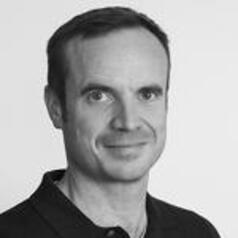
Svante Lundgren

Svante Lundgren

Researcher, Lund University

Researcher, Lund University Svante Lundgren is Associate Professor of Jewish Studies from Åbo Akademi University, Finland, and works as a researcher at the Centre for Theology and Religious Studies and the Centre for Advanced Middle Eastern Studies at Lund University, Sweden. His research interests include modern Jewish history and thought, antisemitism, and Jewish-Christian relations, but also Christian communities in the Middle East, especially Armenians and Assyrians. He has published extensively on the Armenian Genocide and on modern and contemporary Armenian issues. He acted as the narrator in the documentary movie Map of Salvation (1915), which tells the story of five women missionaries who were eyewitnesses to the Armenian Genocide. In 1998 he was awarded with the International Erich Fromm Prize for his book on the religious thought of Erich Fromm.

2 articles
Louise Crowley

Louise Crowley

Professor of law, University College Cork

Professor of law, University College Cork Professor Louise Crowley of the School of Law, UCC, is a national voice on intimate partner violence having published widely on the adequacy of legal responses to the challenges of gender-based violence and works with service providers and state agencies to highlight the need for greater targeted investment in service provision. Louise was a member of the Government appointed expert group that developed the National Framework to End Sexual Harassment and Violence at Third Level in 2019 and she continues to advise on law and policy reform. In 2016, at University College Cork, Louise developed the campus-wide Bystander Intervention programme which educates and empower staff and students to challenge the normalisation of sexual abuse and to recognise their role as pro-social bystanders to effect change and bring about a new normal of safety and respect. This training is now being delivered in other third level institutions as well as workplaces and sporting organisations. In 2022, funded by the Irish Research Council, Louise developed a bespoke second level programme, now being piloted in 50 secondary schools nationwide. Louise has recently commenced a 14 month partnership with the Irish Defence Forces to deliver Sexual Respect and Ethics training to members of the Army, the Air Corp and the Navy.

1 articles
Robert Oakes

Robert Oakes

Senior Researcher, United Nations University

Senior Researcher, United Nations University Dr. Robert Oakes works in the Environment and Migration: Interactions and Choices (EMIC) Division at the United Nations University Institute for Environment and Human Security (UNU-EHS). He researches the reasons for, and outcomes of mobility including evacuation, displacement, voluntary migration, planned relocation in addition to those who are unwilling, or unable to move. In so doing, he hopes to contribute to understanding in which circumstances mobility should be considered a form of adaptation, and when it represents loss and damage. He undertook his PhD at the University of Sussex where he investigated evacuation decision-making.

0 articles