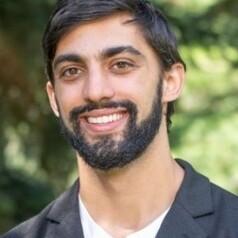
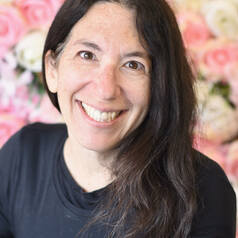
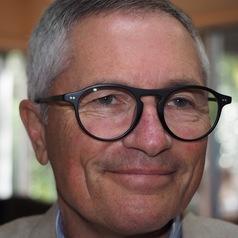
Higher Education & Laboratory Coordinator at Harvard Forest, Harvard University I am a curious naturalist based in Boston, trained as a plant biologist and artist, and passionate about conservation and education. I completed my PhD in evolutionary biology at Harvard University, and I am now Higher Education & Laboratory Coordinator at Harvard Forest.
Assistant Professor of Plant Evolutionary Biology, University of Tennessee As a plant evolutionary biologist, I apply my research and education experience to understand how plant traits are constructed, how they function, and how they have evolved across geologic time. The techniques I use to ask and answer these fundamental questions integrate anatomy, physiology, and phylogenetics, using both large-scale analyses across thousands of species and small-scale analyses narrowing in on key organisms. I am also a science communicator working closely with a fellow botanist to democratize the study of plant biology through the production of academically rigorous (yet accessible) videos free to the public on social media. Check us out @letsbotanize.
Professor of English, John Carroll University Debby Rosenthal is a widely published specialist in 19th-century American literature and in 21st-century climate change literature. She teaches American literature at John Carroll University in Cleveland, Ohio.
Assistant Professor of Art History, Binghamton University, State University of New York Katherine Reinhart specializes in the history of art and visual culture of the early modern period. Her research examines intersections between art and science, with a particular focus on the creation, use, and circulation of images in the formation of knowledge. She is currently completing her first book, Images for the King: Art, Science, and Power in Louis XIV’s France, which examines the epistemic and political functions of images in the Académie royale des sciences—one of the first and most eminent scientific societies in the seventeenth century. It interrogates how various images and objects were created, selected, and deployed in the service of knowledge production and as a means of broadcasting monarchical power. In doing so, this book accounts for the pictorial practices of the natural philosophers assembled in Paris by Louis XIV and the artists with whom they collaborated and situates them in the larger context of the Sun King’s absolutist government and image-making program. Based on previously unstudied archival materials, Images for the King integrates the histories of art and science to explore graphic skill, visual and scientific practice, patronage structures, knowledge production, and the politics of images. Ultimately, it reveals how visual materials—from anatomical drawings to allegorical reliefs on coins—were indispensable to the Academy’s projects, providing tangible evidence of just how central scientific ambitions were to the evolving French state. Reinhart is currently working on three larger research projects: the first explores the materiality and material culture of early modern science and will culminate in an article and guest-edited special issue of the journal Centaurus. The second, a collaboration with Matthijs Jonker, takes an interdisciplinary and comparative approach to the visual culture of early modern scientific societies through an international symposium and edited volume. Finally, the third project investigates practices of image copying and circulation as they created and transmitted scientific and artistic ideas across early modern Europe and its colonial networks. Professor Reinhart’s research has been supported by the Folger Shakespeare Library, the Camargo Foundation, the Consortium for the History of Science, Technology, and Medicine in Philadelphia, the Paul Mellon Centre for Studies in British Art, and she is an ongoing member of the “Visualizing Science in Media Revolutions” Research Group at the Bibliotheca Hertziana - Max Planck Institute for Art History in Rome.
Professor of Political Science and International Affairs, American University William Lawrence is a professor of political science and international affairs at American University’s School of International Service. He has served as a senior diplomat at the U.S. embassies in Morocco and Libya. He lived and worked for 7 years in Morocco and Libya and has travelled dozens of times to both when not living there. He also served as International Crisis Group’s North Africa director and as Control Risks’ North Africa Director. He was previously a Peace Corps Volunteer in Morocco and is currently working with current and former Peace Corps Volunteers to raise funds for earthquake relief. In Peace Corps, he served two years in a small Atlas Mountain town and one year teaching at a university in Marrakech. He previously taught at Georgetown, Johns Hopkins, George Washington, Tufts, and two Moroccan universities (the one in Marrakech and one in Rabat). He co-authored After the Uprisings: Political Transition in Tunisia, Libya, and Yemen, and has published analysis on Morocco and Libya in Foreign Policy and with the Center for Strategic and International Studies, Middle East Institute, Oxford University, and Afropop Worldwide. His research focuses on global challenges, youth protest, informal economy, Islamic law and social change, U.S. policy towards Muslim communities, and political and popular culture. He also co-produced six MENA-related films and fourteen albums of North African music, mostly in Morocco and Libya or featuring Moroccans and Libyans.