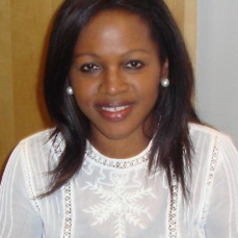
Professor of Criminology, University of Southampton Dr Pamela Ugwudike is an Associate Professor of Criminology, a Fellow of the UK’s Higher Education Academy, a Fellow of the national Alan Turing Institute for Data Science and Artificial Intelligence, and a member of the Alan Turing Institute’s Fairness, Transparency, and Privacy Interest Group. She has international expertise in multidisciplinary research on the ethics and governance of Artificial Intelligence (AI) systems, with a focus on data-driven technologies (such as predictive algorithms and online social networking platforms) that that inform criminal justice policy and practice. Dr Ugwudike is also a co-Editor-in-Chief of Criminology and Criminal Justice Journal (the flagship Journal of the British Society of Criminology) and she currently sits on the Editorial Board of the following Journals: The British Journal of Criminology; Policing and Society: An International Journal of Research and Policy; and the European Journal of Probation. She is also a member of the advisory group for Ada Lovelace Institute's legal review of the governance of biometric data in the UK; the Howard League for Penal Reform’s Research Advisory Group; The Youth Justice Board’s Academic Liaison Network; and an alumna of the Welsh Crucible for Future Research Leaders
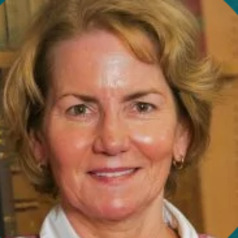
Professor of Law & Criminal Justice, University of Surrey I carry out interdisciplinary research on issues related to domestic and sexual violence, trauma responses in victims of assault, risk assessment practices, policing, sentencing, and corrections.
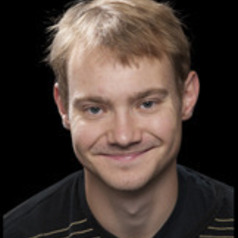
Lecturer in Research Evaluation and Student Engagement, Sheffield Hallam University Nathaniel Pickering is a Senior Lecturer in Student Engagement, Evaluation and Research at Sheffield Hallam University. Nathaniel works on internal and external research and evaluation projects that examine what works to improve student outcomes across access, attainment, retention, and progression, with a particular focus on widening participation. Much of his work is focused on using theory-based evaluation to improve programmes of change and impact, and he has recently launched a game-based resource, ChangeBusters, to support university staff in developing a theory of change. Nathaniel is in the final stages of undertaking a PhD at Lancaster University that examines the impact of crisis events on English higher education policy.
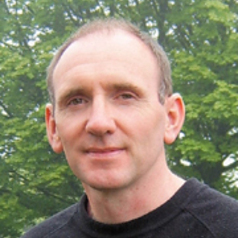
Archaeological Research Assistant, University of Bradford I am a postdoctoral researcher on the European Research Council funded Europe's Lost Frontiers project, working with Prof. Vince Gaffney and colleagues on the archaeological aspects of a project aimed at discovering more about the lost, submerged prehistoric landscape of Doggerland - now the base of the North Sea. My main research focus is on the investigation of archaeological materials and cultural heritage that lay under water. In particular, my interests lie in the landscapes as they evolved from the final Pleistocene into the mid-late Holocene. These landscapes would have certainly been of immense importance to prehistoric peoples, and yet they remain one of the most poorly understood places from our past. Many of archaeology's biggest questions depend upon data that lies upon the seabed, and the ELF project leads the way in exploring their archaeological potential. Other Research Interests: In addition to my role as a Mesolithic/Neolithic specialist, I have broad array of interests pertaining to many aspects of hunter-gatherer society and hominin evolution. These include, means of cultural adaptation to environmental variation, subsistence strategies, migration events, mid-later period hominin evolution and cognitive development, ethnoarchaeology, the transition to farming, and the history of prehistory, among other topics.
Professor of Archaeological Science, University of Bradford I am an archaeological scientist with a PhD in Earth Resistance and for 18 years I co-owned the largest commercial company dedicated to archaeological geophysics in the UK. I was the Chair of ISAP and I previously the editor of the journal Archaeological Prospection. In the summer of 2007 I was awarded an Honorary Doctorate for popularising archaeological geophysics via Time Team and through other media opportunities. I teach both UG / MSc students and supervise a wide range of doctoral topics. My core research interests are based on the fundamental understanding that geophysical data can aide archaeology in the understanding of the life and culture of ancient peoples. In particular I am interested in challenging environments where technical excellence and novel methodological approaches can lead to enhanced interpretation of past environments.
Anniversary Chair in Landscape Archaeology, University of Bradford Following postgraduate studies at Reading Professor Gaffney has gained an international profile in archaeological and heritage research. His current research projects include mapping the inundated landscapes of the Southern North Sea, agent-based modelling of the battle of Manzikert (1071) in Anatolia and the “Stonehenge Hidden Landscapes” Project - where he leads the UK team creating 3D and virtual imaging of the largely unmapped world heritage landscape. Other recent fieldwork has included a major project investigating Roman Wroxeter, survey of Diocletian’s mausoleum in Split, the wetland landscape of the river Cetina (Croatia), fieldwork in Italy centred on the Roman town at Forum Novum, historic landscape characterisation at Fort Hood (Texas) and internet mapping of the Mundo Maya region. Professor Gaffney has received national and international awards for his work including the European Heritage Prize for contributions to global heritage and the Queen's Anniversary Prize for Higher Education. His work on inundated marine landscapes received the 2007 award for Heritage Presentation at the British Association for the Advancement of Science. His book “Europe’s Lost World” was awarded the “Best Publication” prize at the British Archaeological Awards in 2010.