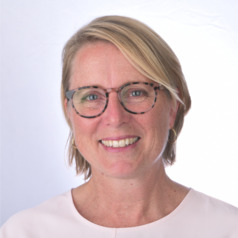
Professor of Social Psychology and Criminology, Royal Holloway University of London I am Professor of Social Psychology and Criminology and Director of the Institute for the Study of Power, Crime, and Society at Royal Holloway, University of London. In my research, I investigate the legitimization of criminal governance, political radicalization, and the implications of cultural ideologies across countries. In 2021, I was awarded the European Research Council StG grant for his project “Secret Power” (funded by UKRI), which examines how communities respond to criminal authority in Italy, the United Kingdom, and Japan.
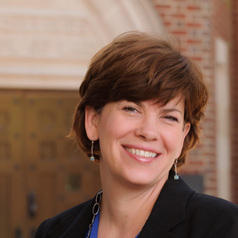
Professor of Cultural Anthropology, Georgetown University Dr. Davis’ research focuses on refugees and conflict, specifically, Palestinian, Syrian, and Iraqi refugees. She has conducted research in Jordan, Turkey, Iraq, and Lebanon. She was also the lead qualitative researcher on a Georgetown University-International Organization for Migration longitudinal study of Iraqis displaced by ISIS/ISIL and their access to durable solutions. The study (2015-2021) followed over 3000 Iraqi families internally displaced in Iraq. Her book, Palestinian Village Histories: Geographies of the Displaced, (Stanford University Press, 2011) was co-winner of the Middle East Studies Association’s Albert Hourani Book Award recognizing outstanding publications in Middle East studies. The book addresses how Palestinian refugees today write histories of their villages that were destroyed in the 1948 war, and the stories and commemorations of village life that are circulated and enacted in the diaspora. This work is based on over 120 village memorial books composed by refugees in Syria, Jordan, Lebanon, the West Bank, Gaza, and Israel, and ethnographic research in these communities. Professor Davis’ is currently writing a book about the conceptions of culture in the U.S. military’s war in Iraq. She examines the cultural training material produced by military institutions and contractors about Iraqis, Arabs, and Islam. Through interviews with U.S. soldiers and marines, her research discusses how the servicemen and women assess the cultural training they received and their experiences with Iraqi culture and society. Interviews with Iraqis provide perspective on how Iraqis experienced the American troops’ cultural knowledge in practice. Her other research interests include Palestinian poster art ( and Palestinian social and cultural life prior to 1948. She has also collected over fifty oral histories of Palestinian Jerusalemites about their lives in the twentieth century.
Professor of Law, University of Richmond Julie E. McConnell is a Professor of Law, Legal Practice and Director of the Children’s Defense Clinic. In addition, she teaches Advanced Clinical Practice and has taught Juvenile Delinquency Law and Procedure and the Science of False Confessions. She has worked in youth justice for more than 25 years and is a frequent speaker, writer, and trainer on best practices in holistic representation, trauma-informed, client-centered practice, the impact of child abuse on children, child mental health, and clinical education. She and her students primarily represent indigent youth on a pro bono basis, handling motions, trials, sentencings, custody proceedings, school-based proceedings, and post-conviction hearings. Clinic students have avoided felonies for almost all their trial clients and gained early release for many adults sentenced as children who have rehabilitated themselves during their incarceration.
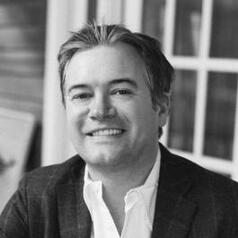
Assistant Director, Applied History Project and Intelligence Project, Harvard Kennedy School Calder Walton is Assistant Director of the Belfer Center's Applied History Project and Intelligence Project. His research is broadly concerned with intelligence, history, grand strategy, and international relations. His research has a particular focus on policy-relevant historical lessons for governments and intelligence communities today. Calder is finishing a book, Spies. The Hundred Year Intelligence War between East and West, to be published by Simon & Schuster and Little Brown in 2023. His research, and commentary, about national security issues frequently appear in major news and broadcast outlets on both sides of the Atlantic. Calder is also general editor of the multi-volume Cambridge History of Espionage and Intelligence to be published by Cambridge University Press. Over three volumes, with ninety chapters by leading scholars, this project will be a landmark study of intelligence, exploring its use and abuse in statecraft and warfare from the ancient world to the present day. Calder's research builds on his first (award-winning) book, Empire of Secrets. British Intelligence, the Cold War and the Twilight of Empire (Harper-Press 2013). While pursuing a Ph.D. in History at Trinity College, Cambridge, England, and then a Junior Research Fellowship also at Cambridge University, Calder was a lead researcher on Professor Christopher Andrew's unprecedented official history of the British Security Service (MI5), Defend the Realm (2009). This research position gave Calder, for six years, privileged access to the archives of MI5, the world's longest-running security intelligence agency. As well as his research on intelligence history, Calder is also an English-qualified Barrister (attorney). He lives in Cambridge, Massachusetts, with his wife and young son, who each day teaches him more about skulduggery than anything else.
Associate Professor of Urban Studies, City University of New York I am a sociologist who studies immigration, the military, urban public spaces and gentrification, race and ethnicity, and alternatives to capitalism. In 2023, I am focused on sharing the findings of my new book, Green Card Soldier: Between Model Immigrant and Security Threat (MIT Press). The research for this book has allowed me to become an expert on immigrant enlistment in the US military, including through special programs like MAVNI, the role of race, gender, and immigrant status in the experience of military work and separation, and deportation of veterans. I also write about diversity discourse in the military, topical because of SCOTUS decisions on affirmative action in college admissions, which the US military consistently opposes. With Dr. Hsin, I have examined the experience of undocumented college students in New York. We have published our findings in several articles, focusing on the experience of understudied groups, such as Asian undocumented youth. We have also published our findings on the tensions between college staff's understandings and goals in supporting undocumented students and the students' experiences and needs. We also developed the concept of stratified entry into illegality, analyzing the role of how one becomes undocumented on subsequent trajectories. My first book, The Road to Citizenship: What Naturalization Means for Immigrants and the United States (Rutgers) contains a unique analysis of naturalization ceremonies, as well as analysis of why immigrants seek citizenship and inequities in its acquisition. While much of my recent work is centered on immigration, I have also researched and written about gentrification and public space. My research on community gardens, public libraries, parks, and farmer's markets has been well received, and I continue to engage with these subjects as a reviewer, book review editor, and in the classroom.
Associate Professor of Physics, Miami University My group's research centers around computational astrophysics, where we attempt to solve astronomical problems employing computational physics. These problems have consisted of many issues associated with the formation of solar systems and the orbital and rotational evolution of planetary satellites. Recently, we adapted our codes to study self-bound gravitating systems like stellar clusters and galaxies. Here, we are simulating the motion of stars in Dwarf Spheroidal Galaxies using an alternative to the dark matter paradigm, i.e. Modified Newtonian Dynamics (MOND).