Filología. Literatura moderna, Universidad de Navarra Gabriel Insausti (San Sebastián, 1969) ha publicado novela (El hombre inaudible, El agua alta, diarios (Días en Ramplona, El oro del tiempo), literatura de viajes (En la ciudad dormida, Rumor del río), poesía (Últimos días en Sabinia, Destiempo, Vida y milagros, Línea de nieve, Azul distinto), aforismos (Preámbulos, El hilo de la luz, saque de lengua, Estados de excepción, Maneras de esperar), ensayo (Récord de permanencia) y crítica (La presencia del romanticismo inglés en Cernuda, Tras las huellas de Huston, La distancia y el tiempo: escritos sobre Cernuda, La trinchera nostálgica: escritores británicos en la guerra civil española, Miguel Hernández, la invención de una leyenda, Tierra de nadie: el poeta inglés y la gran guerra, Verdad y belleza: la pasión de Gerard Manley Hopkins, La lira de Linos: cristianismo y cultura europea, Pasos en el atrio: Kafka, Roth y Buber y Brodsky y la Navidad: hacia otra Rusia). Ha editado los volúmenes colectivos Gaur: 50 años (2018), Unamuno en Hendaya (2020) y Figura con paisajes. Baroja en Navarra (2023). Ha traducido a Wilde, Waugh, Coleridge, Lamb y Hopkins, entre otros autores, y preparado ediciones bilingües de la poesía de Coleridge, Auden, Newman, Day Lewis, Spender, Owen, Thomas y W. H. Davies. Ha recibido premios de poesía (“Gerardo Diego”, “Arcipreste de Hita”, “Manuel Alcántara”), de novela (“Ateneo Jovellanos”), de crítica literaria (“Amado Alonso”) y de aforismos (“José Bergamín”). Fue finalista del Premio nacional de Literatura en 2002 y del Premio Herralde de novela en 2014. Es Doctor en Filología Hispánica, Doctor en Filología Inglesa, Master of Arts en Historia del Arte y Master of Arts en Filosofía. Licenciado en Filología Hispánica y Bachelor en Filosofía. Fue Premio Extraordinario de Doctorado en Hispánica. En la actualidad es profesor de Literatura Universal en la Universidad de Navarra.
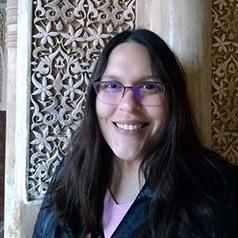
Research Fellow of Mental Health Neuroscience, UCL I have a Bachelor's degree in Clinical Psychology and a Master's degree in Neuroscience. My master's project was about predicting schizophrenia development in patients with a high genetic predisposition using high-density EEG with 256 electrodes. I also have a background in Computer Science. During my PhD in Cognitive Neuroscience from the University of Cambridge, under the supervision of Professor Trevor Robbins and with Professor Barbara Sahakian as my advisor, I studied compulsive behaviour in patients with OCD using clinical scales and a computer task to measure habitual versus goal-directed behaviour. We used 7T proton Magnetic Resonance Spectroscopy (1H-MRS) to measure neurochemical imbalance in brain regions important in the pathophysiology of OCD. After designing and developing a new computer paradigm to measure checking behaviour (one of the most common symptoms of OCD) in a laboratory setting, I also studied the relationship between brain metabolites and checking behaviour in patients with OCD using 7T 1H-MRS. Additionally, I also studies OCD symptoms of clozapine-treated patients with schizophrenia, showing OCD symptoms as a consequence of their treatment, under clinical supervision of Dr Emilio Fernandez-Egea. We used clinical scales and novel computer tasks to characterise clinical symptoms in patients with OCD, schizo-OCS, pure schizophrenia compared to each other and to healthy controls. At the moment I am a Post-doctoral Research Fellow at UCL, working with Professor Argyris Stringers and Dr Georgina Krebs. I am designing a new computer task that allows us to capture the relevant factors underlying improvements in Cognitive Behavioural Therapy, and model them using mathematical models.
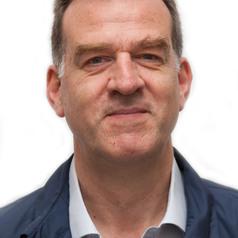
Professor of Neuroscience, University of Cambridge Trevor is Professor of Cognitive Neuroscience at the University of Cambridge from 1997, being based in Cambridge for most of his scientific career and receiving his PhD there in 1975. He was also Professor of Expt. Psychology and Head of the Dept. of Psychology (2002-2017). He is a Fellow of the British Psychological Society (1990), British Pharmacological Society (2017), Academy of Medical Sciences (2000), and Royal Society (2005), the most prestigious science society in the U.K. He has published over 950 peer-reviewed articles, (H index 208, Web of Science; 256, Google Scholar). He has co-edited nine books, most recently (with N. Fineberg) Neurobiology and Treatment of OCD: Accelerating Progress. (Springer, 2021). He edits Psychopharmacology (since 1980) and Current Opinion in the Behavioral Sciences, and is an editorial advisor for Science. Trevor directs the ‘Behavioural and Clinical Neuroscience Institute’ (founded in 2005) the mission of which is to enhance translation from basic to clinical neuroscience. In 1987, he co-invented the CANTAB computerized neuropsychological test battery, used in over 700 centres world-wide. He is especially interested in frontal lobe function, including cognitive flexibility and its neurochemical modulation, relevant to clinical disorders especially of impulsive-compulsive behaviour. He received the Distinguished Scientific Contribution Award from the American Psychological Association (2011). In 2014 he shared the Brain Prize of the Grete Lundbeck European Brain Research Foundation, the most valuable in neuroscience, for his work on human mental disorders. He received Lifetime Achievement Awards from the British Association for Psychopharmacology (2015) and the British Psychological Society (2018). In 2016, he received the Robert Sommer Award for research into schizophrenia. In 2017 he received the Gold Medal of the Society for Biological Psychiatry (USA) and the Goldman-Rakic Award (from the Brain and the Behavior Foundation) for outstanding research in cognitive neuroscience. Trevor has been rated by Semantic Scholar as the "4th Most Influential Neuroscientist of the Modern Era". He received the William James Fellow Award of the Association for Psychological Science (2021) and high research rankings in both Psychology and Neuroscience according to res.com (2022). https://research.com/scientists-rankings/neuroscience/psychology He was made a CBE in the U.K. New Year’s Honours list. in 2012 "for services to medical research".
Professor of music theory, Hunter College Philip Ewell is a professor of music theory at Hunter College of the City University of New York. His research specialties include race studies in music theory, Russian music theory, Russian opera, modal theory and history, twentieth-century music theory, and hiphop and popular music. As a public music theorist his scholarship has been featured in Adam Neely’s YouTube channel, the BBC, Die Zeit, the New York Times, the New Yorker, and WQXR’s Aria Code, among others. Philip's monograph, On Music Theory, and Making Music More Welcoming for Everyone, which appeared with the University of Michigan Press’s Music and Social Justice series in Spring 2023, takes an antiracist approach to music education for the twenty-first century. He is also under contract at W. W. Norton to coauthor a new music theory textbook, The Engaged Musician: Theory and Analysis for the Twenty-First Century, which will be a modernized and inclusive textbook based on recent developments in music theory pedagogy, with a projected publication date in 2024. Philip is the editor of the Oxford University Press book series Theorizing African American Music, which launched in Fall 2022. For more information on Philip visit his website, philipewell.com.
Research Manager, Chaplaincy Innovation Lab, Brandeis University Amy completed her PhD in sociology at the University of Connecticut. Her research interests focus on the potential and paradox of religious pluralism in the United States, the cultural production of the sacred, and meaning-making in both religious and (non)religious belief systems. Her dissertation examined the practice of donor memorial ceremonies, which are memorial services held by medical schools to commemorate and honor whole-body anatomical donors.
Professor of Industrial Economics, Faculty of Social Sciences, University of Nottingham Sourafel Girma is currently Professor of Industrial Economics at the University of Nottingham.. He obtained research awards from, among others, the ESRC, European Union and the Department of Trade and Industry. He had also been active in the field of knowledge transfer and policy advice, with consultancy works for the Department of Trade and Industry, UK Trade and Investment and the Treasury. Sourafel’s research publications enjoyed several media appearances, and according to REPEC, which is the largest bibliographic database dedicated to Economics, he is ranked among the top 5% authors in terms of several metrics, including the number of distinct works and citations.