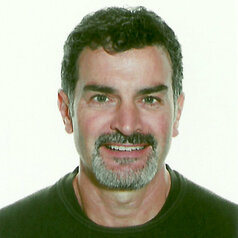
Catedrático de Geografía Física, Universitat de les Illes Balears Doctor en Geografia por la Universitat de Barcelona (1997). Estancia postdoctoral en la Loughborough University (UK) el año 1998. He realizado estancias de investigación en la Ben Gurion University (Israel), el USDA Forest Service Pacific Southwest Research Station (EEUU), la Universidad de Glasgow (Escocia) y la Universidad de California en Berkeley (EEUU). Profesor de Geografía Física en el Departament de Geografia (antes Ciències de la Terra) de la Universitat de las Illes Balears desde Octubre de 1998. Su investigación se centra en: i) geomorfología fluvial (efectos del hydropeaking en el inicio del movimiento en ríos de grava, transporte de sedimentos, evolución de la red fluvial), ii) la hidrología en cursos de agua temporales mediterráneos (análisis de series temporales, hidrología de caudales cero y ecología fluvial), iii) los recursos hídricos en medio insulares (gestión del agua, consumo de agua en zonas urbanas y turísticas, tarifas del agua) y iv) la fotografía aérea histórica para evaluar los cambios en el paisaje a largo plazo.
Profesor de Finanzas y Turismo, Universitat de les Illes Balears Bartolome Deya Tortella is PhD in Economics by the Universidad Carlos III de Madrid (Spain). He has published several research papers in international journals like Water Resources Research, Water, Journal of Environmental Management, International Journal of Hospitality Management, Journal of Sustainable Tourism, Water, Advances in Accounting, Management Research, The European Accounting Review, between others. He has participated and participates consecutively since 2001 in a total of 10 research projects at both national and international level. Has made contributions in several national and international conferences. Has made several research visits at prestigious investigation centers like Universidad Carlos III de Madrid Arizona State University – (USA). In July 2004 he received First Prize for Financial Studies in Human Resources Area (Centro de Estudios Financieros). He is reviewer of several international reviews like Annals of Tourism Research, Tourism Economics, European Accounting Review, among others. Nowadays he is a full professor in the Department of Business Economics in the area of Financial Economics and Accounting in the University of Balearic Islands, from October 1997. He is also coordinator of several international conferences (International Conference Tourism China-Spain, International Conference of Digital Tourism, etc). He has been also the coordinator of the Melia Hotels International Chair. He has held various management positions of responsibility since March 2004 like vice dean of the Faculty of Economics and Business and Dean of the Faculty of Tourism. Actually is the Vice-Dean of the Faculty of Tourism.
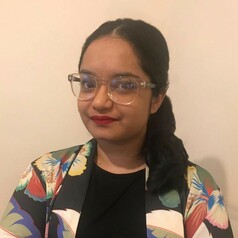
Research Associate, Newcastle University Dr Copilah-Ali is a Research Associate at Newcastle University Business School where she researches and promotes Corporate Digital Responsibility (CDR) and digital ethics on multi-disciplinary research teams spanning computer science, social sciences, and law. She is a certified Data Ethics Professional with the Open Data Institute. Her PhD is in the area of Critical Entrepreneurship Studies, focused on the representation of entrepreneurs in popular culture (covering reality television, social media, and memes). She continues to pursue research on the representations and discourse of business in popular culture.
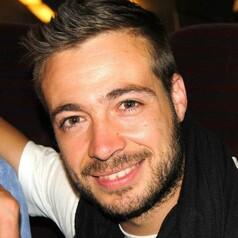
Professeur d'écologie forestière, Université du Québec en Abitibi-Témiscamingue (UQAT) Mes expertises portent sur l'aménagement forestier durable et la sylviculture face aux changements climatiques. Concrètement, ma recherche vise à développer des traitements de coupes expérimentales (coupes partielles) et à évaluer leurs effets sur la croissance, la régénération, la mortalité (chablis) et la biodiversité. De plus, je m'intéresse à la modélisation de forêts complexes à l'échelle du paysage (Landis-II), ainsi qu'à l'effet des perturbations naturelles (épidémies d'insectes, chablis, broutement, le castor), à la structure et à la dynamique forestière à multiples échelles spatio-temporelles en utilisant des approches dendroécologiques et paleoécologiques. Diplômes : Postdoctorat, UQAC (2018-2019) Postdoctorat, SLU (2017-2019) Postdoctorat, UQAC (2017) Ph. D. en foresterie, UQAC (2017) B. Sc. en génie forestier, Université de Huelva (2011) M. Sc. systèmes d'information géographique, Université de Seville (2009) B. Sc. en sciences de l'environnement, Université de Murcie (2007)
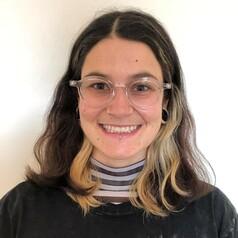
Étudiante au doctorat en paléoécologie et écologie historique, Université du Québec en Abitibi-Témiscamingue (UQAT) -Baccalauréat en biologie à l'Université du Québec à Chicoutimi (2016-2019) -Maîtrise en écologie nordique à l'Université Laval (2020-2022) -Doctorat en paléoécologie et écologie historique à l'Université du Québec en Abitibi-Témiscamingue (2022-en cours)
Professor of Pharmacy Postgraduate Education, Interim Director of CIPPET, University of Reading SKILLS Experienced team leader, committee chair and director. Skills in change management, troubleshooting and team building. Fellow of the Royal Pharmaceutical Society in recognition of contribution to the pharmacy profession. Experienced leadership skills trainer and mentor. Research, evaluation and tertiary level teaching expertise. QUALIFICATIONS 1986 PhD in Clinical Pharmacy and Therapeutics. Thesis entitled: The use of health status indicators to evaluate disease and drug therapy, University of Wales, Cardiff. 1983 MRPharmS (Member of the Royal Pharmaceutical Society of Great Britain) Now General Pharmaceutical Council (GPhC) registration number 2028914 and MRPharmS number 76312 1982 BPharm, 2nd class honours, upper division, University of Wales, Cardiff PRESENT POSTS Interim Director of CIPPET, University of Reading Visiting Professor, University of Portsmouth RESEARCH INTERESTS Current research focussed on development of the pharmacy profession for the benefit of patients and includes the following projects: development of the Healthy Living Pharmacy workforce to deliver benefits in health promotion, the suitability of a “flipped classroom” approach to teaching therapeutics, the use of simulation versus “immersive” education in the MPharm programme, the impact of mentors and peer assisted learning in undergraduate education and development/evaluation of inter-professional education and “professionalism” teaching at undergraduate level and in early professional practice.