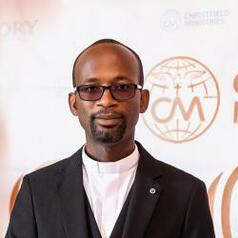
Research Fellow, University of Ghana Philip-Neri is a research fellow at the Institute for Environment and Sanitation Studies, University of Ghana. His research focuses on nearshore coastal processes including coastal erosion and sargassum beaching with the application of remote sensing/GIS and numerical modelling.
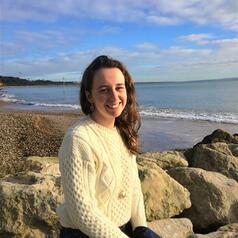
Senior Research Fellow, University of Southampton Sien van der Plank is currently a Senior Research Fellow within the School of Geography and Environmental Science at the University of Southampton. She has researched environmental management across conservation, political, mining and hazard contexts since 2014. She has been a member of staff in Geography and Environmental Science since 2020.
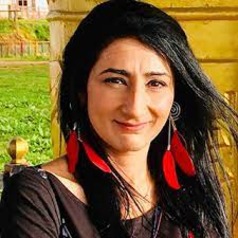
Associate Professor of Obstetrics, Gynecology and Gynecologic Surgery, University of California, San Francisco Dr. Rowen is a general obstetrician and gynecologist with a clinical and research focus on sexual health and gynecologic care for women with disabilities as well as women with cancer. She is an international expert in sexual health, serving as a board member for the International Society for the Study of Women's Sexual Health and as an Associate Editor for the Journal of Sexual Medicine. She has also conducted several studies on family planning as well as safe motherhood in developing countries. As a generalist, Dr. Rowen also provides family planning services as well as management of routine and complex gynecologic conditions, including surgical services and office treatment for conditions ranging from abnormal uterine bleeding, fibroids, adnexal masses, cervical dysplasia and endometriosis.
Head of School of Social Sciences, University of Westminster Dibyesh Anand is the Head of the School of Social Sciences at the University of Westminster in London. He is a professor of international relations and the author of monographs "Geopolitical Exotica: Tibet in Western Imagination" and "Hindu Nationalism in India and the Politics of Fear" and has spoken about and published on varied topics including Tibet, China-India border dispute, Hindu nationalism and Islamophobia in India, and the colonial occupation in Kashmir. He is co-chair for the Westminster BME network and newly formed EDI committee. He identifies as queer in personal and political terms. He is available on Twitter @dibyeshanand. Dibyesh Anand is the Head of the School of Social Sciences at the University of Westminster in London. He is a professor of international relations and the author of monographs "Geopolitical Exotica: Tibet in Western Imagination" and "Hindu Nationalism in India and the Politics of Fear" and has spoken about and published on varied topics including Tibet, China-India border dispute, Hindu nationalism and Islamophobia in India, and the colonial occupation in Kashmir. He is co-chair for the Westminster BME network and newly formed EDI committee. He identifies as queer in personal and political terms. He is available on Twitter @dibyeshanand.
Reader (Associate Professor), School of Social Sciences, University of Westminster Dr Nitasha Kaul (BA Economics Honours, SRCC, University of Delhi; MSc (Economics) with a specialisation in Public Policy and a Joint PhD Economics & Philosophy, University of Hull) is a widely-travelled multidisciplinary academic, award-winning novelist, and media commentator. Her interventions on politics, democracy, and human rights have appeared in major international radio, televisual, and print media including BBC, CNN, Al Jazeera, DW, France 24, The Guardian, and The Independent. She has wide recognition as a public intellectual, having delivered invited lectures and keynotes at institutions around the world, addressing diverse audiences, including U.S. Congress, U.N, and European Parliament. She is Associate Professor (Reader) in Politics and International Relations and Director of Centre for the Study of Democracy (CSD), University of Westminster, London. She has previously been an Associate Professor in Creative Writing in Bhutan and a tenured Assistant Professor in Economics at the Bristol Business School.Her work, over the last two decades, has been on identity, democracy, political economy, technology/AI, Hindu nationalism, rise of the global right, feminist and postcolonial critiques, small states and Himalayan geopolitics, Hindu nationalism, Kashmir, Kerala, and Bhutan. She is the recipient of multiple research grants and awards for her research, writing, and activism. She is the author of over 145 publications, including 7 single-authored or edited scholarly and literary books, book chapters in numerous critical and ground-breaking edited collections, plus peer-reviewed original research articles in numerous journals across humanities and social science disciplines. Her books include Imagining Economics Otherwise (Routledge, 2007), and political fiction telling the stories of conflict and identity, such as her novel Future Tense (Harper Collins, 2020) and the Man-Asian Literary Prize shortlisted novel Residue (Rainlight, 2014) that was the first novel in English by a Kashmiri woman author. A focus on creating knowledge narratives to raise critical consciousness to build resilient democracies and lift the voices and views that are marginalised resonates through all her work; she highlights the need for social justice and human rights internationally and acts to combat prejudice and challenge the politics of hate. Across disciplines, geographies, and over the years, the themes that motivate her work are as follows: the need to foreground and critically analyse -- institutions and systematisations of knowledge trajectories (and their link to systems of oppression, discourses of legitimisation, and narratives of dispossession); indigenisations of political expression; the use of memory as a resource; and the understanding of identities as they travel through the disciplining processes of territory and time. See https://twitter.com/NitashaKaul and https://westminster.academia.edu/NitashaKaul/CurriculumVitae