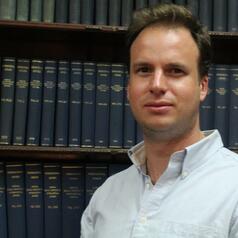
Assistant Professor of Law, University of Windsor Danardo Jones joined the Faculty of Law as an Assistant Professor in January 2021. Professor Jones comes to the Faculty with years of criminal law experience, having worked as a staff lawyer at various Legal Aid organizations across Eastern Canada (Newfoundland and Labrador and Nova Scotia) and Ontario. He was also the Director of Legal Services for the African Canadian Legal Clinic. In that role, he intervened in precedent-setting cases before the Supreme Court of Canada (Tran v. Canada (Public Safety and Emergency Preparedness), 2017 SCC 50; British Columbia Human Rights Tribunal v. Schrenk, 2017 SCC 62). Professor Jones's research interests include criminal law, criminal procedure, criminal sentencing, and race and the law. His research draws on scholarly literature from law and cognate disciplines, including penology and criminology, law and geography, philosophy of law, critical race theory, and prison abolitionist and restorative justice literature.
Senior Lecturer in Astronomy, University of the Western Cape Born in South Africa with a PhD from the University of Cape Town, Dr. Michelle Lochner is a Senior Lecturer with a joint position between the University of the Western Cape and the South African Radio Astronomy Observatory (formerly SKA South Africa). Her focus is on cosmology and trying to get the best out of combining optical and radio telescopes like the Vera C. Rubin Observatory, in Chile, as well as the Square Kilometre Array and its precursor, MeerKAT, in South Africa. She works on developing new statistical techniques and machine learning techniques to tackle the masses of data we are dealing with in astronomy, currently focusing on the use of anomaly detection for scientific discovery. She is also the founder and director of an international mentoring programme for women and gender minorities in physics called the Supernova Foundation.
Senior Research Fellow, Chatham House and PhD candidate, International Relations, University of the Witwatersrand Christopher Vandome is a research fellow with the Chatham House Africa Programme. His research focuses on the political economy and international relations of Southern Africa, as well as regional peace and security, environmental issues and extractive industries. He has written several multi-author and single author peer reviewed book chapters, reports, articles and papers. He has significant experience project managing research on African political-economy issues, including coordinating inclusive multi-stakeholder research processes, conducting extensive field work, and organizing international events and conferences as well as events with senior international political figures. Christopher writes and comments regularly on political issues in southern Africa including for Africa Report, Al Jazeera, BBC, SABC, Huffington Post, Mail and Guardian, Newsweek and the Telegraph. Christopher previously lived in South Africa, and has a Master’s Degree from the University of Cape Town.
Professor of Development Economics, University of Oxford Christopher Adam's current research focuses on the macroeconomics of low-income countries, in particular those of Africa; monetary economics and public finance; and growth and structural change in low-income countries. His work uses methods of quantitative macroeconomics including stochastic and deterministic general equilibrium techniques. Christopher Adam is Lead Academic for the International Growth Centre (IGC) programme in Tanzania. He is also an occasional Visiting Scholar at the International Monetary Fund (IMF) as member of the DFID-IMF research programme on the macroeconomics of low-income countries. He is currently a co-editor of the Oxford Review of Economic Policy and is a member of the editorial board of Oxford Economic Papers, Oxford Development Studies and the Tanzania Economic Review.
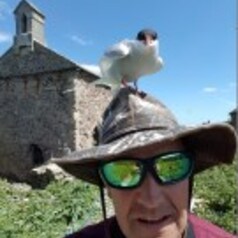
Senior Lecturer in Biology, Newcastle University My research interests are broad and cover the basic physiological processes of an animal up to those occurring at the animal-environment interaction. Underpinning my work is the use of remote monitoring technology such as heart rate monitoring, electronic data archival devices and satellite telemetry. Specific areas of study include: the physiology, ecology and behaviour of aquatic animals; energy expenditure of free-ranging animals; foraging behaviour of seabirds; use of stable isotopes to study animal ecology; spatial movements of animals; animal conservation.
Associate Professor of Conservation Biology, University of Oxford The overall objective of my research is to identify optimal management of environmental resources to maximise conservation and human welfare outcomes. In particular, my science is focused on improving our understanding of the dynamics of social-ecological systems, particularly marine systems. My research combines demographic and bio-economic modelling, non-market valuation and optimisation approaches. My topical interests include human-wildlife conflict, assessing marine use and non-use values, and spatial marine management.