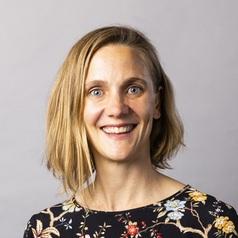
Doctoral Student in Health Psychology, University of California, Merced Jessica Marino is a doctoral student in health psychology at the University of California, Merced. She obtained her B.A. in Psychology from UC Merced in 2016 with a minor in Cognitive Science. Marino’s research focus is on the development and expression of maternal behavior. Specifically, she studies how hormones impact maternal behavior, and the intergenerational effects that the mother-child relationship can have on health. Her ultimate goal is to find protective maternal factors that may mitigate health risks in vulnerable children.
Ph.D. student in Ecology, Colorado State University I am a Ph.D. student studying radar aeroecology to study how we can make cities safer for migratory birds. I am also a writer, interested in connecting people to the natural world and making ecological research more accessible to all. I have written for the National Audubon Society, Nature Portfolio, Positively Filipino, and BirdCast, and I am a recurring guest on the American Birding Podcast.
Continuing Lecturer in Writing, University of California, Santa Barbara Bob Samuels' research interests include academic writing, social science writing, psychoanalysis, rhetoric, and media. He holds doctorates in Psychology and English, and he is the author of numerous books, most recently "Political Pathologies from The Sopranos to Succession," "Educating Inequality: Beyond the Political Myths of Higher Education and the Job Market," "The Politics of Writing Studies: Reinventing Our Universities from Below," and "Why Public Higher Education Should Be Free." He blogs at Changing Universities.
Honorary Senior Lecturer in Bioanthropology, Australian National University Papua New Guinea has been the focus of most of my recent research on health, nutrition and demography. This has been both at the level of nationwide and historical reviews, and of local research with Dr Don Gardner amongst the Mianmin of the highlands fringes of Sandaun (West Sepik) Province, where life expectancy is short, and health and child growth are generally poor, but where these also vary with local variation in altitude and ecology. In a different kind of human biological research project (also ARC-funded), I have recently focused with Prof Simon Easteal and others on the anthropological genetics of Papua New Guinea. In this project we are exploring genetic variation in both the female and male lines for clues as to the long-range histories of Papuan-speaking populations: questions include how the island of New Guinea was originally populated; whether genetic variation correlates with linguistic variation; and whether particular population groups may have expanded with the expansion of language families agricultural practices. In earlier research I studied population processes, ecology and nutrition in Zangskar valley, Jammu and Kashmir Province, northern India.
Socio-behavioural Scientist and Senior Researcher, Stellenbosch University Dr. Graeme Hoddinott is a Socio-behavioral Scientist and a Senior Researcher at Stellenbosch University in South Africa. He is also a fellow of the African Research Initiative for Scientific Excellence (ARISE) project. His ARISE research is focused on optimizing care for adolescents with Tuberculosis. The ARISE project is implemented by the African Academy of Sciences (AAS) with support from the European Commission and the African Union Commission. Graeme has 17 years’ experience working in communities of highest TB and TB/HIV co-morbidity in South Africa. Much of his work has focused on young people.His research expertise (that bridges between public health and social science) is focused on explicating the structural, systemic and operational processes underpinning public health interventions in high-burden contexts through rigorous mixed-method design and analyses.
Research Principal, Institute for Sustainable Futures, University of Technology Sydney Research Principal at the Institute for Sustainable Futures at University of Technology Sydney. Passionate about local food systems, community engagement and interdisciplinary research.