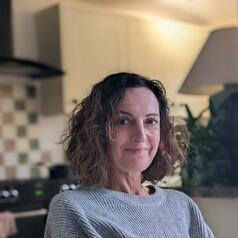
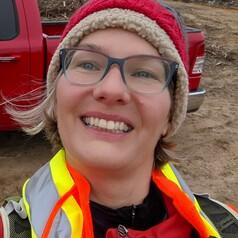
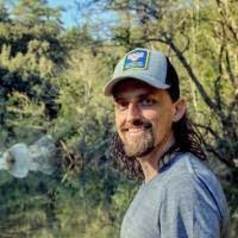
Clinical Lecturer, University of Manchester I am a Clinical Lecturer and Chartered Clinical Psychologist working at the University of Manchester and Pennine Care NHS Trust. I have predominantly worked with older people in mental health services and research in the areas of behaviour and distress in people with dementia, trauma and complex presentations in older people.
Doctoral Candidate, School of Geography and the Environment, University of Oxford Josh Ettinger is a doctoral candidate at the University of Oxford's School of Geography and the Environment, where his interdisciplinary research focuses on extreme weather events and climate change communication. He has previously worked at the American Association for the Advancement of Science (AAAS), Stockholm Environment Institute, Global Canopy, and on Capitol Hill in Washington D.C. He holds an MSc in Environmental Change and Management from Oxford’s School of Geography and the Environment and a BA in Global Studies, Geography, and Philosophy from Hofstra University Honors College in New York. He also previously worked as a production intern at The Daily Show with Jon Stewart and is passionate about the role of storytelling in engaging audiences about societal issues.
Virologist, Queen's University Belfast Connor is a virologist based at Queen's University Belfast in the School of Biological Sciences and Institute for Global Food Security where is a lecturer/assistant professor and group leader researching viruses and how our body defends itself from infection.
Assistant Professor in Law and Criminal Justice, University of Birmingham Dr. Tara Lai Quinlan is a US-trained lawyer (New York) and Assistant Professor at University of Birmingham. Dr. Quinlan’s research and teaching focus on criminal law, policing, disproportionality and diversity in the criminal justice system, and counterterrorism. Dr. Quinlan recently completed a monograph, Police Diversity: Beyond The Blue (Bristol: Policy Press), which examines experiences and impacts of police diversity in the UK and US, and includes original interviews with trailblazing UK and US police leaders. Dr. Quinlan’s PhD examined police engagement programmes with Muslim, Arab and South Asian communities as part of post-9/11 counter-terrorism approaches, and involved interviews with leading UK and US law enforcement and counter-terrorism officials. Before commencing her academic career, Dr. Quinlan practiced law in New York City, where she worked on employment litigation, housing discrimination, access to justice and criminal law matters.
Associate Professor, Spatial Ecology, Toronto Metropolitan University I am a spatial ecologist and Associate Professor in the Department of Chemistry and Biology at Toronto Metropolitan University. I’m fascinated by urban ecology and ecosystem diversity at the local level and across multiple scales. My work in spatial ecology began with research on birds in terrestrial systems, but then pivoted into aquatic systems. By drawing on my expertise in both areas, I can now tackle ecological questions using both lenses — an approach that often provides a wider, more comprehensive and unique understanding of the land-water connection. Our lab researches the impact of environmental stressors on species and on ecological functions. Specifically, we take a spatial analytical and geo-computational approach that lets us find patterns across multiple scales. We’re one of only a few labs to take a combined land-water lens to ecological problems. We draw on large datasets with spatio-temporal components (e.g. climate, socio-economic and environmental monitoring network data, land cover maps). From these, we build theoretical and empirical models of species distributions and compound environmental variables. Ultimately, our work aims to inform real-world strategies for responsible environmental stewardship.
Profesor lector en Ecología, Universitat de Barcelona Summary of the CV I have published a total of 55 JRC articles in 33 different journals covering a wide range of topics (e.g. biodiversity conservation, ecotoxicology, metacommunity ecology, paleolimnology). I am the first author of 19 and the last author of 6 of those articles. My publication rate has considerably increased during the last years, from 1 article published in 2009 to 10 articles published in 2021. Additionally, I have published 2 books and 7 book chapters. Thirty-one of my articles are published in journals belonging to the first quartile, including high impact journals like Science (IF = 37.2), Frontiers in the Ecology and the Environment (IF = 10.9), BioScience (IF = 8.3), Limnology and Oceanography Letters (IF = 7.875), Philosophical Transactions of the Royal Society B (IF = 5.7) and Science of the Total Environment (IF = 4.9). My publications have been cited 1948 and 2639 times and my h-index is 23 and 27, according to Scopus and Google Scholar (respectively). Some of my articles as first author have been widely cited. For example, my 2016 article in Science (351: 914-916) is in the top 5% of all research outputs ever tracked by Altmetric, and my 2013 article in Environmental Pollution (173: 157-167) was acknowledged as highly cited in the field of Environmental Sciences according to the Web of Science (i.e. it performed in the top 1%). According to the Field Citation Ratio, my articles have been cited on average 7.2 times more than the rest of articles published in the same field and in the same year. I have participated in 21 R&D projects funded through competitive calls of public or private entities (leading 5), 8 R&D non-competitive contracts (leading 4) and I have directly secured 527.656 euros in research funds. Also, I serve as a Senior Advisor to the Spanish Government on biomonitoring climate change and pollution in rivers and streams through the public corporation Tragsatec. I obtained 3 highly competitive fellowships (Ramón y Cajal, Fulbright and Marie Curie). I have coordinated mesocosm experiments and field campaigns in Iceland, Spain and USA. I have supervised 1 PhD student (+ 2 more on going), 2 postdoc researchers, 6 master theses and 6 undergraduate dissertations. Two of my students were awarded for their research projects: Daniel Torres (best BsC dissertation of the University of Vic in 2016) and Miquel Sala (II Earth & Torres award on innovation). I have been a committee member of 6 PhD defences. I have given 4 plenary talks, been a member of 4 scientific committees and chaired 9 special sessions at international conferences. I serve as an academic editor for Plos One (IF = 2.7) and I have served as guest editor for Philosophical Transactions of the Royal Society B (IF = 5.7), Limnology and Oceanography Letters (IF = 5.2) and Frontiers Ecology And Evolution (IF = 2.1). I have reviewed 172 articles for 42 different journals (e.g. Global Change Biology, Scientific Reports, Nature Geoscience, Ecography) and in 2017 I was awarded by Publons as the third best reviewer from the University of Barcelona. I am a member of the Gender and Science Commission of the Iberian Limnological Society and I served as the representative of early career researchers in the European Federation for Freshwater Sciences. I created and chaired a Global Interest Group on Freshwater Salinization at the Society of Environmental Toxicology and Chemistry bringing together stakeholders and scientists from around the world. Scientific trajectory I obtained my PhD from the University of Barcelona in 2009, focusing on the ecology and management of coastal ecosystems and publishing 7 JRC articles. During that period I did a research stay at the University of Algarve (Portugal), where I later (2010-2011) worked on integrated coastal management as a contracted researcher. Then (2011-2012) I came back to the University of Barcelona as an adjunct professor and a contracted researcher and I became interested on freshwater salinisation. I coordinated several mesocosm experiments and published 3 JRC articles, including a review acknowledged as highly cited by the Web of Science. Then I was awarded with a Fulbright Fellowship at the Oregon State University (2012-2014) to asses the impacts of climate change on stream biodiversity. There, I started my own research line on metacommunity ecology (publishing 2 JRC articles) and continued my research on freshwater salinisation (e.g. I created Global Interest Group at the Society of Environmental Toxicology and Chemistry). By then, I already had a strong and wide scientific network and I had gained international recognition. This allowed me to obtain a Marie Curie Fellowship at the University of Vic (2014-2016), where I created a research line on freshwater salinisation. I coordinated several experiments, supervised students and led my own research projects. This resulted in 5 JRC articles, including 1 published in the policy forum section of Science. After that (2016 present) I came back to the University of Barcelona, where I worked as a contracted researcher and an adjunct professor, and I was finally hired as a tenure-eligible lecturer professor within the Serra-Hunter talent attraction programme. During this period I have started a research line on biodiversity conservation planning, and I have gained independency (e.g. leading research projects, supervising students) and international reputation (e.g. plenary/invited talks, editorial activity, scientific advisory boards, media interviews). More recently, I have been awarded a Ramón y Cajal Fellowship by the Spanish Government that will fund my research for the next 5 years.