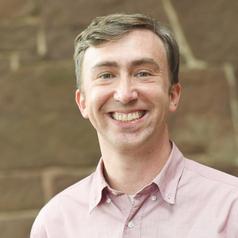
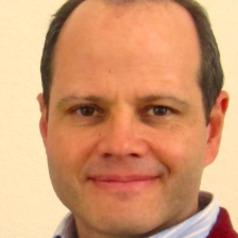
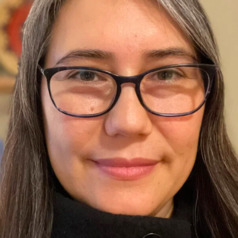
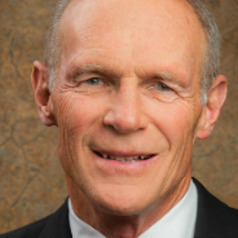
Associate Professor of Medical Laboratory Science, Rush University Nicholas Moore, PhD, D(ABMM), MLS(ASCP)CM, is a clinical microbiologist and a certified medical laboratory scientist. He received his master’s degree from and has completed his doctoral degree at Rush. His doctoral research studies have focused on the epidemiology of carbapenemases in post-acute care facilities in the Chicago metropolitan region. He is a member of the Chicago Prevention and Intervention Epicenter (C-PIE), in collaboration with the Cook County Health & Hospital System and the Centers for Disease Control and Prevention. C-PIE focuses on understanding the role of the gastrointestinal microbiome in the acquisition of antimicrobial resistant organisms. Moore’s long-term research goals are to remain part of an interdisciplinary research team examining changes and testing interventions to prevent the acquisition of multidrug resistant organisms. His primary teaching responsibilities in the Department of Medical Laboratory Science include serving as the course director of the clinical microbiology course and clinical rotations.
Regents' Professor of Art and Design, Georgia State University Pam Longobardi’s parents, an ocean lifeguard and the Delaware state diving champion, connected her from an early age to the aquatic. She moved to Atlanta in 1970 and saw her neighborhood pond drained to build the high school she attended. Since then, she lived for varying time periods in Wyoming, Montana, California, and Tennessee, and worked as a firefighter and tree planter, a scientific illustrator and an aerial mapmaker, a collaborative printer and a color mixer. Her artwork involves painting, photography and installation to address the psychological relationship of humans to the natural world. She has exhibited widely across the US and in Greece, Monaco, Germany, Finland, Slovakia, China, Japan, Italy, Spain, Belgium, Costa Rica and Poland. She currently lives and works in Atlanta as Regents’ Professor, Distinguished University Professor, and Professor of Art at Georgia State University. In 2006, after witnessing the vast amounts of oceanic plastics on remote Hawaiian shores, she founded the Drifters Project. Longobardi is a conceptual artist grounded in modalities of forensic investigation, action, collaborative process and social practice.
Associate Professor of Government, Wesleyan University Logan Dancey (Ph.D. University of Minnesota, 2010) is an Associate Professor in the Department of Government at Wesleyan University, where he teaches courses in American Politics. His research and teaching interests include the U.S. Congress, campaigns and elections, and public opinion. His work has appeared in such journals as the American Journal of Political Science, Political Research Quarterly, and Political Behavior. He is also a co-author (with Kjersten Nelson and Eve Ringsmuth) of the book It’s Not Personal: Politics and Policy in Lower Court Confirmation Hearings.
Research fellow at the Harvard Project on American Indian Economic Development, Harvard Kennedy School Jonathan Taylor is a research fellow at the Harvard Project on American Indian Economic Development, and a senior policy scholar at the Udall Center for Studies in Public Policy at the University of Arizona. Mr. Taylor has provided expertise to tribes and bands in the United States and Canada in the areas of strategic management and economic development. Mr. Taylor has worked in a wide variety of institutional and cultural contexts and on a wide variety of projects. These projects have included assessing changes in quality of life due to major enterprise success (including casino gaming), designing tax regimes, assisting in constitutional evaluation and reform, providing public policy analysis and negotiation support in the context of resource development, valuing non-market attributes of natural resources, and educating tribal executives. At present, he is studying the national evidence on the socioeconomic effects of Indian gaming on Indians and non-Indians. He has authored or supported testimony in litigation and in public hearings for a number of Native American groups needing economic analysis to support treaty rights or tribal policies. Mr. Taylor holds an A.B. in politics from Princeton University (1986) and an M.P.P. from the John F. Kennedy School of Government, Harvard University (1992).
Research Affiliate with the Harvard Project on American Indian Economic Development, Harvard Kennedy School Amy Besaw Medford is a Research Affiliate with the Harvard Project on American Indian Economic Development at the Harvard Kennedy School and an Analyst with the Taylor Policy Group. Previously, she was the Director of Program Development and Director of the Honoring Nations awards program at the Harvard Project and the Manager of Program Development at the Native Nations Institute for Leadership, Management, and Policy at the University of Arizona. Amy also serves on the board for the Calumet & Cross Heritage Society, which strives to preserve and share Brothertown Indian history and heritage. Amy is enrolled Brothertown Indian and Korean. She received her BA in Business Administration from the University of Washington, MA in Organizational Leadership from Chapman University, and EdM in Human Development and Psychology from the Harvard Graduate School of Education.
Ford Foundation Professor of International Political Economy, Emeritus, Harvard Kennedy School Joseph P. Kalt is Ford Foundation Professor (Emeritus) of International Political Economy. His research focuses on exploring the economic implications and political origins of the government regulation of markets. He also heads the Harvard Project on American Indian Economic Development. Kalt has published widely in the area of natural resources economics and policy. He is the author of The Economics and Politics of Oil Price Regulation; Federal Policy in the Post-Embargo Era, Drawing the Line on Natural Gas Regulation (with F.C. Schuller); What Can Tribes Do? Strategies and Institutions in American Indian Economic Development (with Steven Cornell); and a principle author of The State of the Native Nations (with the Harvard Project on American Indian Economic Development) and Rebuilding Native Nations (ed., Miriam Jorgensen). Kalt received his BA from Stanford University and his MA and PhD from the University of California, Los Angeles.