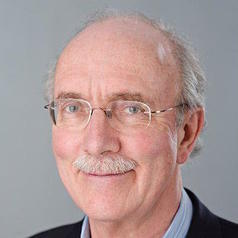
John Shattuck is a former U.S. secretary of state for democracy, human rights and labor. He has had a distinguished career spanning more than three decades in higher education, international diplomacy, foreign policy and human rights. Before coming to CEU, he was CEO of the John F. Kennedy Library Foundation, a national public affairs center in Boston, and Senior Fellow at Tufts University, where he taught human rights and international relations. President Shattuck served as Assistant Secretary of State for Democracy, Human Rights and Labor under President Clinton, playing a major role in the establishment by the United Nations of the International Criminal Tribunals for Rwanda and the former Yugoslavia; assisting an international coalition under UN authority to restore a democratically-elected government to Haiti; and negotiating the Dayton Peace Agreement and other efforts to end the war in Bosnia. Subsequently he served as US Ambassador to the Czech Republic, working with the Czech government to assist in overhauling the country’s legal system, and with Czech educators to support innovative civic education programs in the country’s schools and universities. In recognition of his human rights leadership, he has received the International Human Rights Award from the United Nations Association of Boston; the Ambassador’s Award from the American Bar Association Central and East European Law Initiative; and the Tufts University Jean Mayer Global Citizenship Award. Prior to his government service, President Shattuck was a Vice-President at Harvard University, taught at the Harvard Law School, and was a Research Associate at the Kennedy School of Government. At Harvard, he was responsible for managing the University’s relations with the federal government, including federal support for research funding and student financial aid. While at Harvard he founded the Cambridge Partnership for Public Education, and worked to expand Harvard’s role in assisting public schools, including the creation of a new program of fellowships for Cambridge and Boston teachers at the Harvard Graduate School of Education. He was also active in expanding Harvard’s public service programs involving students and faculty members. He received the Distinguished Service to Public Education Award in 1990 from the Massachusetts Board of Education, and the Yale Law School Public Service Award in 1988. Shattuck’s career began at the American Civil Liberties Union, where he served as Executive Director of the Washington Office and National Staff Counsel. He helped enact federal legislation to protect individual privacy and to enforce civil rights in the election process. He also handled a number of prominent civil rights and civil liberties court cases, including the representation of persons who had been targets of illegal surveillance during the Nixon administration. In 1984 he received the Roger Baldwin Award for his national contribution to civil liberties. Shattuck is the author of three books, including Freedom on Fire, a study of the international response to genocide and crimes against humanity in the 1990s, published by Harvard University Press, and Rights of Privacy, a casebook on US constitutional law and the protection of privacy. He has published more than 50 articles on human rights, civil liberties, international relations, public service and higher education. In 2007 he was elected to the American Academy of Arts and Sciences, and he has received honorary degrees from the University of Western Bohemia in the Czech Republic, the University of Rhode Island, Kenyon College, and the John Jay College of Criminal Justice at the City University of New York.
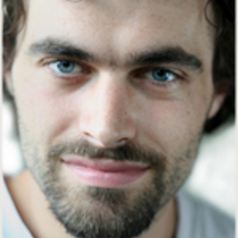
I study learning and decision making. My main focus is the movement system – the idea being that if we can understand the intelligence of simple actions we will have an excellent handle on intelligence more generally. My research looks at simple decision making, and simple skill learning, using measures of behaviour informed by the computational, robotics and neuroscience work done in the wider group. Academic website here: http://www.tomstafford.staff.shef.ac.uk/
Barbara is a Lecturer in the School of Health Sciences at the University of Stirling. Her research interests relate to the psychological aspects of health. She worked for 15 years as a Registered Nurse, including as a British Heart Foundation specialist cardiac nurse.
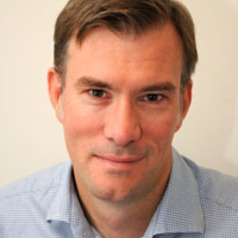
Roger works on optimisation and integration of renewable energy systems, linking together different technologies to find the least expensive, most reliable systems with the lowest carbon emissions possible. He also researches the chemistry of the stratosphere, and the impact of ozone chemistry on the surface climate. Prior to returning to Melbourne in 2008, he worked for the International Energy Agency on the Energy Technology Perspectives 2008 publication. He has worked to integrate observing systems for the global carbon cycle, and on the impact of climate change on the carbon cycle.
Máiréad Nic Craith joined the Department of Languages and Intercultural Studies as Professor of European Culture and Heritage in September 2012. She previously held a Chair in the School of Social Sciences and Applied Social Studies at the University of Ulster. Máiréad has held an honorary professorship at the University of Exeter as well as a DAAD guest professorship at the University of Göttingen. She has held other academic positions at the Universities of Liverpool, Dublin and Cork. She has received many accolades for her publications, including the Ruth Michaelis-Jena Ratcliff research prize for folklife (joint winner), which was awarded at the University of Edinburgh in 2004. Two years later she was awarded a Senior Distinguished Research Fellowship at the University of Ulster. In 2009 she was elected to the Royal Irish Academy, the highest academic honour in Ireland. Máiréad has served on numerous research evaluation panels in Europe and in Canada. She has recently been appointed assessor to the Australian Research Council. Máiréad’s research focuses on different aspects of living heritage including literary heritage (from the Great Blasket Island), intercultural heritage (Cork), World Heritage sites (Skellig Michael), heritage and conflict (Northern Ireland) and heritage and law in a European context. Her recent publications include an exploration of the role of heritage in the Derry/Londonderry (the first UK City of Culture). Máiréad has published a number of edited volumes on heritage including Cultural Heritages as Reflexive Traditions (2007 with Ullrich Kockel) and Cultural Diversity, Heritage and Human Rights (2010 with William Logan and Michele Langfeld). She is currently co-editing the Blackwell Companion to Heritage (due for publication in 2014). In 2011, she was invited by the United Nations as an expert on access to heritage as a human right. Language, power and cultural policy in European society have also been a sustained focus of interest throughout Máiréad's academic career. In 2009 Máiréad held a Leverhulme Research Fellowship examining the sense of dislocation that is experienced by bilingual authors living ‘in-between’ two cultures and two languages. She has explored key questions, such as the impact of political boundaries on the concept of language and the significance of language for citizenship. Máiréad has examined the quest for recognition and legitimacy among speakers of minority and contested languages and queried the non-recognition of migrant, non-European languages in the public space. In 2013, she was invited by the European Centre on Minority Issues as an expert on (linguistic) minorities.
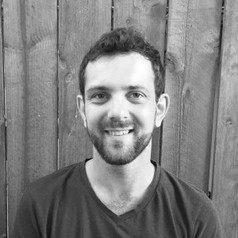
Tim Highfield is Vice-Chancellor's Research Fellow in the Creative Industries Faculty at Queensland University of Technology, where he is a member of the Digital Media Research Centre. His fellowship project is 'Visual Cultures of Social Media'. His research covers social and digital media, politics, activism, popular culture, sport, identity, humour, digital cultures, and more. His first book, Social Media and Everyday Politics, was published by Polity in April 2016. For more information, see http://timhighfield.net or @timhighfield on Twitter.