

 Menu
Menu

 Search

- News

- Economy

- Central Banks
- Investing
- Research
- Roundups
- Digital Currency
- Insights
- Technical Analysis
- Technology
- Business
- Law
- Health
- Nature
- Fintech
- Science
- Topic
- Opinions
- ©Econometrics LLC . All Rights Reserved.
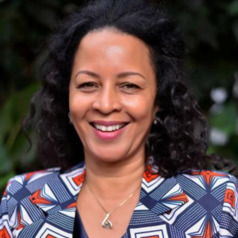
Aster Gebrekirstos
Global Scientist, World Agroforestry (ICRAF)
Dr. Aster Gebrekirstos is a scientist at World Agroforestry (ICRAF), where she leads the Dendrochronology Laboratory. She has over twenty years of experience in research, tertiary level teaching and consulting. She also lectures at universities in Germany and at the West African Science Service Center on Climate Change (WASCAL) PhD programme in Cote d’Ivoire.
Her areas of specialization include reforestation and dry land restoration, dendrochronology (tree ring analysis, stable isotopes and plant-climate interactions), plant ecophysiology (plant water relations, application of stable isotopes to the study of plant eco-physiological processes and global climate changes), tropical forest ecology and management (effects and consequences of global climate change on biodiversity and livelihoods), watershed management, agroforestry.
Aster Gebrekirstos (PhD, Gottingen University, Germany, 2005) is global scientist and head of the dendrochronology lab, World Agroforestry (ICRAF), Nairobi, Kenya, and affiliated with Erlangen University, Germany. Her research is in the area of forest ecology, dendroclimatology, climate change, applications of stable isotopes, land restoration. She led and participated in research projects across Africa and Asia. She set up dendrochronology labs in Ethiopia (2009) and in Nairobi (2013). She taught at Alemaya and Wondo Genet University, Ethiopia; as visiting professor at WASCAL, and Dresden University in Germany. She trained 20+ PhD students, published 80+ journal articles and book chapters. Her awards include: African Climate Award for excellence in climate change research (2014), Special Award for Groundbreaking Science (2009). Fellow of African Academy of Science (AAS), International Academy of Wood Science, conferred Eleonore Trefftz Visiting Professorship Dresden University. She is a vice-president of International Union of Agroforestry, chair of Environment Committee at AAS, member of science leadership at Past Global Changes (PAGES) and Mountain Research Institute (MRI).

Less 
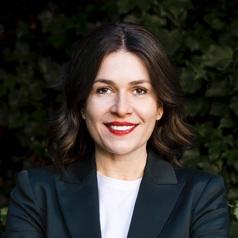
Astrid Edwards
PhD Candidate, The University of Melbourne
PhD Candidate in Journalism and Publishing researching environmental responsibility in book publishing during the climate crisis.
Less
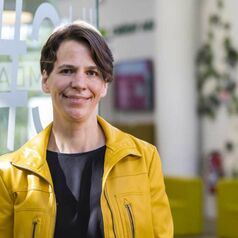
Astrid Hopfensitz
Professor in organizational behavior, EM Lyon Business School
Chercheuse en économie comportementale et expérimentale.
Less
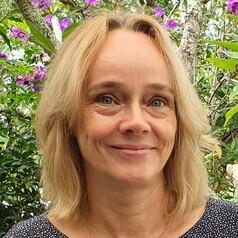
Astrid Poelman
Principal Researcher, Public Health & Wellbeing Group, CSIRO
Dr Astrid Poelman is Principal Researcher Behavioural Nutrition and Team Leader of the Applied Public Health Team at CSIRO Health & Biosecurity, based in Westmead, Sydney. She holds an MSc in Human Nutrition and a PhD in Human Nutrition (Sensory Science) from Wageningen University, The Netherlands. Her research focuses on understanding how knowledge on sensory perception and eating behaviour can be used to enhance human health and wellbeing. She develops behavioural interventions and resources for community settings to support adoption of healthy eating behaviours. A specific research focus is increasing children’s enjoyment of vegetables as a sustainable way to positively influence lifelong vegetable consumption.
Less

Astrid Thébault Guiochon
Ingénieure et Enseignante, Université Lumière Lyon 2
Ingénieur·e en criminologie et neurosciences cognitives, spécialisée en data science, je travaille actuellement sur les facteurs individuels et situationnels des réactions émotionnelles face aux transgressions morales. Mon approche pluridisciplinaire se complète par une perspective intersectionnelle sur toutes mes recherches.
Less
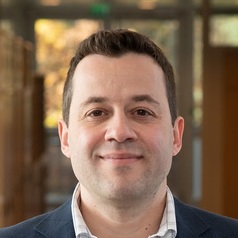
Atalay Atasu
Professor of Technology and Operations Management, INSEAD
Dr. Atalay Atasu's research focus is on socially and environmentally responsible operations management, with topics of interest including the circular economy, extended producer responsibility, and environmental regulation. His research appeared in Management Science, Manufacturing and Service Operations Management, Production and Operations Management, Journal of Industrial Ecology, Harvard Business Review and California Management Review. He received a number of awards, including the Wickham Skinner Best Paper Award (winner 2007, runner up 2014), Wickham Skinner Early Career Research Award (2012), and Paul Kleindorfer Award in Sustainability (2013). He serves as Editor for the POM Sustainable Operations Department, and as associate editor for MSOM.
Less
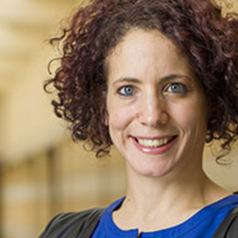
Atalia Omer
Professor of Religion, Conflict and Peace Studies, University of Notre Dame
Atalia Omer is Professor of Religion, Conflict, and Peace Studies at the Kroc Institute for International Peace Studies and at the Keough School of Global Affairs at the University of Notre Dame. She earned her PhD in Religion, Ethics, and Politics (November 2008) from the Committee on the Study of Religion at Harvard University. Her research focuses on religion, violence, and peacebuilding, Palestine/Israel, Jewish studies, decoloniality and religion, and religion and politics. She was a 2017 Andrew Carnegie Fellow resulting in Decolonizing Religion and Peacebuilding (Oxford University Press, 2023). Conversing with decolonial scholarship across multiple fields of study, this book examines, through an extensive empirical work in Kenya and the Philippines, how and why the practices of religion and peacebuilding/development both reinforce and exceed global structural, neocolonial, and epistemic forms of violence. The book traces why a consolidation of the industry of religion and peacebuilding (or the “harmony business”), in the intersection of neoliberalism and an orientalist security discourses, disempowers religious action at the same time that it empowers religious actors. It exposes another ironic insight: “more is less,” meaning that rather than enhancing religious literacy, the “harmony business” diminishes hermeneutical horizons. Even as a growing focus in the policy world on the “global engagement with religion” bills itself as a paradigm shift away from a secularist ignorance of the causal capacities of religious actors, meanings, networks, and institutions, this increased investment in “engaging” with religion is utilitarian. It focuses much more on function or doing religion or being religious as a matter of communal boundaries rather than on content or knowing religious traditions as living and contested sites of interpretations and reimagining. Yet, the decolonial and intersectional lens cannot obscure the existence of the multiple religious actors in the global South and their participation in projects of survival, which includes investing in interreligious and intercultural peacebuilding actions. Such religious actors generate decolonial openings regardless of being firmly grounded in closed rather than hermeneutically open or fluid accounts of their religiosity and communal narratives. They should not be theorized away. Analyzing their work offers an opportunity to rethink the study of religion, violence, and peace practices, their relevance to theory, and theory’s relevance to them.
Omer’s first book, When Peace is Not Enough: How the Israeli Peace Camp Thinks about Religion, Nationalism, and Justice (University of Chicago Press, 2015) examines the way the Israeli peace camp addresses interrelationships between religion, ethnicity, and nationality, and how it interprets justice vis-à-vis the Palestinian conflict. This work scrutinizes the “visions of peace” and the “visions of citizenship” articulated by a wide spectrum of groups, ranging from Zionist to non-Zionist and secular to religious orientations.
Omer’s second solo-authored book project, Days of Awe: Reimagining Jewishness in Solidarity with Palestinians (University of Chicago Press, 2019) explores why divergences in conceptions of national identity between “homeland” and “diasporas” could facilitate the proliferation of loci of analysis and foci of peacebuilding efforts which are yet under-explored both in peace studies and specific scholarship addressing the relations between diasporas and conflict.
As a locally situated, distant issue movement, Jewish Palestine solidarity offers a grassroots critique and a transformative agenda for the local Jewish-American landscape while also critiquing Israeli policies and Zionist interpretations of Jewish identity. This book examines the intentional participation of this movement in intra-traditional work that seeks to provincialize Zion from Jewish identity and inter-traditional work that seeks to undo the intersections between Islamophobia in the U.S. and the marginalizing and silencing of lives in Palestine.
Inter-traditional work is also examined as pivotal to the movement’s efforts to deconstruct the conflation of critique of Israeli policies with anti-Semitism. Likewise, the movement participates in a broader, intersectional solidarity analysis that connects Palestinian struggles with other sites of injustice, both locally and globally, from #BlackLivesMatter to protests against the wall between the U.S. and Mexico.
Omer has also edited and co-edited multiple volumes including The Oxford Handbook of Religion, Conflict, and Peacebuilding (Oxford University Press, 2015). She has published articles in, among other venues, the Journal of the American Academy of Religion, the Journal of Religious Ethics; Soundings: An Interdisciplinary Journal; the Journal of Political Theology, the Study of Nationalism and Ethnicity, the International Journal of Peace Studies, Critical Sociology, Critical Theory of Religion, The Review of Faith and International Affairs, and Method & Theory in the Study of Religion.
Omer was awarded an Andrew Carnegie Fellowship in 2017. She is also a Senior Fellow at Harvard Divinity School’s Religion and Public Life’s Religion, Conflict, and Peace Initiative. She was the recipient of a research fellowship from the Notre Dame Institute for Advanced Studies (Fall 2011), Charlotte W. Newcombe’s Doctoral Dissertation Fellowship (2007), and Harvard University Merit Fellowship (2006). She was a doctoral fellow at the Center for the Study of World Religions at Harvard University (2002-2004) and a Graduate Associate at the Weatherhead Center for International Affairs at Harvard University (2006-2008).
Less
Atef Alshaer
Senior Lecturer in Arabic Studies, University of Westminster
I am a Senior Lecturer in Arabic Studies at the University of Westminster. I obtained my PhD from SOAS, University of Westminster, and taught there for a number of years. Before that, I studied English Language and Literature at the University of Birzeit in Palestine.
I have been active writing on Palestinian-Israeli politics for a number of websites, including International Relations, and the Electronic Intifada. My books include The Hizbullah Phenomenon: Politics and Communication (with Dina Matar and lina Khatib, 2014), Poetry and Politics in the Modern Arab World (2016) and A Map of Absence: An Anthology of Palestinian Writing on the Nakba (2019).
My interests include politics of the Middle East, Literature and Cultural Studies.
I am a member of a number of research centres and institutes, including the Palestine Studies Centre and The Middle East Institute in London at SOAS.
Less
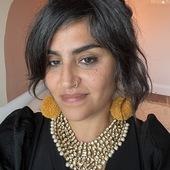

Athena Bellas
Teacher and Writer, The University of Melbourne
Athena Bellas has a PhD in Screen Studies from the University of Melbourne. Her research and teaching focus is in feminist media and screen studies.
Less
Atieh Razavi Yekta
Sessional Lecturer, University of British Columbia
My research focuses on job quality and occupational health within the platform economy. Specifically, I explore how differences in jurisdictional and federal regulations, along with the transnational nature of some platform jobs, create a grey area between policy and action. Additionally, I examine how platform companies' use of machine learning models in workforce management impacts the occupational experiences of marginalized workers, such as immigrants.
I hold a Master's degree in Public Policy and Global Affairs and am currently pursuing a doctoral degree in the Department of Occupational Science and Occupational Therapy within the UBC Faculty of Medicine. I also serve as a sessional lecturer at UBC.
Less

Atmaja Gohain Baruah
Joint PhD Researcher at the National University of Singapore and KCL, King's College London
Atmaja Gohain Baruah is a joint PhD student at the Geography Department at KCL and the Department of Comparative Asian Studies at the National University of Singapore (NUS). She is a recipient of the President’s Graduate Fellowship, and her PhD research project focuses on exploring the connection between climate variability, ecological migration and wellbeing in India and China taking an intersectional approach. Her research interests also lie in non-traditional security threats facing the Indo Pacific. She is supervised by Associate Prof Rajesh Rai at NUS and Reader in Environmental Politics Dr Naho Mirumachi at KCL.
Atmaja is associated with the Institute for Security and Development Policy, a Stockholm-based non-profit, non-partisan research and policy organization as an Associated Research Fellow. She is also associated with the International Water Management Institute (IWMI), a non-profit, scientific research organization focusing on the sustainable use of water and land resources in developing countries. The project fits well with her past experience of conducting policy and political economy analysis in the context of extreme events. Atmaja speaks English, Assamese and Hindi fluently, and is trained in intermediate Mandarin Chinese for her research work.
Thesis title: 'Mobility and Wellbeing in the Context of Climate and Environmental Change in Assam, India, and Yunnan, China—An Intersectional Approach'
Atmaja locates her research interests within the broad spectrum of Sino-Indian relations. As part of her Ph.D., she is focusing on exploring the connection between climate variability, ecological migration and wellbeing in India and China. Besides observing these interconnections across the whole spectrum of context-specific migration, she seeks to inspect the broader institutional responses impacting the risks and vulnerabilities of those already vulnerable and marginalised. Apart from environmental governance in Asia, her research interests also lie in analysing non-traditional security threats facing the Indo Pacific.
Less
atricia Jovellar Isiegas
Terapeuta Ocupacional y Fisioterapeuta. Docente e investigadora en el Grado de Fisioterapia de la Universidad San Jorge. Miembro del grupo de investigación iPhysio., Universidad San Jorge
Doctora en Ciencias de la Salud. Fisioterapeuta y Terapeuta Ocupacional. Máster en Funcionalidad del Miembro Superior y Terapia de Mano. Personal docente e investigador en el Grado de Fisioterapia de la Universidad San Jorge. Su línea de investigación está centrada principlamente en la influencia del procesamiento somatosensorial en la funcionalidad del miembro superior y la mano en niños con hemiparesia.
Ha publicado artículos en revistas científicas y divulgativas sobre Fisioterapia y Terapia Ocupacional en la infancia. Ha participado en congresos nacionales e internacinales sobre rehabilitación pediátrica y desarrollo infantil.
Actualmente compagina su labor docente con la asistencia clínica acompañando a niños con diversidad funcional y sus familias. Colabora con la Universidad Internacional de Cataluña en el Máster de Fisioterapia Pediátrica y con el Centro de Estudios Superiores de La Salle en el Máster de Terapia Ocupacional basado en la evidencia. Participa activamente en proyectos de Cooperación al Desarrollo en países como Polonia, Argentina, Nicaragua, República Dominicana, India y Vietnam.
Less
Aude Bandini
Professeure agrégée, Philosophie (épistémologie et philosophie de la médecine), Université de Montréal
Aude Bandini est professeure agrégée au département de philosophie. Ses travaux de recherches récent s'inscrivent à l'intersection entre l'épistémologie sociale et la philosophie de la médecine.
Less
Aude Campmas
Lecturer in French Studies, University of Southampton
My current research interests include the relation between science and literature, and the representation of ‘the monstrous family' in Francophone literature and Film.
I am currently completing a monograph on Fleurs monstrueuses: histoire d'une métamorphose, Littérature, femmes et botanique. This analyses the links between visual and textual representations of flowers, and the monstrous representation of women during the late nineteenth century.
Less
Aude Ripoche
Chercheure en agronomie du système de culture et modélisatrice, Cirad
• Agronomie du système de culture,
• Évaluation des performances agronomiques et environnementales des systèmes de culture
• Interactions culture / adventices dans les systèmes de culture
• Modélisation du système de culture
• Évaluation de la nuisibilité des adventices
Less

Audrey Ferron-Parayre
Professeure agrégée, Section de droit civil, Faculté de droit, L’Université d’Ottawa/University of Ottawa
Audrey Ferron Parayre is Associate Professor at the University of Ottawa Faculty of Law, Civil Law Section, and a member of the University of Ottawa Centre for Health Law, Policy and Ethics. She is also co-director of the Observatoire pluridisciplinaire sur le devenir du droit privé. Her research and teaching interests focus on the law of persons, health law, legal effectiveness and knowledge transfer. Her current projects focus on law and women's reproductive health, in particular obstetric and gynecological violence and how the law can be mobilized to prevent it.
Less
Audrey Mat
Researcher in marine biology and chronobiology, Universität Wien
I am a marine biologist, for what might be the simplest reason: passion for the ocean and the biological wonders it hosts. My research focuses on how marine animals cope with their changing environment, whether influenced by natural cycles, anthropogenic activities, or a combination of both. In particular, I use both molecular tools and behavioral analysis to understand how the physiology of marine animals changes over time, as the oceans are complex, oscillating environments.
Currently, I am exploring these questions in one of our greatest ecological frontiers, the deep sea.
Less

Audrey Roulston
Professor of Social Work in Palliative Care, Queen's University Belfast
Audrey qualified as a social worker in 1996 and worked in children's and adults services within local Health and Social Care Trusts prior to being employed in Marie Curie Hospice Belfast in 2005-2010. Alongside working with individuals, families and groups, she completed several small-scale research projects, audits and service evaluations. After completing her Masters in Research Methods, she conducted her PhD in End of life care decision-making with people diagnosed with advanced lung cancer.
Audrey moved to work in Queen's University in 2010, where she has been the Director of Practice Learning, Chair of the Admissions Committee for Social Work training in Northern Ireland, and lead for widening participation into social work. She is currently the Programme Director for a new Postgraduate Diploma in Palliative Care for Social Workers, which is taught online.
She is co-chair of the European Association of Palliative Care Task Force for Social Workers.
Audrey's research interests in palliative care have included the role of palliative care social workers, bereavement needs assessment, complicated grief, music therapy, psychological distress of people living with a life-limiting illness, palliative care for people in prisons, deaths in prison custody and interventions for people with Parkinson's. She is also involved in research involving social work students in relation to the admissions process (Social Work Match), practice placements (failing students), well-being and resilience in newly qualified social workers and mindfulness based interventions to alleviate stress and anxiety.
Less
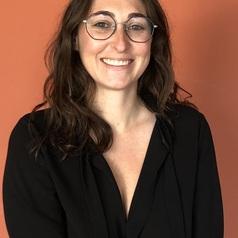
Audrey Rouyre
Assistant Professor en Management Stratégique, Montpellier Business School
Audrey est Professeur Assistant en Management Stratégique à Montpellier Business School. Dans le cadre de ses recherches, elle travaille sur le management de la coopétition multilatérale dans le secteur aérospatial.
Less
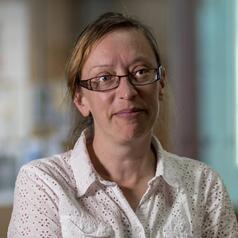
Audrey H Small
Lecturer in the Department of French, Francophone and Luxembourg Studies, University of Sheffield
I graduated from the University of Aberdeen in 1997 with an MA (Hons) in French Studies, after which I went to teach English in Dakar, Senegal. My time in West Africa sharpened my interest in all things extra-hexagonal, and I returned to Aberdeen to study for a PhD on the links between publishing and literary discourses of identity in francophone African literature. I taught at Aberdeen for four years before coming to Sheffield in 2002.
Less

Audrey T. Lin
Research Associate in Anthropology, Smithsonian Institution
My research focuses on ancient DNA, domestication, molecular evolution, and viruses. I am based at the American Museum of Natural History in NYC and am a Research Associate at the Smithsonian National Museum of Natural History.
Less
Audrey-Anne de Ubeda
Responsable de la coordination des programmes de recherche à la Fondation pour les Etudes et Recherches sur le Développement International (FERDI)
Less
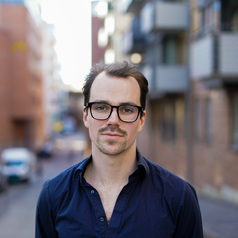
August Nilsson
PhD Candidante in Organizational Psychology, Lund University
Happiness and personality through the lens of language.
How are you?
You probably ask this question many times a day, and most of the times, the answers are not through numbers, but through words.
Using modern Language AI techniques, such as Large Language Models (LLM; the type of models behind chatbots such as ChatGPT) and Topic modelling, I research how the Language we use can help us understand happiness and personality. Specific happiness related subjects I research include everyday activities, alcohol consumption, and happiness definitions. For personality, I have worked with the Assessment of implicit motives through LLMs and the personality assessments of LLMs on social media.
I did graduate school at Lund University, was a predoc at the University of Pennsylvania, and I am doing my PhD at Oslo Metropolitan University.
I do several research projects with The World Well-Being Project, allocated at Stony Brook University, University of Pennsylvania, and Stanford University.
Less
Augustine Aboh
Ph.D. candidate in Global Governance and Human Security, University of Massachusetts
Augustine Aboh is a Global Governance and Human Security doctoral student at the University of Massachusetts Boston, U.S.A. He works as a Conflict Prevention and Peacebuilding Researcher for the Office of Strategic Preparedness and Resilience (National Early Warning Centre of Nigeria) and a Lecturer in the Department of Political Science, University of Calabar, Nigeria. His research interests include the intersection of democracy and technology, defense and security governance, strategic studies, conflict prevention and peacebuilding, human security, global governance, radicalization, extremism, terrorism, and organized crime.
Less
Augustine Kiptum
Research Student, School of Global Studies, University of Sussex
Augustine completed his PhD in geography at the University of Sussex, UK. His research focused on understanding the nature, drivers, and predictability of flood events in the Tana River, Kenya. Through his research, Augustine led two peer-reviewed publications (https://orcid.org/0000-0003-3117-9368). A holder of an MSc in hydrology and groundwater resources management and a BSc in meteorology, both from the University of Nairobi, he has extensive data analysis skills using Python and R, which are key in the analysis of large climate datasets.
Augustine has also worked at the Kenya Meteorological Department's (KMD) National Meteorological Centre section for the last eight years, where he has been involved in the generation of seasonal forecasts through the running of climate models, including WRF. He is also involved in the running of rainfall/runoff models over the Nzoia River Basin and subsequent flood warnings over a shorter lead time (three days).
Currently, he is providing technical support in the risk data on a consultancy basis for the United Nations University-Environment & Human Security (EHS), VARMAP division, Bonn, Germany, under the project "Early Warning for IGAD."
Less
Augusto Riveros
Associate Professor, Faculty of Education, Western University
PhD in Educational Policy Studies (2013) from the University of Alberta. Currently investigating the availability and accessibility of educational opportunity in urban centres. Recent publications explore the effects of overcrowding and enrolment pressures in Ontario schools.
Less
Aulo Gelli
Senior Research Fellow, International Food Policy Research Institute (IFPRI)
Aulo Gelli works as a senior research fellow in the Nutrition, Diets, and Health Unit of the International Food Policy Research Institute (IFPRI). His main interests and experience intersect food policy and nutrition, with a particular focus on evaluating the impact of child health and nutrition interventions. Aulo trained as a physicist at Imperial College London, then gained a MSc degree in information processing and neural networks at Kings College London working on semantic memory models, and then studied human perception and cognition at the Laboratory of Neurobiology at University College London. He transitioned his career towards food policy, gaining a MA in development economics and food security at the University of Rome, and a DPhil from the Department of Infectious Disease Epidemiology at Imperial College. Prior to working at IFPRI, Aulo worked as a research fellow at Imperial College (2009-2013), as policy analyst at the UK Collaborative on Development Sciences (2007-2009), and as a statistician at the World Food Programme (2004-2007).
Less

Aurélien François
Maître de conférences en management du sport, Université de Rouen Normandie
Aurélien François est Maître de Conférences à l'Université de Rouen Normandie en Management du Sport.
Ses travaux de recherche portent sur les questions de responsabilité et d'utilité sociale abordées analysées au travers d'approches économiques et managériales.
Less

Aurelien Mondon
Senior Lecturer in Politics, University of Bath
Aurelien Mondon (he/him) is a Senior Lecturer in politics at the University of Bath.
His research focuses predominantly on the impact of racism and populism on liberal democracies and the mainstreaming of far-right politics through elite discourse.
His first book, The Mainstreaming of the Extreme Right in France and Australia: A Populist Hegemony?, was published in 2013 and he recently co-edited After Charlie Hebdo: Terror, racism and free speech published with Zed. Reactionary democracy: How racism and the populist far right became mainstream, co-written with Aaron Winter, was published with Verso in 2020. The Ethics of Researching the Far Right, co-edited with Antonia Vaughan, Joan Braune and Meghan Tinsley will be out in March 2024 with Manchester University Press.
His work has been published in various mainstream and expert outlets around the world, including CNN, The Guardian, The Independent, Libération, Newsweek, Le Soir, Mediapart and Al Jazeera.
Less

Aurélien Restelli
Doctorant, sociologie, CESDIP, Université de Versailles Saint-Quentin-en-Yvelines (UVSQ) – Université Paris-Saclay
Ancien élève de l’ENS Cachan, détenteur d’un Master 2 de sociologie de l’EHESS et auteur d’un mémoire de recherche sur le Service Volontaire Citoyen (sous la direction de Cédric Moreau de Bellaing), Aurélien Restelli prépare une thèse intitulée « Coopérer en maintien de l’ordre : la police à l’épreuve de la pluralisation », sous la direction de Jacques de Maillard.
Dans les pays occidentaux, on assiste à une logique de pluralisation des activités policières. Cela touche notamment le domaine de la police des foules ; en effet, de plus en plus d’unités, dont l’organisation et les modes de fonctionnement peuvent parfois être très différents, sont amenées à participer aux opérations de maintien de l’ordre. La question se pose donc de savoir comment, aussi bien en bas de la hiérarchie qu’au niveau de l’état-major, elles échangent, se jugent et se coordonnent pour mener à bien les opérations de maintien de l’ordre.
Less
Auriba Raza
Research in Epidemiology, Stockholm University
I am a researcher in Epidemiology Unit at the Stress Research Institute. I have a PhD in environmental epidemiology from Karolinska Institutet. I was trained as a Post-doctoral researcher at the Stress Research Insitute, Stockholm University and Department of Clinical Neuroscience, Karolinska Institutet. My research investigates how changing weather patterns impact mental health of Swedish and Finnish working population. My research also includes the impact of environmental characteristics around home and workplace on behavior-related health of Swedish working population. I have substantial experience of working with register-based data and large longitudinal surveys.
Less

Auxtova Auxtova
Lecturer in Marketing, University of Edinburgh
Dr Kristina Auxtova is a Lecturer in Marketing at the University of Edinburgh. She has previously also worked at the University of Dundee and University College Cork.
Kristina's research interests revolve around questions of ethics and sustainability in advertising and consumption, particularly within the public and non-profit contexts. Her work on advertising focuses on advertising offence and how advertising issues are regulated. Within the sustainability domain, she looks mainly at second-hand consumption and the charity shop context, exploring ways to overcome consumer aversions towards clothing reuse. Kristina is also interested in pedagogies for integrating ethics and sustainability within the classroom.
Kristina completed her PhD at the University of Edinburgh Business School in 2019. She also has an MGE (Master Grande École) in International and European Business from EM Strasbourg, and a BA (Hons) in International Management and Intercultural Studies from the University of Stirling. Since 2022, she is a Fellow of the Higher Education Academy.
Less


- Market Data




