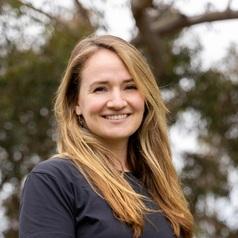
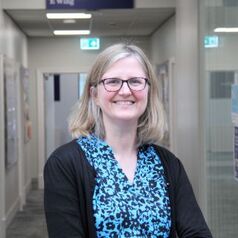
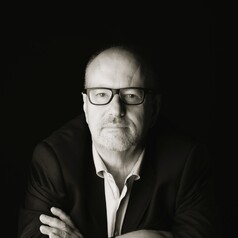
Ph.D. Candidate in Computational Neuroscience, University of California, San Diego As a Neuroscience PhD candidate at UC San Diego, I specialize in neural signal analysis. Our brains produce many different kinds of signals--chemical, magnetic, electrical--and the ways that neuroscientists use these signals is essential to how we research the brain. I'm specifically interested in the brain's electrical signals, or "brain waves" that we can measure using tools like the electroencephalogram (EEG). When these electrical signals are measured in research experiments, neuroscientists use complex mathematical methods to extract information from their brain waves. This is where my research comes in: how does the math we use influence how we think about the brain? What happens when we're using that math incorrectly or misinterpreting it? These are the questions I face every day in my research. So far, I've been able to answer some pretty big questions about brain waves and how they change in patients receiving treatment for severe depression. By challenging our assumptions about brain waves, I hope to help settle long-standing mysteries about the brain and uncover new, exciting discoveries that help us better understand how the brain works in healthy cognition and disease. Currently, I'm a PhD candidate in the Neurosciences Graduate Program, supervised by Dr. Bradley Voytek in the Neural and Data Analytics Lab at the University of California, San Diego. I have a B.S. in Biopsychology from UC Santa Barbara and also volunteer as a writer for Stories of Women in Neuroscience, a blog and podcast that features women neuroscientists, their research, and journeys in academia.
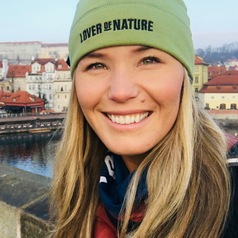
Molecular biologist, Stellenbosch University I am a molecular biologist, and my research interests lie broadly in vertebrate evolution, diversification and conservation. I am interested in the way in which species evolve and diversify over time and over geographical landscapes. I am an avid conservationist, and find fulfilment in generating information that can assist in the conservation of threatened species. My current research focuses on developing and advancing environmental DNA (eDNA) research, as an emerging approach to studying cryptic or endangered species, and as a broadly applicable approach to biodiversity assessment and biomonitoring. I am a highly inquisitive and enthusiastic person, and am driven to pursue novel ideas and innovative approaches to answering questions and solving problems. I believe that my eDNA research is at the forefront of conservation genetics research in South Africa, and has the potential to revolutionise conservation science and practice.
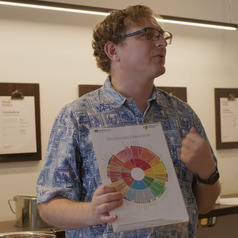
Research Assistant and PhD student. Member of Melbourne Climate Futures Academy., The University of Melbourne PhD student exploring how governance can enable Climate Resilient Development of Healthcare Systems. Member of Climate Futures Academy at University of Melbourne and Research Assistant. Background in Science, International Relations and Environmental Governance.
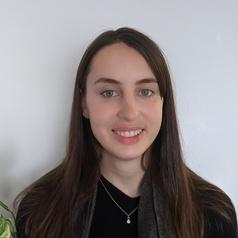
Professor of Law, University of Sheffield Sara is an expert on health care law and ethics, and family law. She has written on reproductive technologies, emerging biotechnologies (especially xenotransplantation), and matters relating to consent, capacity, risk and regulation, and conscientious objection. She is interested in the roles that hope and exploitation have in health care practice. In terms of family law, her interests lie in issues relating to parenthood and parental responsibility, and other matters relating to children, including their ability to consent to medical treatment. Sara is a co-investigator on a Wellcome funded project, Future of Human Reproduction, based at Lancaster University.
Professor of Bioethics, Lancaster University Stephen Wilkinson is Distinguished Professor of Bioethics, and Associate Dean for Research for the Faculty of Arts and Social Sciences. Much of his work is about reproductive ethics and the regulation of reproductive technologies, especially the ethics of selective reproduction (practices that involve choosing between different possible future people). A book on this topic (Choosing Tomorrow’s Children, Oxford University Press) was published in 2010. Since then, particular interests have included ethical issues raised by uterus transplantation, non-invasive pre-natal testing, mitochondrial replacement, new sources of eggs and sperm, genome editing, surrogacy, and public funding for infertility treatment. Another abiding interest is the commercial exploitation of the human body, which was the subject of his first book, Bodies for Sale (Routledge, 2003). From 2013 to 2021, he was the joint leader (with Prof Rosamund Scott) of a large Wellcome-funded research programme about the Ethics and Regulation of Human Reproductive Donation. Since 2022, he has led another large Wellcome project called The Future of Human Reproduction: transformative agendas and methods for the Humanities and Social Sciences, a collaboration with Lancaster colleagues from Design, English Literature, Law, Linguistics, Philosophy, & Psychology. He has previously held research grants from the AHRB, AHRC, British Academy, and Leverhulme Trust.