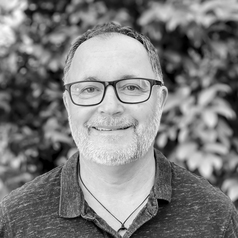
Professor of Marine Science, National Marine Science Centre, Southern Cross University I am a marine benthic ecologist with primary interests in the amazing biodiversity that can be found in our marine and estuarine environments. Much of this diversity is under threat from a wide range of human impacts and I am dedicated to understanding these impacts with a view to fostering long-term sustainability. Because little is known about the distribution and dynamics of marine biodiversity in Australia, especially in subtidal environments, much of my research focuses on measuring and monitoring diversity and determining the main factors that cause it to change - this includes both natural and human-induced impacts. This is a very broad area of research and my specific interests lie in the following key areas: - Developing methods to measure and monitor biodiversity in a rigorous and cost-effective way; - Measuring natural variation in communities - it is only by measuring this that we can effectively detect changes caused by human activities; - Measuring and monitoring the effects of different types of human impact on marine communities (especially marine debris); and - Identifying biodiversity hotspots (areas of high diversity that are also under threat) and, in collaboration with management agencies, facilitating their sustainable management; Much of my work focuses on the highly diverse communities associated with subtropical reefs on the east coast of Australia. However, I am also actively involved in research in Indonesia and SE Asia. My main interest is in marine invertebrates and especially the molluscs which are not only highly diverse, occurring in most if not all marine habitats, but also an excellent model group for studies of biodiversity and human impact. Over the last decade I have focused strongly on developing citizen science programs to both develop community capacity and to deliver data to support marine management at a range of scales. This has included assessments of marine debris, as well as biodiversity assessments of charismatic groups of organisms (e.g. the Sea Slug Census program). Publications: A list of my publications is available here https://scholar.google.com/citations?user=7sHMyEMAAAAJ&hl=en
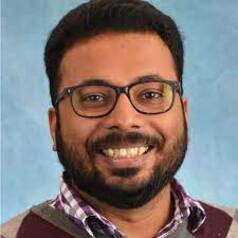
Research Scientist in Electrical and Computer Engineering, Georgia Institute of Technology I am a Research Faculty member at Georgia Institute of Technology. I work in the Structured Information for Precision Neuroengineering Lab (SIPLab) within the School of Electrical and Computer Engineering. I work at the intersection of neurotechnology and psychiatry with the aim of developing brain stimulation therapies for psychiatric disorders. I received my PhD in Biomedical Engineering from the University of Florida. Prior to joining Georgia Tech, I was a post-doctoral research associate at the University of North Carolina at Chapel Hill, working in the Carolina Center for Neurostimulation (spun off from Frohlich Lab). I enjoy photography, travel (to a certain extent) and (re)learning history.
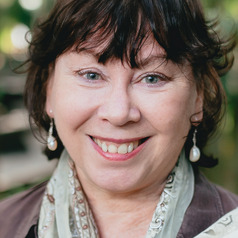
Research Fellow (Asian Security), Australian National University Dr Stuti Bhatnagar is a Research Fellow (Asian Security) at the Strategic and Defence Studies Centre (SDSC) at ANU. At SDSC she will also act as the Coordinator for the Graduate Research and Development Network on Asian Security (GRADNAS). She has previous experience as a Researcher and sessional academic with the University of New South Wales, Sydney and the University of Adelaide in South Australia. With a PhD in politics and international relations from the University of Adelaide, she specialises in Indian foreign policy and South Asian politics. She has several peer-reviewed academic publications to her credit and is the author of India’s Pakistan Policy: How Think Tanks Are Shaping Foreign Relations published by Routledge in 2020.
Associate Professor of Social Work, Associate Member, Interdisciplinary Studies, Faculty of Liberal Arts and Professional Studies, York University, Canada
Professor of Clinical Psychology, Griffith University Research expertise: Substance misuse and mental health Psychosis and substance use Parenting in high risk families Impulsivity and substance use Biological basis of personality
Associate Professor in Sustainable Development Governance, Monash University Shirin Malekpour is a social scientist with expertise in strategic planning and governance for sustainable development. She has been Chief Investigator in multiple transdisciplinary research projects focusing on infrastructure planning, transformative adaptation, futures thinking, scenario planning under deep uncertainty, collaborative governance and localising the SDGs. In 2020, Shirin was appointed by the UN Secretary-General to a scientific advisory role and as one of the 15 members of the Independent Group of Scientists tasked with writing the 2023 Global Sustainable Development Report. In 2018, she was recognised as one of the top 25 young scientists in the world in the field of sustainable development and received the international Green Talents award. She is a member of the editorial board of the Journal of City Climate Policy and Economy – flagship publication of the C40 initiative. She also co-leads a working group on sub-national SDG implementation in the Earth Systems Governance Network. Shirin has an interdisciplinary background and has previously worked as a civil engineer in large urban water infrastructure projects in Africa and the Middle East.