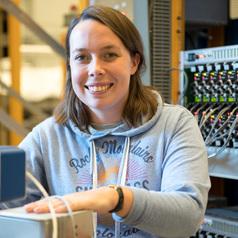
Postdoctoral Research Associate, Particle Physics, University of Liverpool I am a senior Research Associate in the Particle Physics group at the University of Liverpool. My research is focused on Muon Physics. In particular, I work on resolving the tension between the experimental and theoretical determinations of the muon anomalous magnetic moment. I have been working on the Fermilab muon g-2 experiment since 2014. After gaining my PhD from the University of Liverpool, where I built hardware and developed reconstruction algorithms for the g-2 tracking detectors, I moved to Fermilab as a Research Associate in the muon department. During my time working on g-2 I have been involved with many different aspects of the operations and analysis of the experiment. In my current role as magnetic field Analysis Coordinator, I analyze data from multiple systems to make an ultra-precise measurement of the muon-weighted magnetic field, which is one of the two main quantities required to determine the value of the muon anomalous magnetic moment. In 2022, I joined the University of Liverpool once again, to continue my work on g-2 as well as other muon experiments.
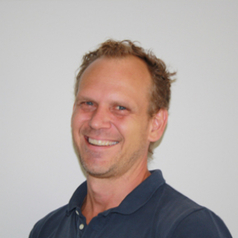
Professor in statistics, University of Copenhagen I am a professor in statistics at the University of Copenhagen, with research interests including statistical inference for stochastic processes, mathematical biology, mathematical modeling of physiological systems, and non-linear dynamics and mathematical neuroscience. My career has also led me to model the behaviour of marine mammals.
Associate Professor, Immunovirology and Pathogenesis Program, Kirby Institute, UNSW Sydney The overall goal of my present research work at the Kirby Institute is two-fold. Firstly to define the basic mechanisms of HIV spread, from tracking entry and fusion of single HIV virions through to the more logistically challenging task of tracking viral spread through cell-cell contact. To date our laboratory is one of only a few laboratories worldwide that can image HIV spread in live HIV infected primary cell types. The second component of my laboratory is currently involved and actively collaborating with research groups involved in using gene therapy for a treatment of a range of chronic diseases including HIV. Indeed a functional cure for HIV may lie in gene therapy. For instance, functional removal of human genes that HIV needs or attacking the viral genes directly, all represent ways to silence the viral reservoir in the long term. Whilst there are many approaches that work in cell line models, the present limitation to this approach is gene delivery. For instance the cells of the immune system that HIV attacks are unfortunately very difficult to deliver genes to. The broad aim of this project is to systematically determine the best protocol for gene delivery by using different combinations of viral proteins. We are actively looking for capable honours, masters and PhD students who have a strong interest in the intersection of virology and cellular biology to undertake NHMRC funded projects.
Directora y Profesora Adjunta del Grado en Óptica y Optometría, Universidad CEU San Pablo Directora del Grado en Óptica y Optometría USP CEU Profesora Adjunta de la Facultad de Farmacia USP CEU Profesora de Audiología en Instituto Superior de Enseñanza Profesional ISEP CEU Doctora en Ciencias de la Visión. Licenciada en Biología, Diplomada y Graduada en Óptica y Optometría.
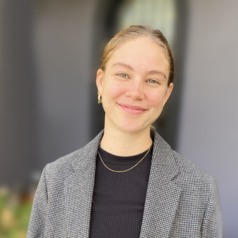
PhD Candidate in Nanotechnology & Innovation Governance, University of Technology Sydney Sarah is a PhD Candidate at the Institute for Sustainable Futures (ISF). Her research examines the governance of technological innovation, with a focus on the commercial governance of toxic engineered nano-materials (ENMs). Through this, Sarah works across frontier science (including nanotechnology and quantum technologies) to explore the responsible development, application, and governance of rapidly evolving and complex technoscientific innovations. She approaches these uncertain phenomena through the lens of social governance frameworks. Sarah has previously worked in the space of industrial chemicals governance, collaborating with government and industry to better understand and manage the use of hazardous chemicals in commercial supply chains.
Research Associate in Marine Behaviour , University of Cambridge I am fascinated by the behavioural strategies of predators and their prey. My PhD largely concerned how the presence of visual noise (in the form of dynamic illumination) within a habitat can alter the salience of motion, and subsequently influence predator-prey interactions and foraging behaviour. Two forms of dynamic illumination were of interest: dappled light (in terrestrial environments) and water caustics ("wave-induced flicker"; in aquatic environments). I am continuing this theme throughout my current role, expanding our knowledge to highlight how water caustics in marine habitats can also influence social interactions and collective behaviour. I am also interested in the emergence of interspecific foraging strategies and the ecological factors that may determine such interactions. In particular, I study the foraging behaviour and wider ecology of the trumpetfish, Aulostomus maculatus.