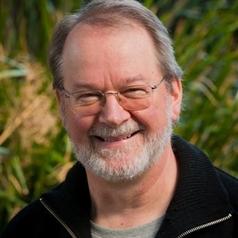
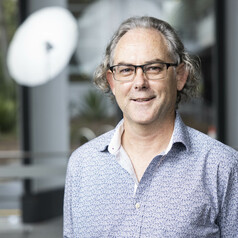
PhD Candidate, School of Health and Social Care, University of Essex Susanna Alyce is a doctoral candidate at the University of Essex researching within a “Mad Studies” paradigm CSA survivors’ experiences of trust and trustworthiness. She is an educator in trauma-informed practice at the University for clinical psychology students, and for the charity Survivors’ Voices. Susanna also delivers Mindfulness Based Stress Reduction (MBSR), and is a yoga teacher. She is currently working towards her diploma as a Person-Centred Counsellor at The Norwich Centre. She is a member of the Tavistock Network for Non-Recent CSA (https://www.networknrcsa.com), and facilitates two peer support groups for researchers. Susanna is a survivor of child sex abuse (CSA). Her own debilitating anxiety led her to meditation and yoga in her early 20s. These effective self-care practices enabled her to live a full and rewarding life, while managing her internal landscape of fear. It was not until she turned 50 that she discovered the origin of what she now understands as ‘trauma distress’ caused by the dissociated and silenced memories of CSA.
Emeritus Professor Philosophy, Deakin University Stan van Hooft is an Emeritus Professor of Philosophy at Deakin University in Australia. He is the author of Caring: An Essay in the Philosophy of Ethics, (Niwot, University Press of Colorado, 1995) and numerous journal articles on moral philosophy, bioethics, business ethics, and on the nature of health and disease. He is also a co-author of Facts and Values: An Introduction to Critical Thinking for Nurses, (Sydney, MacLennan and Petty, 1995). His Life, Death, and Subjectivity: Moral Sources for Bioethics, was published by Rodopi (Amsterdam and New York) in 2004. Stan published two further books in 2006: Caring about Health, (Aldershot, Ashgate), and Understanding Virtue Ethics, (Chesham, Acumen Publishers). Acumen Publishers published his Cosmopolitanism: A Philosophy for Global Ethics in July, 2009. This book was shortlisted for the Australian Eureka Prize for Research in Ethics in 2010. His current research centres on Global Ethics and Political Philosophy, the concept of caring in contemporary moral theory, and the role of hope in politics and religion. His book, Hope was published by Acumen in 2011 and his edited volume, The Handbook of Virtue Ethics, was published by Acumen (now Routledge) in 2014.
Plant Evolutionary Biologist, The University of Edinburgh The aim of my research is to understand the key innovations that enabled the conquest of the land by plants. In my group The Molecular Palaeobotany and Evolution Group we make the most of all available data to shed light on the origin and evolution of key innovations during plant evolution including evidence from fossils, studies of development from living species and comparative omics approaches. Using this interdisciplinary approach can shed light on the evolution of land plants in a way that would not be possible from isolated approaches alone. Current research interests: 400 Million Years of Food Transport in Plants: unearthing the origin, diversity and genetic toolkit of vasculature. Plants require an internal conducting network to transport food and water around their bodies. This conducting network is termed vasculature and consists of two tissues, water conducting xylem and food conducting phloem. The acquisition of these tissues during plant evolution was key for the origin of trees and crops from tiny moss-like ancestors. Despite the importance of the phloem for transporting sugars throughout plants we know almost nothing about its evolution or how it may respond to climate change. The aim for my fellowship is to study the evolution of the phloem over its 400 million year history.
Postdoctoral Research Fellow in Sociology, American University My area of research is the sociology of language, specifically the nature of discourse in male-dominated subcultures. My research looks at specific groups like Bronies, gamers, and members of the military. In addition, some of my research looks at discourses in African American public space, particularly those dominated by men. My work is heavily impacted by gender studies, popular culture, linguistic anthropology, and sociology.
Reader in Innovation and Technology Management, University of Portsmouth I am a Reader (Assoc. Professor) of innovation and technology management. My research focuses on the intersection of innovation management and data science, with a particular emphasis on science, technology & innovation (STI) intelligence, technology foresight, and technology roadmapping. I have also conducted research on policy development and assessment of emerging technologies such as blockchain, AI, and nanotechnology. To support my work, I use a variety of research methods including text intelligence, natural language processing, machine learning, patent analysis, scientometrics, and social media analytics. My research is informed by theories and models such as diffusion of innovations, systems of innovation, and general purpose technology. I published in the top journals of innovation management and engineering management fields. I worked as a project lead and consultant in various innovation management and text intelligence-related projects.
Associate professor, UNSW Sydney A/Prof Scott Mooney is a geographer and palaeoecologist in the Earth and Sustainability Science Research Centre (and the School of Biological, Earth and Environmental Sciences) at the University of New South Wales in Sydney. He has published more than 70 peer-reviewed scientific papers covering his interests in past climate change, human impact and palaeoenvironmental proxies (in particular, using charcoal to consider fire over hundreds to tens of thousands of years).