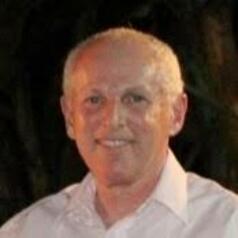
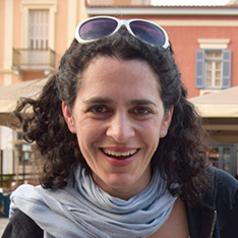
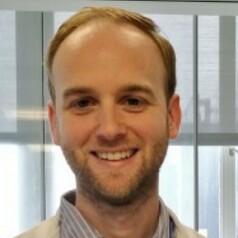
Professor of Historical Geography, University of Nottingham I undertook my undergraduate degree, ESRC-funded doctorate and Junior Research Fellowship at the University of Cambridge. Since moving to Nottingham in 2005 my research has been funded by a Philip Leverhulme Prize, a British Academy Mid-Career Fellowship, an AHRC Research Grant and an Indepedent and Social Research Foundation Mid-Career Fellowship. I have also taken up visiting research fellowships at Queen Mary, London, the State University of Rio De Janeiro, Brazil, and the Jawaharlal Nehru Institute of Advanced Study at JNU, New Delhi The summer of 2015 saw the launch of a major AHRC funded project. Running for five years, "Conferencing the International: a cultural and historical geography of the origins of internationalism (1919-1939)" studied liberal, radical and imperial forms of internationalism as manifested in their conference spaces in the years between the wars. Work is continuing on the outputs from this project (see https://www.nottingham.ac.uk/research/groups/interwarconf/home.aspx). Current and future work addresses interwar Delhi as an anticolonial and communal space.
Research Assistant Professor of Public Health, University of Illinois at Chicago Susan Kaplan is an environmental health lawyer and professor. Her work focuses on environmental sustainability and environmental and occupational health policy.
Senior Lecturer in Psychology and Neuroscience, Anglia Ruskin University Sharon is a cognitive neuroscientist, with an interest in language and memory across the lifespan. She is studying cognitive processing and impairments following brain damage, using neuropsychological testing and brain imaging techniques. Sharon joined ARU as a Senior Lecturer in 2022. Prior to this, she worked at University College London as a Post-Doctoral Research Fellow, first at the Institute of Child Health, and then at the Wellcome Trust Centre for Human Neuroimaging. She works with both paediatric and adult populations, combining structural and functional Magnetic Resonance Imaging (MRI) with neuropsychological testing. Sharon studies brain mechanism underlying speech and language impairments and recovery after stroke. She also studies the variability in inner speech in healthy adults and post-stroke, with special interest in the relation between inner speech and other aspects of cognition. She is a member of the ARU Centre for Mind and Behaviour.
Postdoctoral fellow, University of Oxford Research fellow at Wildlife Conservation Research Unit (WildCRU), University of Oxford and research associate at Department of Chemistry and Bioscience, Aalborg University Postdoctoral researcher, specialising in European hedgehog ecology and conservation. I have made a short lecture on the results of our age determination study, which is available from my YouTube channel Dr Hedgehog: https://youtu.be/7nBF7vKU47o The published scientific article can be downloaded open access here: https://www.mdpi.com/2076-2615/13/4/626 You can follow my research here: Twitter: https://twitter.com/Dr_Pindsvin Facebook: https://www.facebook.com/Pindsvineforskning LinkedIn: https://www.linkedin.com/in/drhedgehog/ YouTube: https://www.youtube.com/@drhedgehog ResearchGate: https://www.researchgate.net/profile/Sophie-Rasmussen
Senior Lecturer in Physiology, Anglia Ruskin University Dr Cork obtained his PhD in neurophysiology from St Aidan’s College, Durham University, in 2013. His doctoral research focussed on the neural control of blood pressure and identified neurochemical changes that underpin increased autonomic drive to the cardiovascular system in hypertension. This was followed by post-doctoral research at University College London and a research fellow position at Imperial College London, in the laboratory of Prof Sir Stephen Bloom. His post-doctoral research specialised in the regulation of hunger and body weight, particularly the role of gut hormones in the control of appetite and their therapeutic potential in the treatment of obesity. Dr Cork is passionate about science communication and has appeared on numerous national and international TV and radio programmes and is regularly quoted in newspapers particularly on the topic of obesity, but more recently on various aspects of human physiology. With a passion for widening access to higher education for individuals from under-represented backgrounds, Dr Cork sits on numerous national committees focussed on widening access to medical schools and is involved in instigating a number of initiatives within the School of Medicine to attract and retain such students.