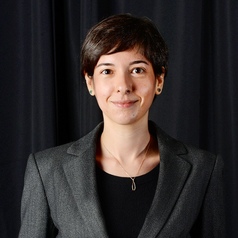
Assistant Professor of Political Science and Global Studies, University of Illinois at Springfield Sibel Oktay's research focuses on the foreign policy decision-making and behavior of coalition governments, primarily in Europe. Other research interests include political leadership and voting behavior within the context of democratic foreign policy, as well as Turkish-EU relations. Her work employs qualitative and quantitative methodologies, particularly comparative case studies, events data and content analysis. Oktay received her Ph.D. and M.A. in Political Science from the Maxwell School of Citizenship and Public Affairs at Syracuse University. She also holds an M.A. in Political Science and a B.A. in Social and Political Sciences from Sabanci University in Istanbul, Turkey. She was a visiting pre-doctoral fellow at Northwestern University’s Buffett Center for International and Comparative Studies between 2012 and 2014. Her work has appeared or is forthcoming in the Journal of European Public Policy and European Political Science. She is the 2013 winner of the Foreign Policy Analysis Section’s Alexander George Award and has been serving for the section as an officer-at-large since 2015.
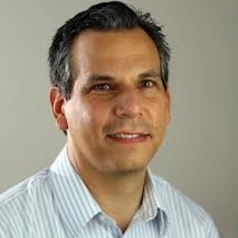
Visiting Assistant Professor of Law, Georgia State University Law professor in human rights, refugee and asylum law, public international law, for the past 6 years. Attorney with practice experience in international courts and tribunals, before UN bodies, and within US immigration courts.
Professor of Philosophy, University of Maryland Samuel Kerstein (PhD, Columbia University) is Professor of Philosophy. His research focuses on Kant's moral philosophy, normative ethics, and bioethics. Several of his current projects stem from his book How to Treat Persons (Oxford, 2013). For example, he is developing a Kantian conception of the dignity of persons and exploring its implications for issues in bioethics, including the fair distribution of scarce, life-saving resources and moral constraints on medical research.
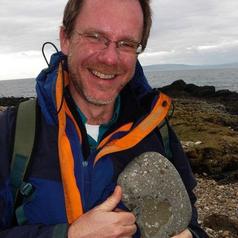
Professor in Earth Sciences, University of Cambridge I study the properties of materials in Earth, from biominerals in seas shells to the nature of Earth's inner core. I use neutron and synchrotron light sources to study these properties at the atomic scale, and link the results to phenomena at the global scale. As a British Science Association Media Fellow this year I have been reporting for BBC Science, follow my experiences at redfernsimon.wordpress.com My PhD was carried out at Cambridge University Department of Earth Sciences. After finishing I took up at Lectureship joint in the Departments of Geology and Chemistry at the University of Manchester. In 1994 I returned to Cambridge where I am now Professor, as well as a Fellow of Jesus College. I have published more than 200 academic research papers in the peer reviewed literature, and guided more than 20 students to their PhDs. I blog general Earth Sciences for a wide audience at www.geopoem.com
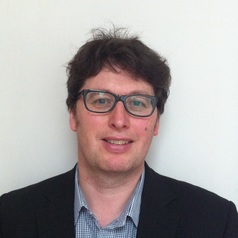
Head of Politics, University of Liverpool Stuart joined the University of Liverpool in 2002 as a Lecturer in Social Policy. He was promoted to Senior Lecturer in 2010 and became Head of the Department of Politics in 2014. He is recognised as a leading expert on the UK democratic process, particularly with regard to issues associated with the mechanics of the electoral process. Stuart frequently provides UK political commentary and analysis for newspapers and broadcasters regionally, nationally and internationally. He also contributes to a range of leading political blogs, and tweets on UK politics @stuartwilksheeg
PhD Candidate, Queen Mary University of London My research interests are primarily in gender, development, intersectionality, well-being, gendered agency, qualitative methods and South Asian studies. My doctoral research explores intersectionality, well-being and agency amongst Nepali widows. The methodological approach taken involves a triangulation of qualaitive methods. My research hopes to not only contribute empirically to the limited scholarship on widowhood, especially in Nepal, but also conceptually to reimagine approaches to understanding and theorising widowhood. With this doctoral research, and my personal pursuits outwith this work, I hope to bring attention to the issue of widowhood and in some way improve the lives of Nepali widows.