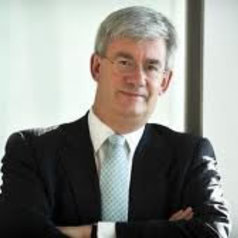
Sara Hagemann is Assistant Professor at London School of Economics and Political Science, where she joined the European Institute in September 2009. In her work, Sara draws on a mix of academic and policy experience as she has held research and policy positions in Brussels, Copenhagen and London. Sara has published extensively on European affairs, in particular on transparency and accountability in political systems, EU policy-making processes, EU treaty matters, the role of national parliaments, and the consequences of EU enlargements. Sara is a frequent commentator on EU affairs in both international and national media. She is the Co-Founder and General Editor of the LSE’s popular European Politics blog EUROPP. Before joining LSE, Sara worked as a Policy Analyst at the Brussels-based European Policy Centre (EPC), where she was responsible for its Political Europe programme. She has also held posts at the Centre for European Policy Studies (CEPS), and in the Danish Ministry of Foreign Affairs. Sara is the Co-Founder and former Managing Director of VoteWatch.eu (www.votewatch.eu) an online initiative that monitors EU decision-makers’ voting records. She is currently the Treasurer and Vice-Chair of the organisation. Sara has been awarded an ESRC Impact Accelerator Grant through the LSE’s Institute of Public Affairs, due to commence in September 2016 until July 2018.
In 2016, Saul Eslake was appointed as the University of Tasmania's inaugural Vice-Chancellor’s Fellow. A focus of his efforts in the role will be the University’s Institute for the Study of Social Change, where he will provide advice and leadership on new research programs designed to analyse and address the social and economic challenges facing our local community and nation as a whole. His work also will centre upon the importance of education to Tasmania. This is a part-time role; Saul is also an independent consulting economist. Saul Eslake has worked as an economist in the Australian financial markets for 25 years, including 14 years as Chief Economist at the Australia & New Zealand Banking Group (ANZ). After leaving ANZ in mid-2009, Saul was Director of the Productivity Growth program at the Grattan Institute, a non-aligned public policy 'think tank' affiliated with the University of Melbourne, and a part-time Advisor in PricewaterhouseCoopers' Economics & Policy practice. From 2011 to 2015, Saul was Chief Economist at the Australian arm of Bank of America Merrill Lynch, before establishing a private consultancy in Tasmania. Saul is a non-executive director of Hydro Tasmania (the Tasmanian state-owned electricity generator), and Chair of the Board of Ten Days on the Island (Tasmania's biennial multi-arts festival). He has previously been a member of the National Housing Supply Council and the Australian Statistics Advisory Committee; Chair of the Tasmanian Arts Advisory Board; and a non-executive director of the Australian Business Arts Foundation. He was also a member of the Howard Government's Foreign Affairs and Trade Policy Advisory Councils, and of the Rudd Government's Long-Term Tourism Strategy Steering Committee.
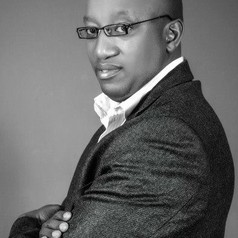
Sandile Swana is an ICT entrepreneur and part-time lecturer at the Wits Business School Municipal Finance Programme. He completed a BComm at Wits in Economics and Business Information Systems, a BComm Hons Logistics at UNISA, and holds an MBA from the University of Pretoria. He has also completed BTh and BTh Hons in Christian Ethics and Leadership through UNISA. He is a member of Institute of Information Technology Professionals of South Africa and also the Institute of Risk Management of South Africa. Areas of interest: African Development Economics; Entrepreneurship; Risk Management; Strategy; African Leadership; African Ethics; African Technology Development; ICT; African Logistics; Cost Management; Local Government.
Sam Holloway is an Associate Professor of Strategy and Entrepreneurship at the University of Portland. His research on business model innovations examines how strategy affects the design of organizational architectures and has been published in Academy of Management Journal, Strategic Management Journal, Academy of Management Best Paper Proceedings, Academy of Marketing Science Review, and Journal of Strategic Innovation and Sustainability, among others. His current research includes studying the business side of craft brewing. Based upon his research, Dr. Holloway (and fellow UP Professor, Dr. Mark Meckler) launched CRAFTINGASTRATEGY.COM, a global online learning community whose mission is to empower craft brewing entrepreneurs to run profitable businesses, so they can create more jobs and transform their local communities for the better. Additionally, Sam teaches undergraduate and MBA courses in strategy, entrepreneurship, and innovation. Sam also helped launch the Pamplin School of Business’ first online courses as part of the school’s Continuing Education Certificate: Craft Beer Business Strategy.
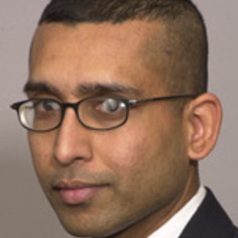
Sanjay Goel is an Associate Professor in the Information Technology Management Department (School of Business) at the University at Albany, SUNY. He is also the Director of Research at the New York State Center for Information Forensics and Assurance at the University. Before joining the university, he worked at the General Electric Global Research Center. Dr. Goel received his Ph.D. in Mechanical Engineering in 1999 from Rensselaer Polytechnic Institute. His current research interests include security & privacy that focus on information security along with privacy behavior; innovative education and pedagogy; and also security models i.e. biological models, risk models, and security policies. He also conducts research on forensics and cybercrime as well as on critical infrastructure, the first explores three fields: copyright and media piracy; botnets; and networks forensics. The second focuses on smart grid, including privacy in smart grid data analytics; impact of security and terrorism on financial markets; resilient transportation; and resilient service oriented architecture. Dr. Goel research interests also include hardware Trojans and secure chip design, and cyberwarfare. He is invited to present seminars at several conferences in information security with topics including, wireless security, hacking, botnets, etc. and has several publications in leading conferences and journals. Dr. Goel teaches several classes including, Computer Networking & Security, Information Security Risk Analysis, Security Policies, Enterprise Application Development, Database Design and Java Language Programming.
Steven Weber works at the intersection of technology markets, intellectual property regimes, and international politics. His research, teaching, and advisory work focus on the political economy of knowledge intensive industries, with special attention to health care, information technology, software, and global political economy issues relating to competitiveness. He is also a frequent contributor to scholarly and public debates on international politics and US foreign policy. One of the world’s most expert practitioners of scenario planning,Weber has worked with over a hundred companies and government organizations to develop this discipline as a strategy planning tool. Steve went to medical school at Stanford then did his Ph.D. in the political science department also at Stanford. He served as special consultant to the president of the European Bank for Reconstruction and Development and has held academic fellowships with the Council on Foreign Relations and the Center for Advanced Study in the Behavioral Sciences, and was Director of the Institute of International Studies at UC Berkeley from 2003 to 2009. His books include The Success of Open Source and most recently The End of Arrogance: America in the Global Competition of Ideas (with Bruce Jentleson) and Deviant Globalization: Black Market Economy in the 21st Century (with Jesse Goldhammer and Nils Gilman). He is currently working on a new book, Beyond the Globally Integrated Enterprise, that explains how economic geography is evolving and the consequences for multinational organizations in the post financial crisis world. Steve is the faculty director for the Berkeley Center for Long Term Cybersecurity (CLTC).