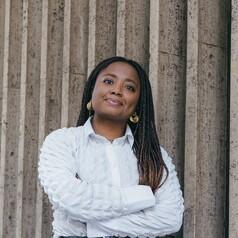
Indigenous Knowledge Water is the basis of life, which, as a proud Alywarr woman and Ecohydrologist means I study the interactions between the environment, water, and culture. This, I do from both a western science education, but also using the Indigenous science philosophy of caring for and understanding Country. I am currently living in Adelaide SA and working at CSIRO in the ecohydrology space as part of the Water Security group. I have worked on Country for a combination of nine years, learning what I could as an Indigenous ranger and as a stationhand in North-West QLD. While I am fairly new to the formal science space – graduating from a combined science degree in 2021 - I was taught from a young age the importance of caring and respecting Country as well as the first peoples that walked it. Currently, I am a part of a team that is investigating the water use of floodplain Eucalyptus trees in the Murray-Darling Basin and working with First Nations groups from around Australia, having meaningful conversations about what science projects they’d like to see done on their Country.
David and Elaine Potter Professor, Department of Politics and International Studies, University of Cambridge I am an interdisciplinary and applied researcher currently working on issues at the intersection of digital technology and politics in Africa. This research has been awarded funding by UK-DFID, ESRC, Wellcome Trust, Isaac Newton Trust, university-related research funds and private foundations. It has yielded numerous publications, supported six early career researchers, built international research collaborations and had notable research impact. I am co-founder and the first executive director of a non-profit spin-out from this research, Africa’s Voices Foundation (a registered charity in the UK). Now with over 25 staff in Kenya, Africa’s Voices applies digital social research methods to deliver governance programmes in East Africa worth £1+ million annually. Grounded in political theory on civic republicanism, democracy and constitutionalism, my long-term research interest lies in unravelling how political ideas, values and interests that are embedded in the ‘built’ world – for example in digital technology applications but also institutions built by peacemakers – enable or constrain political action and the public realm. I am committed to praxis; applied interdisciplinary research collaborations that enable critical thinking and collaborative innovation. My current work with Cambridge Computer Laboratory colleagues combines political theory and human computer interaction to reimagine socio-technical systems that can be built to serve civic democracy. I regularly contribute to wider policy and public forums, and to date have accepted close to 30 speaking invitations for university conferences, the media and policymaker/public events.
Ph.D. Candidate in Sociology, University of Wisconsin-Madison Sadie Dempsey is a Ph.D. candidate in Sociology at the University of Wisconsin-Madison studying democracy, political inequality, social movements, and political communication.
Researcher, University of the Witwatersrand Researcher on feminist economics, climate justice and inequality at the Southern Centre for Inequality Studies.
Earth Scientist, Pacific Northwest National Laboratory Dr. Lubis is an atmospheric scientist with a broad interest in atmospheric dynamics and climate variability and change. The main focus of his work is to advance the fundamental understanding of large-scale atmospheric processes that impact extratropical and tropical weather and climate. Potential topics of interest include, but are not limited to, the dynamics of large-scale circulation (such as sudden stratospheric warmings, blockings, annular modes, stationary waves, planetary wave reflection, and wave breaking), tropical meteorology (including moisture modes, MJO, equatorial waves, and cold surges), and extreme weather. Before joining PNNL in the summer of 2022, Dr. Lubis was a Postdoctoral Researcher working with Prof. Noboru Nakamura (University of Chicago, USA) and Prof. Pedram Hassanzadeh (Rice University, Houston, USA). Dr. Lubis received his Ph.D. in Atmospheric Sciences from GEOMAR - Helmholtz Centre for Ocean Research Kiel and the University of Kiel, Germany, under the supervision of Prof. Katja Matthes and Prof. Nili Harnik. Outside of work, he enjoys listening to and watching classical music concerts (a big fan of Bach, Sibelius, Paganini, Shostakovich, and Tchaikovsky), traveling, and exploring nature.
Honorary Fellow, Melbourne Biodiversity Institute, The University of Melbourne Simon has worked at the intersection of finance, economics and sustainability for over 25 years as an executive, director and expert in climate change, ESG, sustainable finance and nature-related finance. Simon is currently an Honorary Fellow at Melbourne University, working across the Melbourne Biodiversity Institute and the Melbourne Climate Futures' Sustainable Finance Hub. Simon is a member of the Australian Government's Nature Finance Council. He was most recently the CEO of the Responsible Investment Association Australasia for over a decade, where he led the establishment of the Australian Sustainable Finance Initiative as inaugural co-chair, established the regional consultation group of the Taskforce of Nature-related Financial Disclosures, chaired the Global Sustainable Investment Alliance, was a board member of the Aotearoa New Zealand Impact Investment National Advisory Board, as well as establishing the Aotearoa NZ Stewardship Code.